
2026: The top of the art market is melting — collecting isn’t.
Private sales are in, auctions are out
Auctions have long been the art world’s spotlight as the visible, public-facing part of the market. But in 2026, that spotlight captures only a very small fraction of activity, with collecting increasingly happening out of the limelight, through private channels.
Even when the salerooms show moments of momentum, as in glimpses of the last quarter in 2025, the broader reality and uneasy dynamics of auctions remain in that they are risky, costly, and uncertain. Compounded by volatile outcomes, auctions can become harder to justify as the most optimal sales channel.
Now, what do we mean by risky, costly, and uncertain? Given that auction sales become public records, unsold or poorly performing lots can give the undue appearance that an artist’s market isn’t prime. In particular, when unique works are to be auctioned, going unsold typically means the collector needs to wait to attempt to resell it under more favourable market conditions or at an adjusted price level. At the same time, auction lots often start bidding below true market value in order to garner interest and attention, there is the risk that the lot sells for less than what it might fetch privately.
More and more collectors are choosing to step away from that volatility, not because they’re buying less, but because they want more control over the outcome.
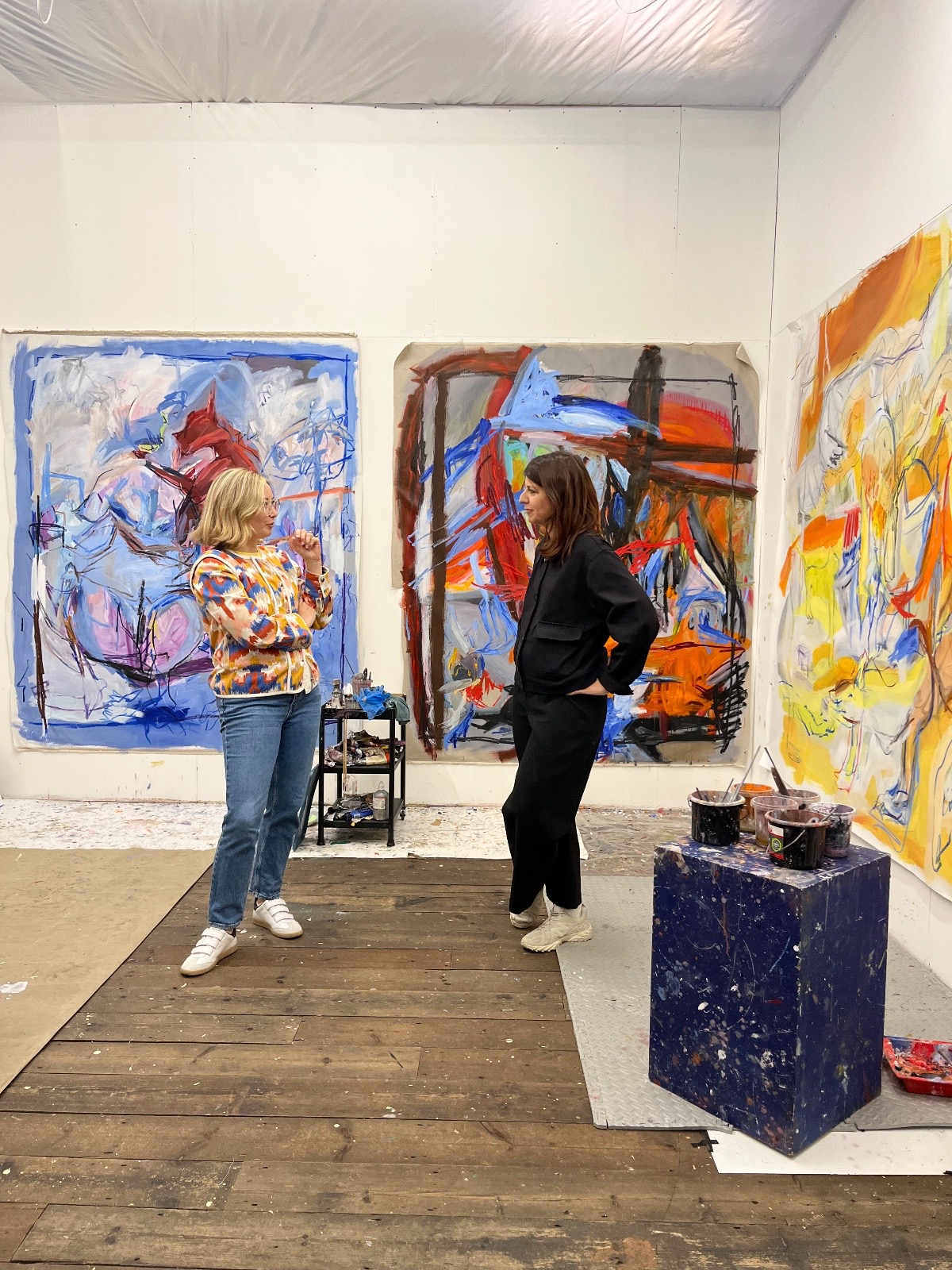
Behind-the-scenes studio visit with Rosana Antonioli. Photo: © Bethan Street
Why private sales win in 2026
Private sales offer what today’s collector increasingly demands as outcome certainty, discretion, and speed. A target price can be agreed that is aligned with the market, there is no public record of the sale, and sales can happen in a matter of days, as opposed to months. In other words, private sales offer collectors better structuring options flexibility in timing and pricing.
And this shift isn’t theoretical, it’s already happening. At Artscapy, we’re seeing how private transactions now represent not only a “safer” route, but a smarter one. Especially when collectors want to move quickly, avoid public noise, and still access liquidity.
We’re seeing firsthand this need for flexibility and liquidity, and in response have added yet other tools to a seller’s toolkit including instant sales where collectors can receive funds within days for eligible, approved artworks. Beyond immediate sales, there is the option to consign the work to target different global sales avenues - or - access liquidity without selling through financing.
Including something the public market simply doesn’t offer: funds without selling.
That’s where the real action is moving in 2026.
“Auctions may be the visible tip of the iceberg — but private sales are where the market is really moving.” - Emilia De Stasio
Collecting horizontally, not vertically
For a long time, traditional collecting followed a vertical logic:
Choose a few artists → acquire multiple works → go deep.
But in 2026, we’re seeing a different approach take hold. Collectors are widening the lens by building collections across many artists, rather than concentrating on single names. Instead of acquiring 10 works by one artist, many collectors are choosing one or two works across 10 artists.
This isn’t a result of lacking conviction, but rather, it is the result of a conscious curiosity to build broad collections that explore different themes and motifs across artists. This creates meaningful explorations that capture different perspectives, as opposed to in depth voyages within an artist’s practice. Additionally, there is a risk mitigation element to this strategy in which spreading the portfolio across different artists reduces the “all eggs in one basket” approach that concentrates risk and heightens exposure to a few names.
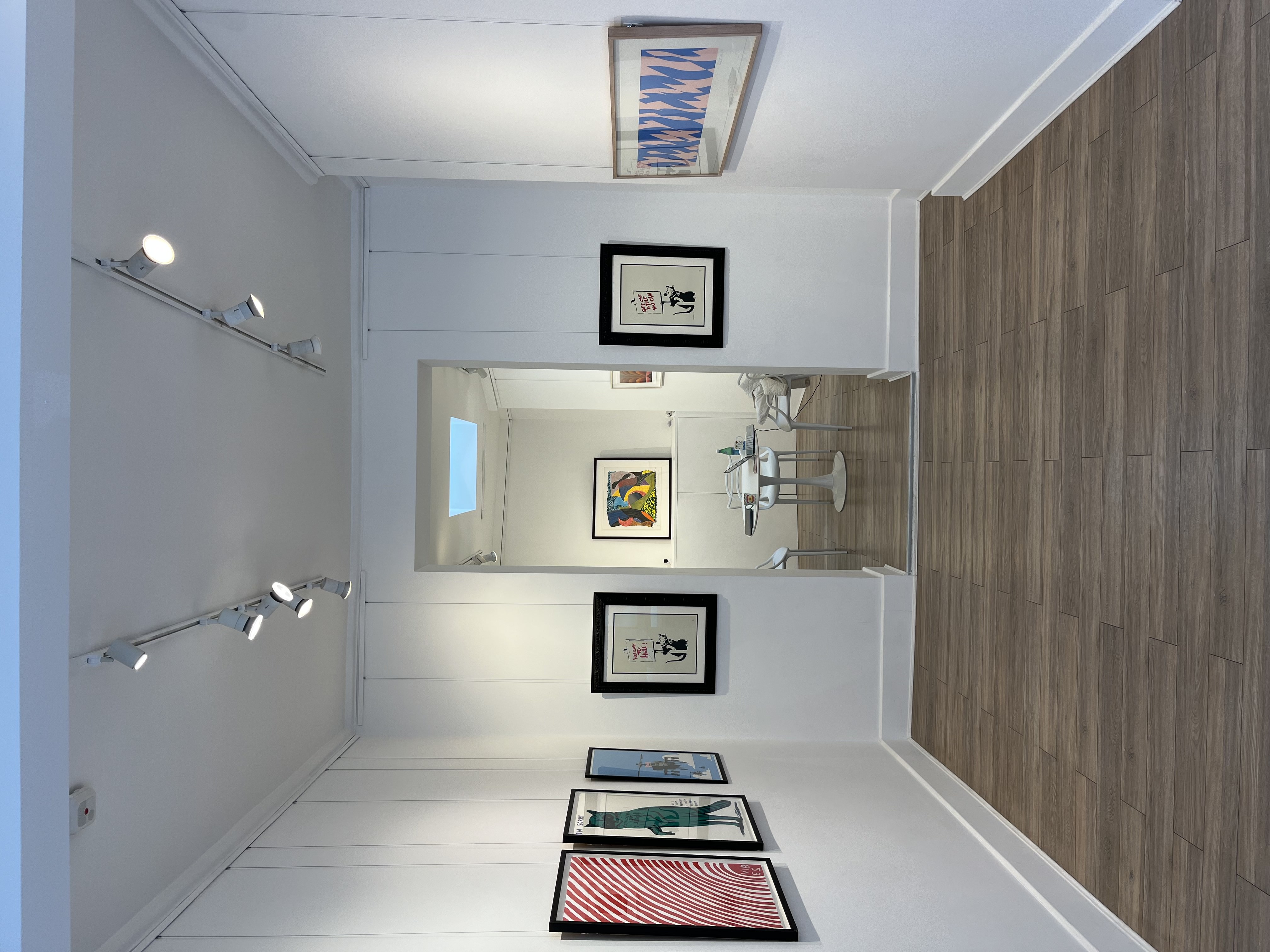
Blue-chip works presented privately through Artscapy’s ICONS exhibition. Photo: © Louis Denizet
Why “horizontal collecting” is accelerating
Collecting multiple artists across themes or tastes, reflects a new type of collector confidence guided by three key pillars:
1) Taste can develop
Collecting horizontally allows for a stimulating journey to form as the collection now can tell stories across different themes and explore varied lenses through which those questions are interrogated.
2) Collecting globally
Collecting today is a global endeavour showcasing worldwide views, not restricted by local markets or availability.
3) Risk is spread
In a generally cautious market, it is more favourable to spread acquisitions, as opposed to concentrate the collection on select names.
This approach to collecting can challenge traditional gallery loyalty models, especially where “support” historically meant repeated buying from the same programme. But it also produces richer collections that feel alive, contemporary, and personal.
3. Artist mid-career squeeze is real
If there’s one segment under pressure in 2026, it’s the mid-career tier of artists. We’re seeing collectors gravitate toward two ends of the market: discovering early talents and balancing them with blue-chip anchors.
The next generation of artists coming onto the market bring fresh perspectives and new takes on themes, without yet commanding a hefty price tag. From a portfolio perspective there is greater risk, but the lower cost balances it. New techniques and approaches to art making can evolve among the younger generations that have the space and creative freedom to experiment in their practices, without being restrained by sticking to themes, techniques, or narratives that they are “known for”. For many buyers, it feels like a meaningful way to build a collection without overexposing themselves financially.
At the other end of the spectrum, established names still attract capital because they can offer stability, market validation both in terms of institutional support and secondary market activity, and a general renown that engenders liquidity. However, even if blue chip, it is possible to source works in this category without spending in the 6+ figures. This makes the blue chip category a go-to purchase also for the new generation of collectors. In particular, the presence of a secondary market history adds a layer of comfort as more aspiring collectors are entering the market. Blue chip art reflects the anchors of the collection.
This split of interest manifested by today’s collector between early-career and blue chip art means that the mid-career artists, often with a higher price tag but not-yet star-studded pedigree of institutional and market support, have fallen in buying priority. The higher price tag effectively discourages many buyers while the budding backing and secondary market make resale outcomes unclear. Collectors may demand stronger market validations before committing to purchases in this category. This behaviour is exacerbated when put in perspective of the horizontal collecting trend, which heightens the appeal of buying another artist as opposed to deepening the collection into a mid-career holding.
Nonetheless, it doesn’t mean mid-career collecting won’t happen in 2026. It just means that institutional support and solid market positioning are needed as buying levers.
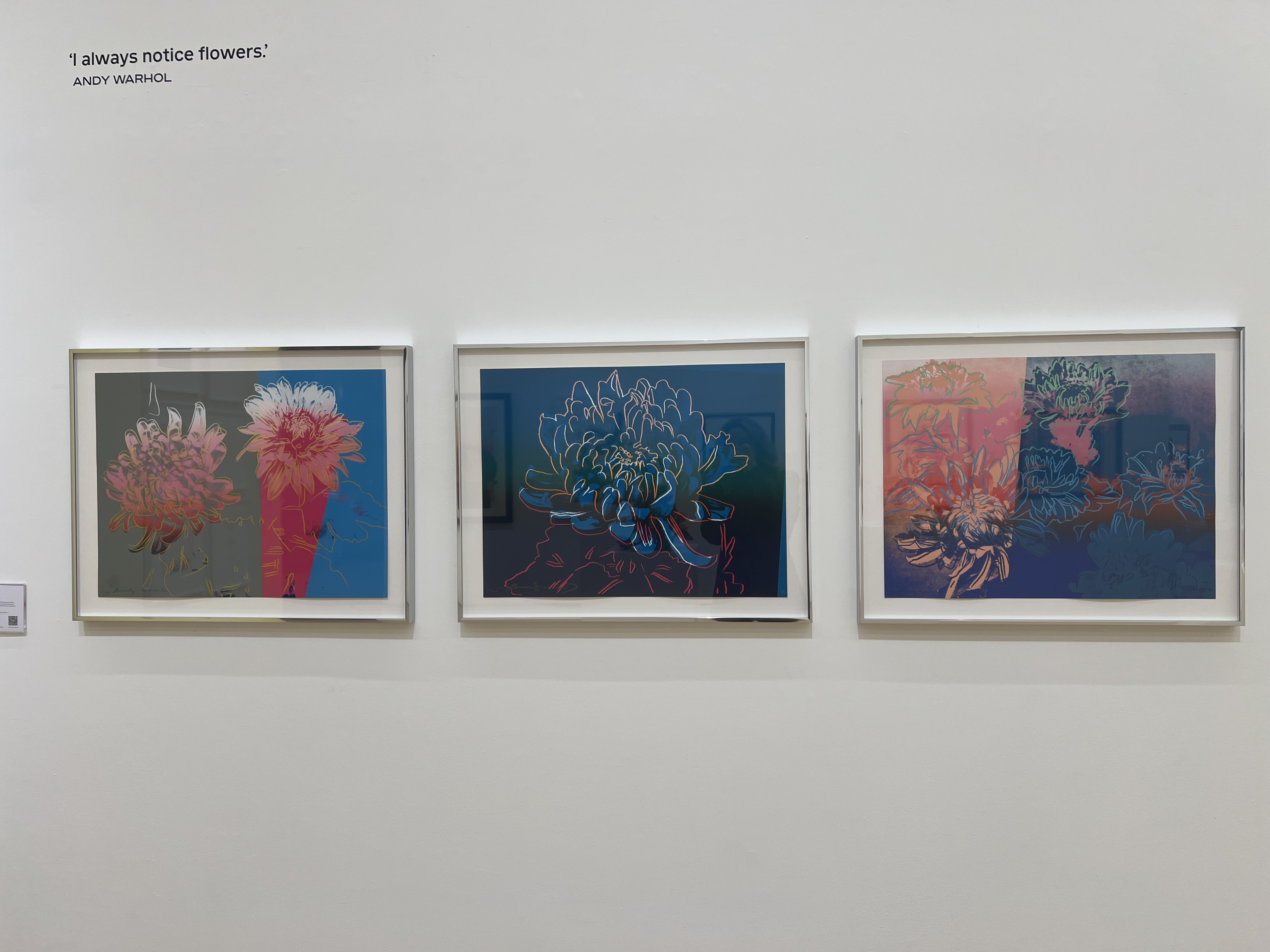
Andy Warhol works at the Phillips Evening & Day Editions Preview. Photo: © Bethan Street
What this means for collectors in 2026
Whether you agree or disagree with these predictions, one thing feels undeniable:
Collectors have more agency than ever before.
In 2026, collectors aren’t simply reacting to what the market tells them is valuable.
They’re choosing how public or private their buying should be, whether to build a collection broad or deep, how to manage liquidity without panic selling and how to structure deals on their own terms.
This is a market where flexibility matters as much as taste. And it’s why the future of collecting isn’t cooling down, it’s evolving.
Collecting in 2026 is more strategic, more personal, and more self-directed
The visible part of the market may be melting, but the system beneath it is adapting.
In 2026, the smartest collectors will embrace privacy where it matters, build narratives horizontally and find conviction where others hesitate. And they’ll do it with tools that match the way collecting now works.
That’s what we’re building at Artscapy.