

Annie Morris market analysis. Is now a good moment to sell? (February 2026)
Last updated: 8 February 2026
Annie Morris has one of those markets that looks easy from a distance “the Stacks are popular” and then turns selective the second you try to sell a specific work. The real question isn’t whether Annie Morris is “hot”; it’s whether your piece sits in the part of the Stack market where buyers compete, and whether you’re choosing a route that lets that competition do its job.
Verdict: if you own a strong Stack sculpture, this is a sensible moment to explore a sale but only with a strategy that respects how selective buyers have become.
Start with valuation. Get a price range in about 60 seconds.
If the range looks right, we’ll talk you through the routes that fit your Annie Morris, from discreet private placement to (when applicable) curated purchase offers.
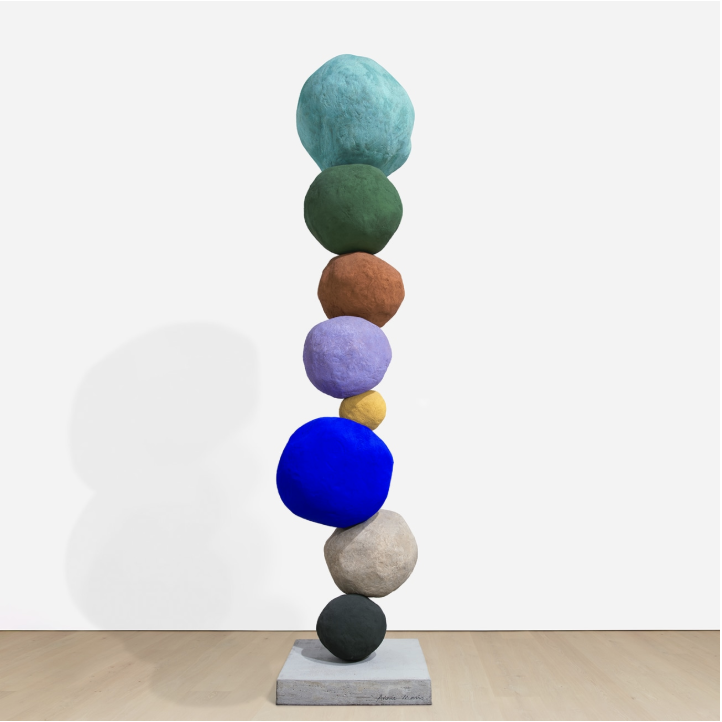
Annie Morris, Stack 8, Copper Blue, 2019. Image: © Phillips
The Annie Morris market is effectively a Stack market
In today’s secondary market, Annie Morris does not trade like a “whole-practice” artist in the way some names do; she trades like a market with a clear flagship product: the Stack sculptures. That matters because the Stack series is what most public buyers recognise instantly, and it’s what major auction houses have repeatedly validated as the work to fight over.
You can see the split in the public record: the serious bidding energy is concentrated in Stack sculptures in signature pigment palettes, while non-sculptural or design-category offerings appear to occupy a completely different lane. If you’re selling an Annie Morris Stack, you’re speaking to one kind of buyer; if you’re selling an Annie Morris textile or design object, you’re often speaking to another.
Implication for you: your first job isn’t “find a buyer for Annie Morris.” It’s “place this work into the right buyer pool for this part of Annie Morris’s practice.”
Action: we start by identifying what you actually have, Stack sculpture, bronze Stack, tapestry, drawing, or design and valuing it accordingly.
What buyers actually reward: colour conviction, not just the name
Annie Morris’s Stack sculptures aren’t just sculptures in the market’s eyes; they’re colour objects with presence. The institutional descriptions lean heavily on pigment, surface, and the emotional/physical tension of precarious balance, and that’s exactly what buyers seem to reward when they bid. Yorkshire Sculpture Park, for example, foregrounds the Stack sculptures as towers of balanced spheres in rich colours, and frames the works as both technically made and emotionally charged. [1]
In public auction results, the works that reach the strongest prices tend to be those that look like the “definitive” Stack experience: saturated blues, greens and related palettes; crisp verticality; and a finish that reads as intentional rather than tentative. That doesn’t mean other colours can’t sell, it means buyers pay a premium for recognisability within the series.
Implication for you: “Stack” is necessary, but it’s not sufficient. A Stack that nails the series’ visual identity tends to have a wider buyer pool than one that reads as an outlier.
Action: when we value your Annie Morris, we don’t just classify it as a Stack; we position it within the colour-and-presence hierarchy buyers are actually responding to.
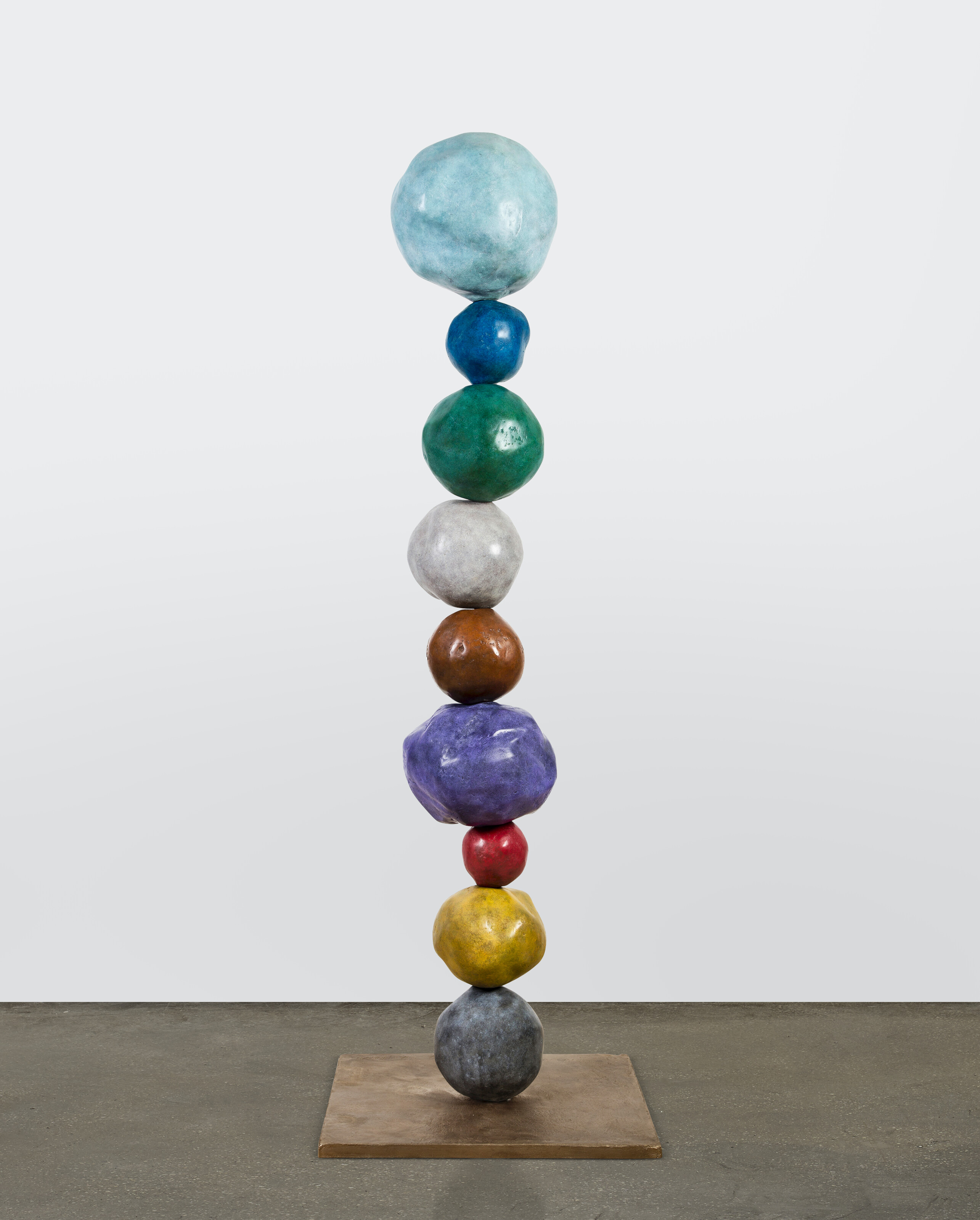
Annie Morris, Bronze Stack 9, Copper Blue, 2015. Image: © Christie's
Where liquidity concentrates: major houses, day-sale depth, and rare bronze theatre
A useful (and slightly counterintuitive) fact about Annie Morris’s public market: the current high-water mark in the auction results we can see is $672,204, achieved in a Sotheby’s Contemporary Day Auction rather than an evening sale. That tells you the liquidity isn’t only dependent on “evening sale storytelling”; there’s genuine depth in the buyer base for the right Stack.
At the same time, when bronze Stack sculptures enter the evening-sale arena, buyers treat them as trophy objects rather than decorative variants. A bronze Stack sold in a Christie’s London Evening Sale reached $506,231 in the public record, which is meaningful not only as a price point but as a signal that the market accepts bronze Stacks as major works when presented as such. Christie’s positions bronze Stacks explicitly within the “iconic totems” narrative and ties them to institutional commissioning and deliberate surface processes. [4]
Implication for you: if your work is a high-conviction Stack, the market’s most liquid venues are not obscure — they are the major rooms that already have an audience primed for the series.
Action: valuation is how you decide whether your piece belongs in that public contest, or whether it’s better served by a quieter route.
The “ignored” zone: works that don’t sit in the Stack bullseye
The fastest way to misread Annie Morris’s market is to assume that “Annie Morris” alone guarantees demand. The secondary market has shown it can be enthusiastic, but it can also be narrow: works outside the Stack sculpture lane (or works that feel peripheral within it) tend to trade at very different levels and with less urgency.
One data point makes the gap stark. An Annie Morris embroidered fabric work in a design-category context sold publicly for $12,712, a valid sale, but operating in a different universe from the Stack sculptures that anchor the market’s attention. (This is exactly why sellers get surprised: they assume the name carries the same weight across media.)
That difference is not just about “medium”; it’s about buyer intent. Stack buyers are typically looking for the signature object that carries the series’ physical drama and pigment presence. A design-category work asks a different question of a buyer.
Implication for you: if your Annie Morris isn’t a Stack sculpture, selling publicly may still be possible but you should expect a different buyer pool and a different kind of price conversation.
Action: we’ll tell you plainly whether your work is likely to benefit from a public auction spotlight, or whether private placement is structurally more rational for your piece.
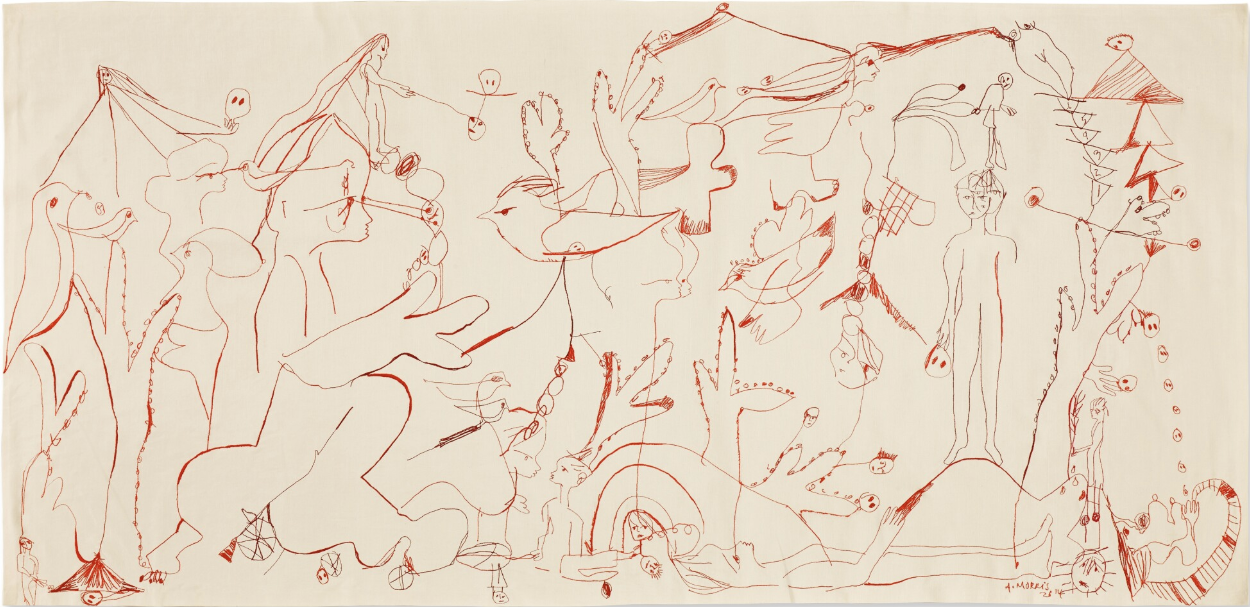
Annie Morris, Untitled, 2014. Image: © Sotheby's
The market’s most expensive misunderstanding: “any Stack will do”
Collectors often talk about Annie Morris as if all Stack sculptures sit on one smooth price curve. The public record suggests the opposite: buyers are capable of paying aggressively, but they do it selectively.
A good example is a smaller Stack (in the public record) that didn’t just beat its estimate — it came in at 7.14× the low estimate. That kind of result doesn’t happen in a market where “any Stack is fine.” It happens when buyers have a specific hunger and the lot meets it — colour, freshness, venue, and timing aligning.
The lesson isn’t “small Stacks always outperform.” The lesson is that estimates and prior comps do not fully capture buyer appetite in this market when the work feels like the right example — and they also don’t protect you if your work feels like the wrong one.
Implication for you: the key decision is not “auction or not,” but “does my Stack have the traits that make bidders behave like price-setters?”
Action: we’ll position your work against the behaviour of recent buyers — not generic advice — and recommend the route that fits.
What changed behaviour recently: institutions caught up with collector taste
If you only watch auction prices, you miss why buyers feel safer paying up. Annie Morris has had a steady ratcheting of institutional and public-programme visibility that makes the Stack series feel less like a social-media-friendly object and more like a sculptural practice with cultural weight.
Yorkshire Sculpture Park presented Morris’s first UK solo museum exhibition and explicitly framed her Stack sculptures as central to her practice. [1] That’s not just a line on a CV; it’s an institutional validation that feeds collector confidence.
Then there’s international institutional positioning: Fosun Foundation in Shanghai staged a large-scale institutional survey in China, presenting Morris across sculpture, tapestries, and paintings and situating her within a broader programme focus. [2] Even if you’re selling a Stack rather than a tapestry, that matters: it strengthens the “this is a serious artist” narrative that underwrites higher secondary bids.
Finally, public commissioning acts as a different kind of signal. The Hepworth Wakefield’s programme around Wakefield’s sculpture trail describes a permanent bronze Stack installed outside the West Yorkshire History Centre, reinforcing that the Stack is also legible as civic-scale public sculpture rather than private decoration. [5]
Inference: when institutions and public commissions validate the Stack as sculpture-with-gravity, it broadens the set of buyers who feel comfortable paying “serious” prices, which helps explain why strong Stacks have been able to set new highs in public auctions.
Action: when we value your Annie Morris, we account for whether your work benefits from this “institutional gravity” effect — and whether now is a good window to use it.

Annie Morris, Stack 3, Cobalt Turquoise, 2024. Image: © Christies
Condition and paperwork matter more here than sellers expect
Annie Morris’s Stack sculptures are materially specific: plaster and raw pigment surfaces (and, in bronze works, deliberate patination processes) are part of what buyers are buying. [1] That means condition isn’t a checkbox; it’s a value component. A chipped edge, a rubbed pigment surface, or sloppy installation history can change how a buyer feels in front of the work — and that changes price.
Paperwork also matters, because this is a market where buyers want reassurance that the work is properly documented and correctly attributed. On Artsy, a Timothy Taylor listing for a Stack sculpture explicitly notes that a certificate of authenticity is included. [6] That’s not proof that every Annie Morris work comes with identical documentation — but it is evidence that serious market channels present certificates as part of the value package.
Data needed. Confirmation would be: whether Annie Morris Studio and/or her primary gallery provide a consistent authentication process for secondary sales, and what standard documentation (certificate, invoice trail, foundry documentation for bronze works) is expected for different categories of work.
Action: before you choose a selling route, we’ll tell you what documentation you have, what you’re missing, and how much it matters for your specific Annie Morris.
Is private placement structurally rational for Annie Morris?
For many artists, private sale is just a “quiet alternative” to auction. For Annie Morris, private placement can be structurally rational because the market is concentrated: when the work is not a slam-dunk trophy Stack (or when discretion matters), matching the work to the right buyer is often more efficient than broadcasting it to the whole room and hoping.
Private placement tends to make the most sense when:
- your Annie Morris work sits outside the Stack sculpture bullseye (for example, textiles or design-category works), and you want a buyer who actually collects that side of the practice, not someone who only knows the Stacks;
- your Stack sculpture is strong, but you want to control the pricing conversation rather than live inside an auction estimate band;
- you’re sensitive to public visibility (for example, you’d rather not have a public pass/fail outcome attached to your name and the work).
Public auction can still be rational — especially for high-conviction Stacks where competition is likely — but it’s not automatically “best” simply because the market has produced big headline results.
Implication for you: the “right” route depends less on general market heat and more on whether your work will trigger competitive behaviour from Stack buyers.
Action: we’ll recommend auction or private placement based on where your specific work sits in the Annie Morris demand map.
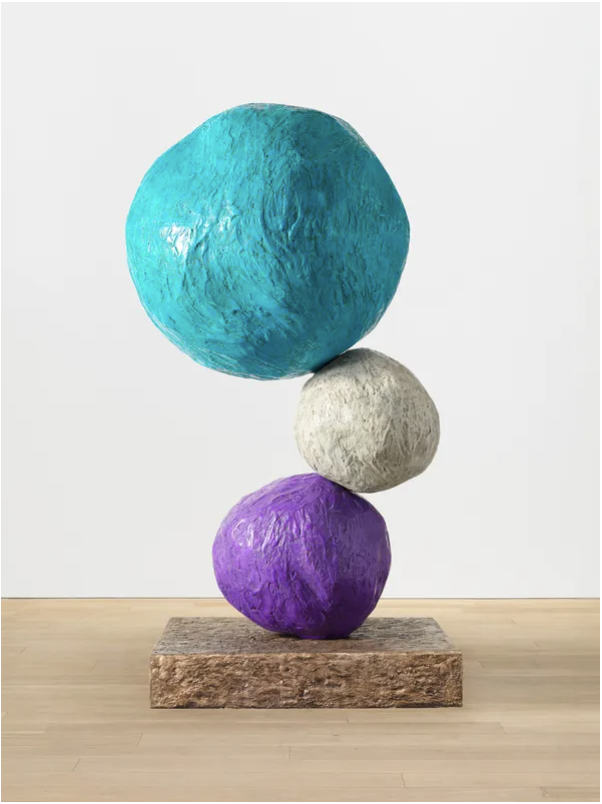
Annie Morris, Bronze Stack 3, Cobalt Turquoise, 2023. Image: © Artsy
Acting now versus waiting: what a rational collector does in this market
A calm way to think about timing in Annie Morris is to separate “market momentum” from “work-specific fit”.
Acting now is rational if your work aligns with what public buyers have been rewarding: a convincing Stack sculpture, in a palette and presence that reads as quintessential Annie Morris, with clean provenance and strong condition. In that case, the recent public record suggests buyers have been willing to be assertive price-setters, and you may prefer to meet that demand while it’s clearly visible.
Waiting is rational if your work sits in a thinner lane: a design-category work, a textile, or a Stack that feels like it may require careful contextualisation to avoid being judged as a second-choice example. In those cases, a slower, more targeted strategy — including discreet private placement and documentation strengthening — can be the higher-confidence path.
Inference: because this is still a concentrated market, timing swings are likely to show up first as increased selectivity (buyers becoming pickier about colour/scale/condition) rather than as a uniform drop in all Annie Morris prices.
Action: valuation is the low-friction way to decide whether you’re looking at a “sellable now” Stack, a “sellable with positioning” work, or a “better to wait” situation.
Selling Annie Morris with Artscapy: a clean next step
We built Artscapy’s process for exactly this kind of market: strong demand, real selectivity, and lots of seller anxiety about choosing the wrong route.
Here’s how we approach an Annie Morris sale:
- Start with valuation so you can see where your Stack, bronze Stack, or textile likely sits in the current market.
- Then choose the route that matches the work: private placement when selectivity and discretion matter, or public-auction strategy when competition is likely.
- Where eligible, you can also request purchase offers through our network, with a calm, opt-in approach.
No hype — just a clear picture of how Annie Morris buyers are actually behaving, and what that means for your next move.
References
[1] Yorkshire Sculpture Park, “Annie Morris: When A Happy Thing Falls” (past exhibition page).
[2] Fosun Foundation (Shanghai), “Annie Morris: Hope from a Thin Line” (exhibition page).
[3] Timothy Taylor, “Timothy Taylor to represent Annie Morris” (gallery news, 8 July 2019).
[4] Christie’s, “Annie Morris (b. 1978), Bronze Stack …” (lot page and essay).
[5] The Hepworth Wakefield, “Wakefield’s Sculpture Trail launches across the city centre” (news item, 21 July 2023).
[6] Artsy (Timothy Taylor listing), “Annie Morris, Stack … (includes a certificate of authenticity)” (artwork listing page).
