
George Condo market analysis. Is now a good moment to sell? (March 2026)
Last updated: 16 March 2026.
If you own a George Condo work, the temptation is to treat the name itself as the market: major museum validation, fresh gallery representation, recognisable imagery, and occasional headline sales. The harder truth in the auction results is that Condo’s market now rewards precision more than optimism.
Verdict: this is a good moment to sell strong, central George Condo, but a selective moment to expose anything less than that. [1][2][3] Start with a valuation. Get a price range in about 60 seconds. We’ll tell you what the auction record supports, what it doesn’t establish, and which route is structurally appropriate for your work.
George Condo’s market is not weak. It is divided. Buyers still compete for the right large painting and still treat strong unique works on paper as a real collecting lane, but they are much less willing to rescue middling paintings, stale consignments, or weak routing choices. That distinction is what should drive your next step. [1][11][12]
George Condo’s public auction figures here reflect hammer prices in the reviewed public record from February 2018 to March 2026, converted to USD where available. New sales will change the picture, but the current tape is already clear enough to show where liquidity sits and where it breaks down. [1]
In this article
- The George Condo sale that best explains the market
- How George Condo’s market actually works
- What buyers are really paying for now
- Why private sale is often the rational route
- How to think about selling now versus waiting
- The Artscapy route from valuation to sale
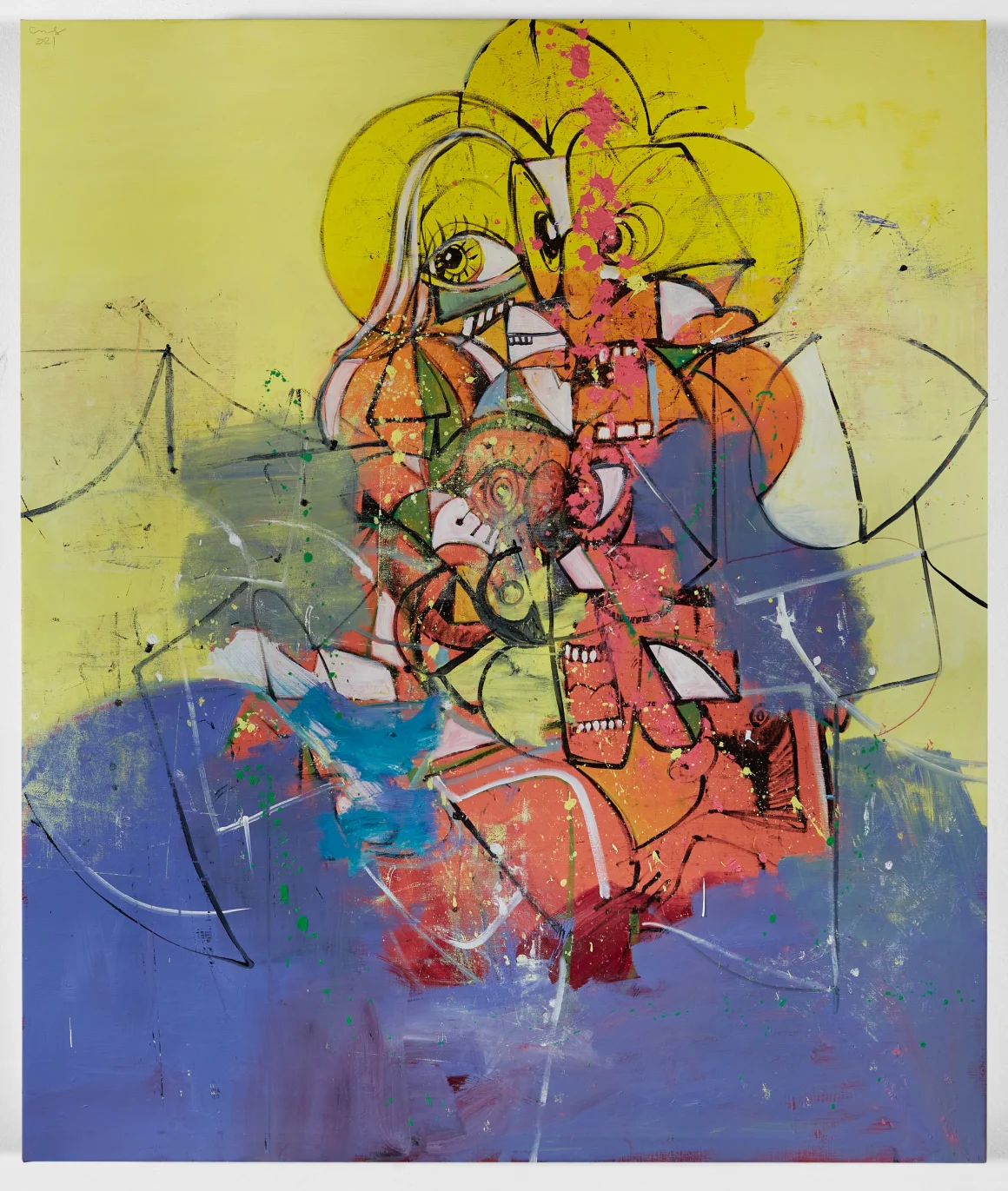
George Condo, The Day I Stopped Drinking, 2021. Image: © George Condo
The sale that best explains the market
The clearest single case study is Christie’s Hong Kong sale of Prescription for the Clinically Normal in September 2024. Estimated at about $5.1m–$7.7m, the 2012 diptych sold at $6.21m hammer, the highest result in the reviewed George Condo auction record. [1][6][7]
That sale mattered because it was not merely “a George Condo”. It was a monumental, psychologically crowded, unmistakably central Condo: a picture poised between portraiture and abstraction, with exactly the scale and formal ambition that auction houses, galleries and museums keep foregrounding when they frame the artist at the top level. Christie’s catalogue language, the Musée d’Art Moderne de Paris retrospective, and long-running institutional framing around Condo’s invented characters and drawing-painting fusion all point to the same thing: buyers pay most when they feel they are getting full-dose Condo, not peripheral Condo. [2][6][11][12][13][15]
The uncomfortable part is what happened next. The record sale proved that the ceiling was still alive, but it did not broaden the whole market. In 2025, George Condo painting sell-through fell to about 74%, and the painting median dropped to roughly $225,000, down from about $360,000 in 2024. [1] That is not what a broad, automatic blue-chip painting market looks like. It is what a selective market looks like after the headlines have done their work and buyers return to judging the individual picture.
How George Condo’s market actually works
George Condo does not trade as one market. He trades as several linked markets with very different buyer behaviour: major paintings, unique works on paper, editioned material, and smaller sculptural works. Collectors may follow the same artist across those lanes, but they do not price them as if they were interchangeable. [1][2][11][12]
The ceiling sits in major paintings, and the best barometer is format. Across the reviewed record, George Condo paintings above 2 m² have a median hammer of about $1.26m; paintings below 1 m² sit around $100,000. [1] That is not just a size premium. It is a conviction premium. When buyers see a large Condo that fully activates the artist’s fractured heads, unstable portrait space, crowded figuration or hybrid abstraction, they behave as if they are buying into the central argument of the oeuvre.
You can see that logic in the titles that dominate perception: Prescription for the Clinically Normal, The Executives and Their Wives, Conversations, Multicolored female composition, Reclining blue form. The market-making pictures are not generic oils with a famous signature. They are the works that feel close to the museum and gallery narrative around Condo’s invented beings, double states of mind, and the friction between line and paint. [2][6][11][12][13]
Even in a more selective year, that barometer still functions. In 2025, large George Condo paintings still cleared at about 83%. The catch is that strength came with price discipline rather than euphoria. Buyers were willing to show up for the right works, but they were not giving sellers a free pass on estimate. [1]
The second real liquidity lane is unique works on paper. Across the reviewed record, George Condo works on paper clear at about 92% with a median hammer around $47,500. [1] That makes sense artistically as well as commercially. The Phillips Collection’s survey of Condo’s drawings and “drawing paintings”, the New Museum’s framing of his invented portraiture, and the recent Pastels presentation at Sprüth Magers all treat drawing not as a side product but as a central way Condo thinks. [11][12][15]
This matters if you are selling. A strong George Condo paper is not merely “the cheaper option”. It belongs to a market with its own committed buyer base. That usually makes it easier to route than a smaller painting that looks secondary next to the artist’s major canvases.
What buyers are really paying for now
Buyers in George Condo are paying for recognisability with consequence. They want the picture to feel unmistakably Condo, but also fully resolved within the artist’s deeper language of invented portraiture, psychic distortion, and painterly intelligence. Museums and galleries repeatedly foreground heads, portraits, double heads, female figures, “drawing paintings”, and works that compress multiple emotional states into a single image. That curatorial emphasis is not separate from the market. It is one of the reasons the market has such a clear hierarchy. [2][11][12][13][15]
What gets quietly ignored is just as revealing. The weaker zone is the middle-tier painting: works substantial enough to be consigned with confidence, but not strong enough to command genuine competition. In that band, sellers often confuse “recognisable George Condo” with “must-have George Condo”. The public tape does not make that mistake. [1]
Routing sharpens the difference. From 2023 to 2025, George Condo painting sell-through at Christie’s and Sotheby’s sat at about 91%, while Bonhams was at 50%. [1] That does not mean one house is universally right and another is universally wrong. It means Condo is a route-sensitive market, and the top houses are still doing most of the real price-discovery work for the paintings that matter.
That route sensitivity is where many sellers slip. If a major house does not want your George Condo in the right context, the lesson is usually not “try a smaller auction and hope”. The lesson is that your work may need a different channel, a more careful buyer list, or a more disciplined price expectation.
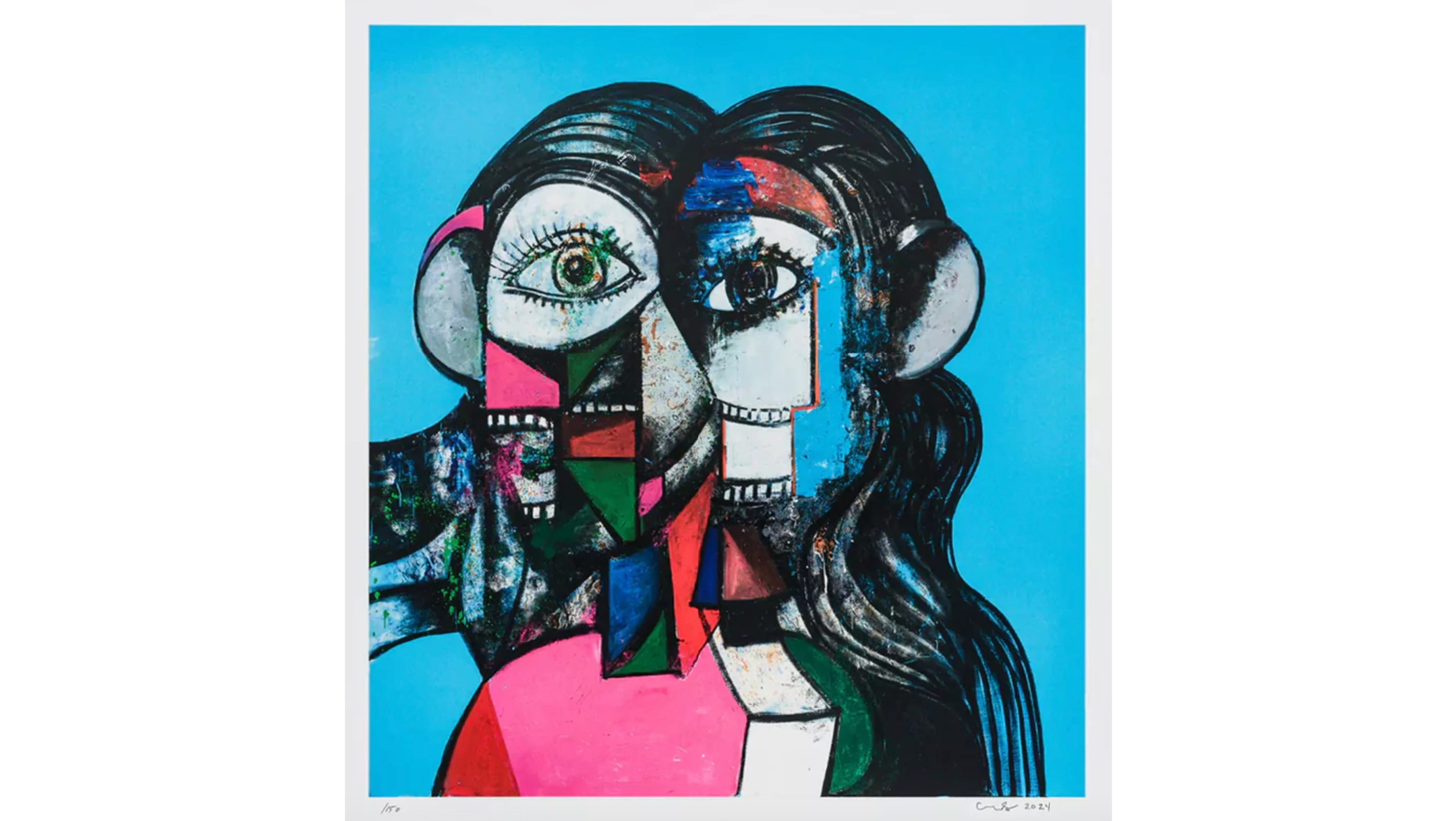
George Condo, Portrait and Head, 2024. Image: © George Condo
What changed recently, and what did not
The external signals around George Condo have been positive. The Musée d’Art Moderne de Paris opened the most significant exhibition to date of his work in late 2025, Artsy reported his move to joint representation by Sprüth Magers and Skarstedt in November 2025, and reported fair placements in Basel, Paris, Seoul and Miami show that galleries can still place serious Condo with conviction. [2][3][4][5][16][17]
The crucial seller takeaway is that those signals helped the top of the market without reopening the whole field. In 2025, more George Condo paintings sold below estimate than above, 13 against 6. [1] Inference: the market still believes in Condo’s cultural position, but it now insists on proof at the level of the object, the estimate and the route.
That absence of broad halo effect matters. A seller waiting for “all Condo to get stronger” is waiting for the wrong thing. The evidence suggests that what improves outcomes is not a generic rise in sentiment, but a better set-up around a specific work.
Why private sale is often the rational route
In George Condo, private sale is not a fallback. It is often the most intelligent route for the work that sits below the Prescription / Conversations / Executives lane: the smaller oil, the mid-sized painting with decent but not dominant image power, the work that has already circulated publicly, or the picture whose strongest asset is provenance rather than spectacle. [1]
That logic fits the wider market as well. The Art Basel & UBS Art Market Report noted that auction-house private sales expanded while public auction values fell in 2024. [14] In a selective artist market like George Condo’s, that matters because private sale offers control: no public pass, no headline estimate, no visible cooling effect if the buyer pool turns out to be narrower than hoped.
For George Condo specifically, private sale becomes especially rational when the top auction houses are cautious, when the work needs context, or when freshness matters. Public failure can be punitive in this market because buyers track exposure. Once a painting has been seen and not defended, it becomes harder to sell as discovery. [1]
Auction still makes sense when you have the right George Condo: a fresh large painting in the core visual language, or a strong unique paper with clear comparables and a specialist team willing to position it properly. But if the auction conversation starts drifting toward a weaker slot, a thinner house, or an estimate that relies on optimism rather than evidence, private placement is usually the cleaner form of discipline.
Paperwork matters here as well. Christie’s and Sotheby’s catalogues on notable George Condo works routinely foreground provenance and exhibition history, and at least some Condo works have also been catalogued with artist-signed certificates. [8][9][10] A current public statement from George Condo’s studio, a recognised archive, or a catalogue raisonné office would be needed to confirm the present authentication pathway for secondary-market works.
Sell now or wait?
Sell now if your work sits in the core lane
If your George Condo is a large, recognisable painting or a strong unique paper, the current market is usable. The barometer lane still functions, the artist has recent institutional and gallery momentum, and serious buyers still have reasons to engage now rather than later. [1][2][3][4][5]
Inference: waiting is unlikely to transform a genuinely strong George Condo into a fundamentally better proposition than it already is. For those works, the decision lever is usually route, not patience.
Wait, or keep it private, if your work sits in the selective lane
If your George Condo painting is smaller, middling, recently exposed or house-sensitive, time only helps if it changes the set-up. The gap between the major-painting lane and the smaller-painting lane is already visible in the auction results, and 2025 showed how quickly the middle can lose negotiating power when estimates get ahead of demand. [1]
That is why “wait” should not mean passive hope. It should mean one of three things: improve freshness, improve paperwork, or improve routing. If none of those can improve, a controlled private process is often more rational than another public test.
The real seller logic in George Condo
George Condo’s market rewards the works that feel like the centre of his practice and penalises the works that lean too heavily on the artist’s reputation alone. That is the contradiction sellers are navigating now. The same name can still produce a museum-calibre result at Christie’s Hong Kong and a frustratingly soft response in the middle of the painting market. [1][2][6][7]
The practical question is not “Should I sell a George Condo?” It is “Which George Condo market is my work actually in?” Once you answer that, the next step becomes obvious: valuation first, then route. Get a price range in about 60 seconds.
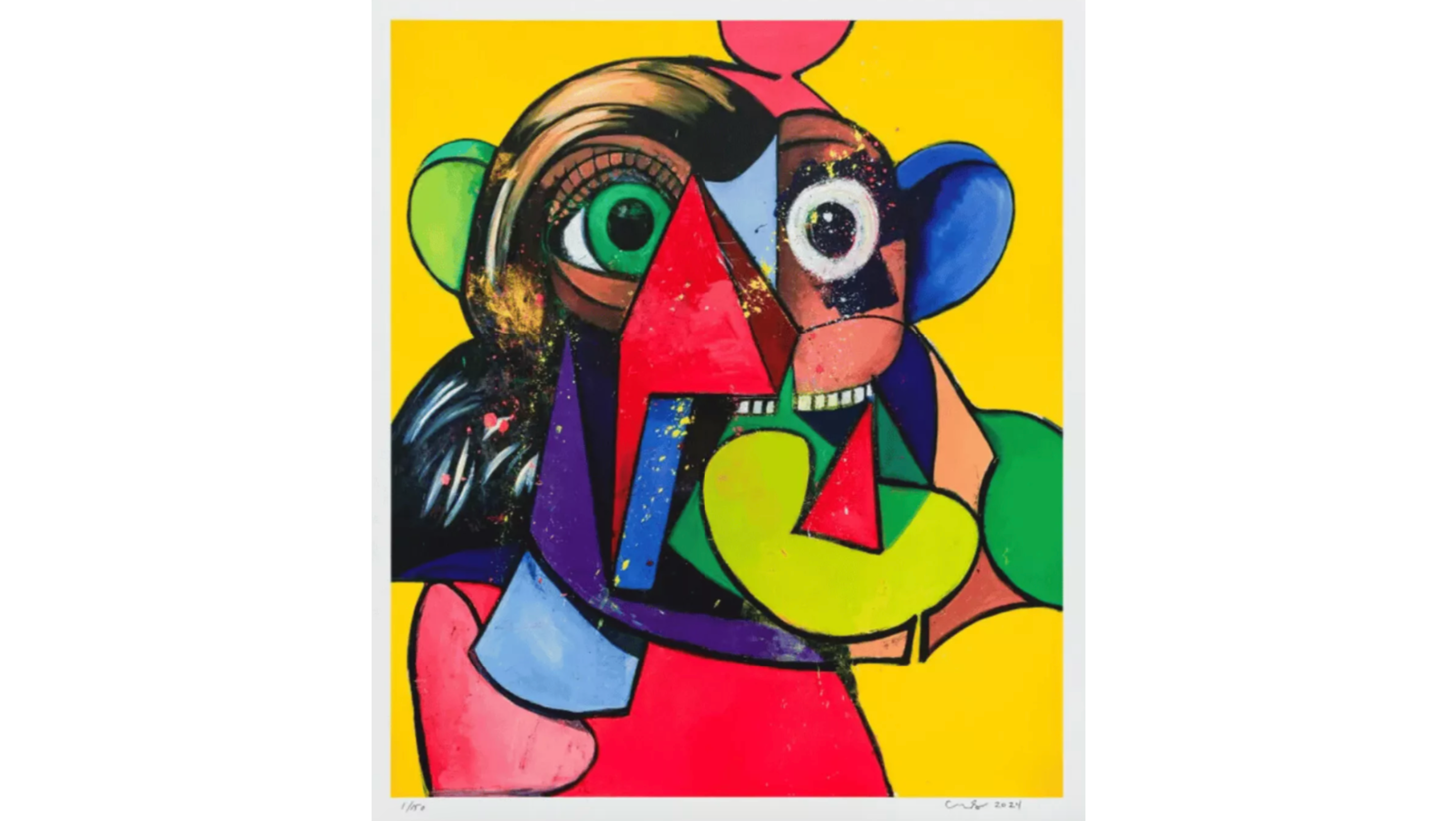
George Condo, Portrait and Head, 2024. Image: © George Condo
Sell with Artscapy
- Start with a 60-second estimate. You get an instant price range, backed by auction data refreshed every 24h.
- Pick your path. Choose Fast Sale for speed, or Maximise Returns for an advisor-led strategy.
- Use the route that matches the work. Fast Sale can produce a non-binding offer in 1–3 working days, where eligible. Maximise Returns lets you choose private placement, targeted auction, or a hybrid approach based on what your George Condo actually is.
- Close cleanly. We work with 0% seller commission, transparent costs and escrow protection. Payout follows within 7 days of collection, and Fast Sale payout is initiated the same day once the work is in our care.
If the valuation looks right, request purchase offers within 48 hours with 0% seller fee, where eligible.
Sources and references
[1] Public auction results table supplied by user, George Condo public auction records reviewed for this analysis, February 2018 to March 2026. Accessed 16 March 2026.
[2] “George Condo”, Musée d’Art Moderne de Paris, exhibition page, 2025. Accessed 16 March 2026.
[3] Maxwell Rabb, “George Condo is now represented by Sprüth Magers and Skarstedt Gallery”, Artsy, 10 November 2025. Accessed 16 March 2026.
[4] Arun Kakar, “What Sold at Art Basel Paris 2025”, Artsy, 27 October 2025. Accessed 16 March 2026.
[5] Casey Lesser, “What Sold at Art Basel 2025”, Artsy, 23 June 2025. Accessed 16 March 2026.
[6] “Prescription for the Clinically Normal”, Christie’s lot page, sale 26 September 2024. Accessed 16 March 2026.
[7] “Inaugural Evening Sales at The Henderson”, Christie’s press release, September 2024. Accessed 16 March 2026.
[8] “Escaping from the dark”, Christie’s lot page, 2023. Accessed 16 March 2026.
[9] “Rodrigo at his Wedding”, Christie’s lot page, 2022. Accessed 16 March 2026.
[10] “Smiling Girl Profile”, Sotheby’s lot page, 2018. Accessed 16 March 2026.
[11] “The Phillips Presents George Condo: The Way I Think”, The Phillips Collection, 24 January 2017. Accessed 16 March 2026.
[12] “George Condo: Mental States”, New Museum Digital Archive, 2011. Accessed 16 March 2026.
[13] “George Condo”, Skarstedt, artist page. Accessed 16 March 2026.
[14] “The Global Market — The Art Basel & UBS Art Market Report 2025”, Art Basel / Arts Economics, 2025. Accessed 16 March 2026.
[15] “George Condo: Pastels”, Sprüth Magers, exhibition page, 2025. Accessed 16 March 2026.
[16] Arun Kakar, “What Sold at Frieze Seoul 2025”, Artsy, 8 September 2025. Accessed 16 March 2026.
[17] Casey Lesser, “$5.5 million Gerhard Richter painting leads Art Basel Miami Beach opening sales”, Artsy, 5 December 2025. Accessed 16 March 2026.