
KAWS market analysis. Is now a good moment to sell? (March 2026)
Last updated: 16 March 2026. Reading time: 11 minutes.
KAWS is a market built on recognition and sorted by selectivity. The characters are instantly legible like COMPANION, CHUM, BFF, and FAMILY, and museums and galleries continue to present them as emotionally loaded, cross-medium works rather than mere collectibles [2][3][4][7]. That gives you validation. It does not give you one blended KAWS price. Buyers separate major canvases, legacy print suites, bronzes, vinyl editions and everything in between with surprising discipline. Route matters more than heat.
Data note: The figures below reflect public auction results for KAWS between January 2018 and February 2026. They are useful because they show where liquidity actually printed in public. They are incomplete by definition because private sale, off-market negotiation and unpublished offers do not appear in auction results, and the picture will shift as new works come to market.
→ Start with a valuation. Click here and get a price range in about 60 seconds.
In this article
- The KAWS sale that still explains the ceiling
- How this market actually works
- Why private sale is often the cleaner route
- Sell now vs wait
- Get your KAWS price range
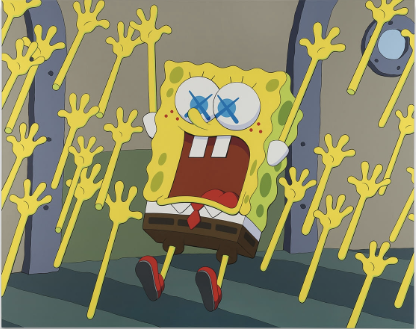
KAWS, THE WALK HOME, 2012. Image: © KAWS
The KAWS sale that still explains the ceiling
The sale in this data that still explains the KAWS hierarchy is THE WALK HOME. Phillips New York sold the 2012 acrylic on canvas for about $5.96 million on 16 May 2019. That mattered because it did more than set a high-water mark inside this auction tape. It fixed a public benchmark for what a large, fully resolved KAWS painting can look like when it reaches the right room with the right level of competitive attention.
The wider lesson is more useful than the headline. The five highest prices in this auction record all printed in a tight period between late 2018 and spring 2019, and they are all paintings. That is why owners of serious KAWS canvases think first about validation, while owners of editions think first about liquidity. The brand is broad. The ceiling is narrow.
How this market actually works
KAWS is not one market. It is a hierarchy disguised as a mass-recognition brand. Institutions and galleries consistently frame the practice as one that moves between painting, sculpture, product design and public installation [2][3][4][7][8][9]. The auction record shows what that means in cash terms: paintings are only about one in seven completed lots here, yet they account for well over 70% of results above $500,000. The liquidity lives across the whole brand. The ceiling lives in a much smaller painting-led tier.
If you own a painting, the first decision lever is not simply date or title. It is tier. Across 2024 and 2025, large KAWS paintings sold at a median of roughly $309,000, while small paintings sat nearer $57,000. That gap is too wide to explain away as noise. Inference: buyers are paying for scale, resolved composition and scarcity, not merely for the name on the label. A major canvas should be routed like a scarcity asset. A smaller one needs tighter expectations and better comparables.
The print market behaves differently. It is not weak, but it is highly selective. Routine KAWS prints trade in a completely different band from the legacy suites that serious buyers already recognise. In this data, NO REPLY sits near six figures at the median, while SHARE sits in the low four figures. That is not a minor spread. It is the difference between a print buyers chase and a print buyers compare. Inference: if your work is from a legacy suite, placement matters more than volume.
The clearest sentiment barometer is the vinyl and open-edition tier built around COMPANION, CHUM, BFF and HOLIDAY. That is not arbitrary. Those characters remain central to the way KAWS is institutionally presented, from Companionship in the Age of Loneliness at the NGV to FAMILY at the AGO and SFMOMA, and on into the 2025 THERAPY exhibition in Berlin [2][3][7][9]. In the auction tape, the vinyl-edition median has compressed from the low-$3,000s in 2020 to the low-$1,000s in 2025. This is not a vanished market. It is a disciplined one. Inference: if you are selling an open edition, buyers are still there, but they are anchoring lower and comparing harder.
The top end is also geographically disciplined. Above the half-million-dollar line, almost every public result in this record printed in New York, Hong Kong or London, and most of those results were paintings. That means the KAWS ceiling is not dispersed. It is routed. Inference: if your work belongs in that tier, the wrong public venue can make a rare work look ordinary.
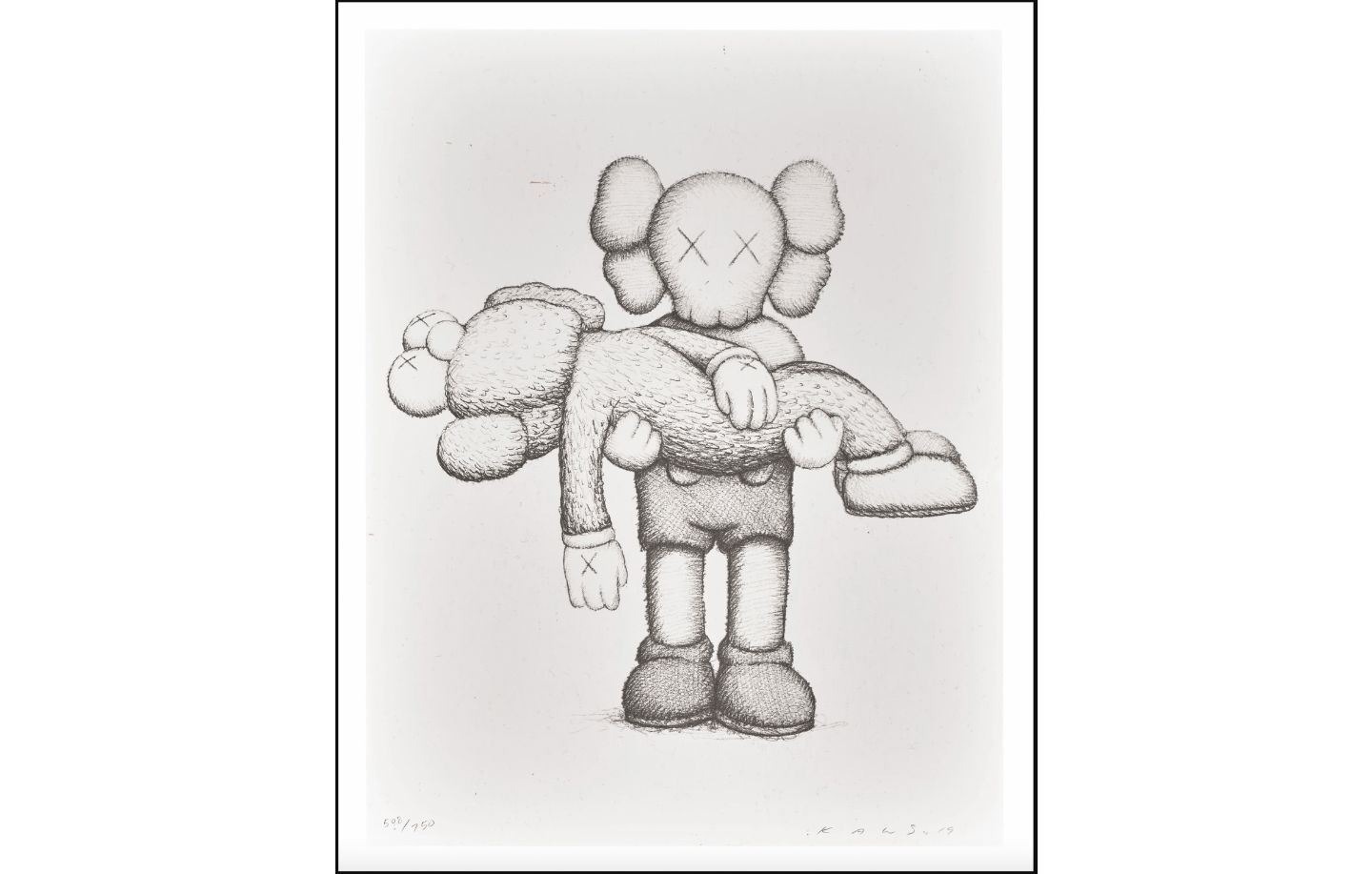
KAWS, Companionship in the Age of Loneliness, 2019. Image: © KAWS
Why private sale is often the cleaner route
Private sale is not the consolation route in KAWS. Often, it is the more rational one. Art Basel and UBS found that in 2024 public auction sales fell 25% while private sales through auction houses rose 14%, with transaction growth driven by lower-priced works rather than the top end [10][11]. Their 2026 market report then described the 2025 recovery as real but uneven [12]. That is close to what the KAWS tape already shows: accessible material still moves, but the upper tiers remain thin, benchmark-sensitive and easy to misread.
That matters because KAWS compresses many buyer populations into one name. A vinyl edition, a named screenprint, a package painting and a museum-scale canvas do not need the same audience, the same estimate logic or the same public theatre. Private placement lets you separate those lanes. It can protect the price discussion for a strong work, while avoiding the reputational drag of a public pass in a market that remembers soft auction signals.
Paperwork is also more artist-specific here than many sellers realise. KAWSONE states that official KAWS prints are signed, numbered and dated, and that they do not come with certificates of authenticity [1]. So if you are selling a print, the absence of a print COA is not, by itself, a defect. Do not apologise for it, and do not invent it. For figures and sculptural editions, the original release invoice, retailer confirmation, and a clean chain of provenance would confirm what accompanied your exact release.
Private placement also fits the current cultural context around KAWS. The artist is not trading on stale memory. There were major programmes at the Parrish in 2024, The Warhol in 2024–25, The Drawing Center in early 2025 and SFMOMA in 2025–26, while Skarstedt and Galerie Max Hetzler both staged fresh bodies of work in 2024 and 2025 [3][4][5][6][7][8][9]. Inference: if you own a strong canvas, bronze or legacy print suite, private sale gives you the chance to test live appetite without spending your work’s public benchmark too early.
Sell now vs wait
Sell now if your work is already legible to the market
Sell now if your KAWS work already belongs to the part of the tape buyers can read quickly. That usually means a large painting, a recognisable bronze, or a named print suite with established demand rather than generic brand demand. The tier structure is still clear, the vinyl barometer still trades even after price compression, and the institutional calendar around KAWS has remained active across 2024 to 2026 [3][4][5][6][7][8][9]. Inference: if your priority is conversion rather than maximum optionality, this is a sensible moment to pursue a controlled sale.
This is especially true if your work sits in a tier where public demand has already proved itself. A large KAWS canvas does not need the market to love everything. It needs the right buyers to compete for the right thing. The same applies, in a narrower way, to legacy print suites. A work that already has a recognisable place in the hierarchy can be sold from a position of reason rather than hope.
Wait if your work sits in the most substitutable part of the hierarchy
Wait if your work is in the middle zone where KAWS is most easily substituted, or if the file is not clean enough yet. In 2025, painting sell-through softened into the low-70s and print sell-through to roughly two-thirds, while the vinyl barometer continued to cheapen. That combination is workable for a clearly scarce work. It is less forgiving for a smaller canvas, a routine print, or an open edition with incomplete provenance.
Inference: waiting makes sense here only when the extra time changes something real — your paperwork, your channel, your buyer list or your comparables. Waiting without improving route is just delay. Waiting with better placement logic can be rational.
The calm conclusion is that this is not a blanket sell-now market and not a blanket wait market. KAWS rewards accurate self-placement. The real question is not whether KAWS is famous enough. It is whether your particular KAWS work is already speaking the language the current buyer wants to hear.
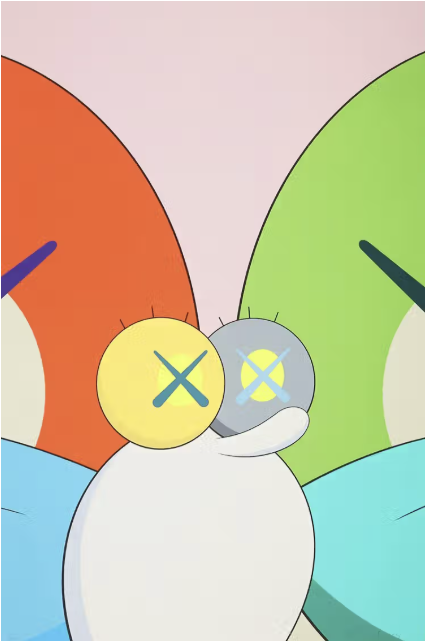
KAWS, No Reply 8, 2015. Image: © KAWS
Get your KAWS price range
Start with a 60-second estimate. Instant price range, backed by auction data refreshed every 24h.
Pick your path. Fast Sale for speed, or Maximise Returns for an advisor-led strategy.
Choose the route that matches the work. Fast Sale can return a non-binding offer in 1–3 working days, where eligible. Maximise Returns can route your KAWS to private placement, targeted auction or a hybrid strategy based on what the work actually is.
Close cleanly. 0% seller commission, transparent costs, escrow-protected. Payout within 7 days of collection. Fast Sale payout is initiated the same day once the work is in our care.
Sources and references
[1] “FAQs,” KAWS Prints / KAWSONE, undated, accessed 16 March 2026.
[2] “KAWS: Companionship in the Age of Loneliness,” National Gallery of Victoria, exhibition page, 2019, accessed 16 March 2026.
[3] “KAWS: FAMILY,” Art Gallery of Ontario, exhibition page, 27 September 2023, accessed 16 March 2026.
[4] “KAWS: TIME OFF,” Parrish Art Museum, exhibition page, 2024, accessed 16 March 2026.
[5] “KAWS + Warhol,” The Andy Warhol Museum, exhibition page, 2024, accessed 16 March 2026.
[6] “The Way I See It: Selections from the KAWS Collection,” The Drawing Center, exhibition page, 19 January 2025, accessed 16 March 2026.
[7] “KAWS: FAMILY,” San Francisco Museum of Modern Art, exhibition page, 2025, accessed 16 March 2026.
[8] “KAWS: DAY BY DAY,” press release, Skarstedt, 8 November–21 December 2024, accessed 16 March 2026.
[9] “KAWS: THERAPY,” press release, Galerie Max Hetzler, 13 June–9 August 2025, accessed 16 March 2026.
[10] “The Art Basel & UBS Art Market Report 2025: Auction Houses,” Art Basel / Arts Economics, 2025, accessed 16 March 2026.
[11] “Seven critical trends that reshaped the global art market in 2024,” Art Basel, 8 April 2025, accessed 16 March 2026.