
Claire Tabouret market analysis. Is now a good moment to sell? (February 2026)
Last updated: 8 February 2026
Claire Tabouret’s market is having a very public cultural moment — Grand Palais visibility, museum programming, and the Notre‑Dame stained‑glass commission in the background. But the auction market doesn’t reward “attention” evenly: it rewards a specific kind of Tabouret, and it can be quietly unforgiving to everything else.
Verdict: If your Claire Tabouret is a prime, recognisable painting (or an exceptional, painting-like work on paper), this is a rational moment to explore selling — but only with controlled positioning.
Start with a valuation
For a Claire Tabouret work, the first move is not “auction or private sale”. It’s getting a realistic band for your category — Débutantes versus Masques, unique canvas versus edition, major house versus editions sale.
→ Claire Tabouret pricing is context-sensitive, so we start with valuation: Get a price range in about 60 seconds.
Once you’ve got a range, we’ll route you based on what you own — a Perrotin‑era canvas, an Almine Rech work on fabric, a monotype, or a print edition — and how the current buyer pool is behaving. [3] [4]
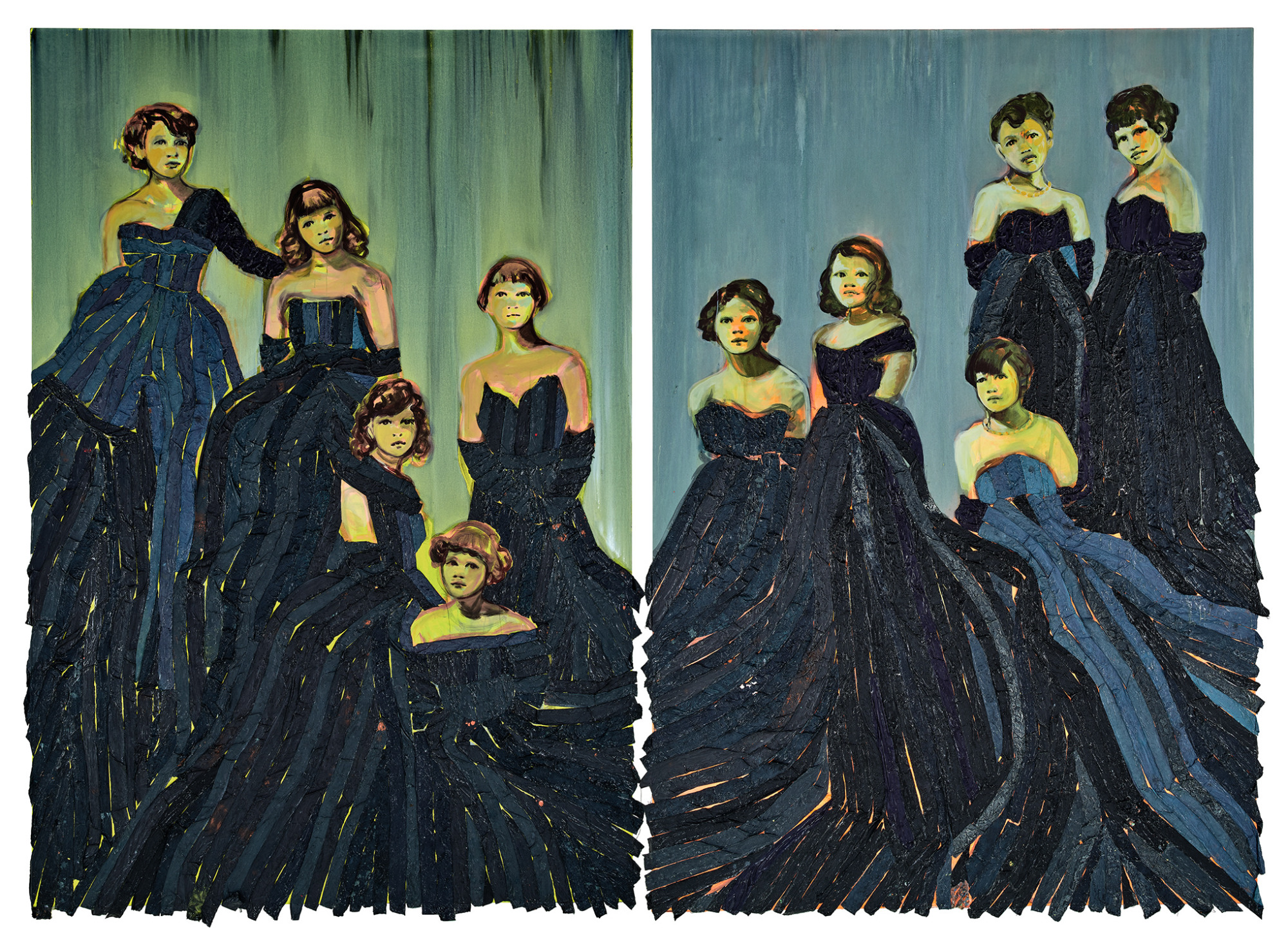
Claire Tabouret, Les Débutantes (Dark Water),2016. Image: © Phillips
The market isn’t “hot” or “cold”. It’s selective.
Here’s the clean mental model for Claire Tabouret at resale: there isn’t one market — there are three, and they don’t talk to each other very much.
- Trophy paintings: the recognisable, career‑central canvases that buyers treat as “the real Tabouret”. Think Les débutantes and the strongest figurative paintings with that unmistakable gaze. These are the works that can create bidding energy at Christie’s, Phillips, and Sotheby’s.
- “Painting‑like” works on paper: the rarer paper works that feel resolved, singular, and emotionally dense — and can behave like a proxy for a painting when they’re exceptional.
- Editions and multiples: prints, digital pigment editions, and repeatable images. These can sell, but the buyer behaviour is usually transactional rather than competitive.
That split is why sellers get whiplash: a headline price suggests a booming market, while a perfectly decent print or off‑series canvas may struggle to attract urgency.
What buyers actually pay for in Tabouret
Buyers reward recognisability plus seriousness — not just “a portrait”, but her kind of portrait, where the gaze holds, the palette carries its own weather, and the composition reads as part of the artist’s long-term story. Perrotin’s own overview of Tabouret emphasises her colour-field approach, her focus on bodies and assemblies of people, and her use of monotypes alongside painting — all cues that shape what collectors consider “core” versus “adjacent”. [3]
At auction, the purest proof is the record: Les débutantes (bleu azur) reached US$870,000 at Christie’s.
That number isn’t just bragging rights; it tells you the buyer pool exists for the right, canonical Tabouret — and that it behaves like a trophy market when the work hits the nerve.
What’s uncomfortable (but useful) is that this doesn’t automatically lift other parts of the market. It creates a premium for works that feel like they belong in the same conversation as Les débutantes, and it leaves everything else to fight for oxygen.
The “Débutantes premium” is real — and it changes how you should sell
If you own a Claire Tabouret painting from the Débutantes constellation, you are not selling into a generic “contemporary painting” slot. You’re selling into a very specific collector narrative: theatrical group dynamics, staged identity, and that uneasy beauty Tabouret makes look effortless. Almine Rech explicitly frames the Débutantes ensemble as a key example of her large-scale practice and its theatrical intensity. [4]
That matters because the buyer pool for Débutantes-level works tends to include collectors who already understand what they’re chasing. They’re not looking for a discount “Tabouret-like” picture; they’re looking for the thing itself.
Seller implication: if your work is in that zone, the job isn’t simply “choose a sale”. The job is choosing the right audience and protecting the work from being misframed (wrong auction context, wrong estimate posture, wrong seasonality, wrong comparables).
Where liquidity disappears: when the work is “adjacent Tabouret”
The market’s sharpest penalty isn’t a low price; it’s silence — the work that “should sell” but doesn’t, or sells with no competitive pressure.
In the auction table, Masques is the cleanest warning label. A major Masques canvas was offered at a top venue and passed — a rare event in the painting category, and a sign that even scale and a blue-chip platform can’t rescue a work if buyers don’t see it as central.
Seller implication: if your Claire Tabouret is a Masques painting, or another motif that sits outside the Débutantes gravitational pull, you should assume the market will be price-disciplined — and you should avoid strategies that rely on bidding momentum magically appearing.
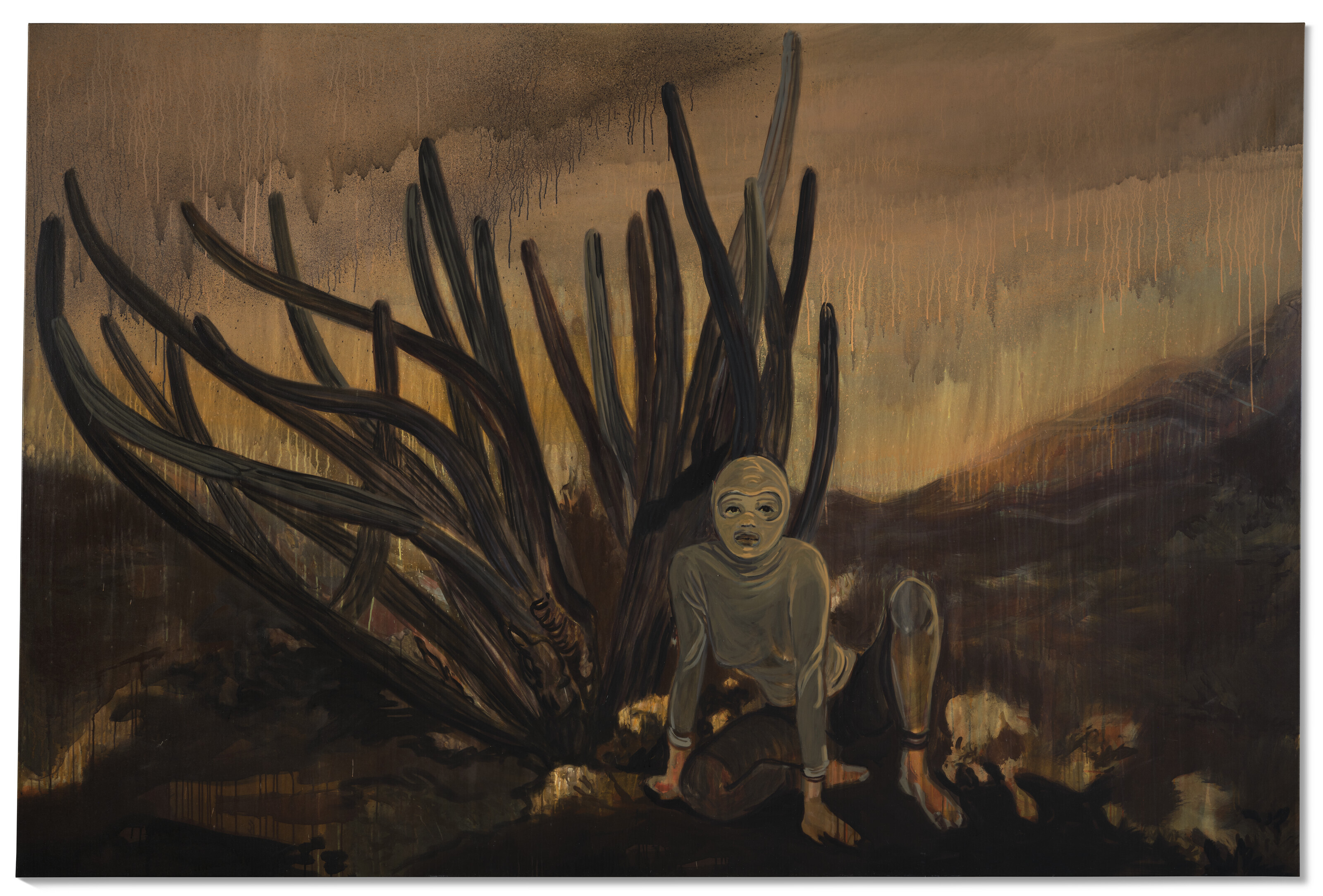
Claire Tabouret, Les masques (La vallée) (The Masks (The Valley)) 2015. Image: © Christie's
A recent signal that genuinely matters: 2025 did not behave like 2021
Tabouret’s market had a peak-heat moment earlier in the decade, and sellers still anchor to it. The more useful question is what the market is doing now with what’s actually being offered.
In 2025, the highest painting price in the table was US$46,994, achieved by Les Masques (De Profil) at Phillips — and it sold below its estimate.
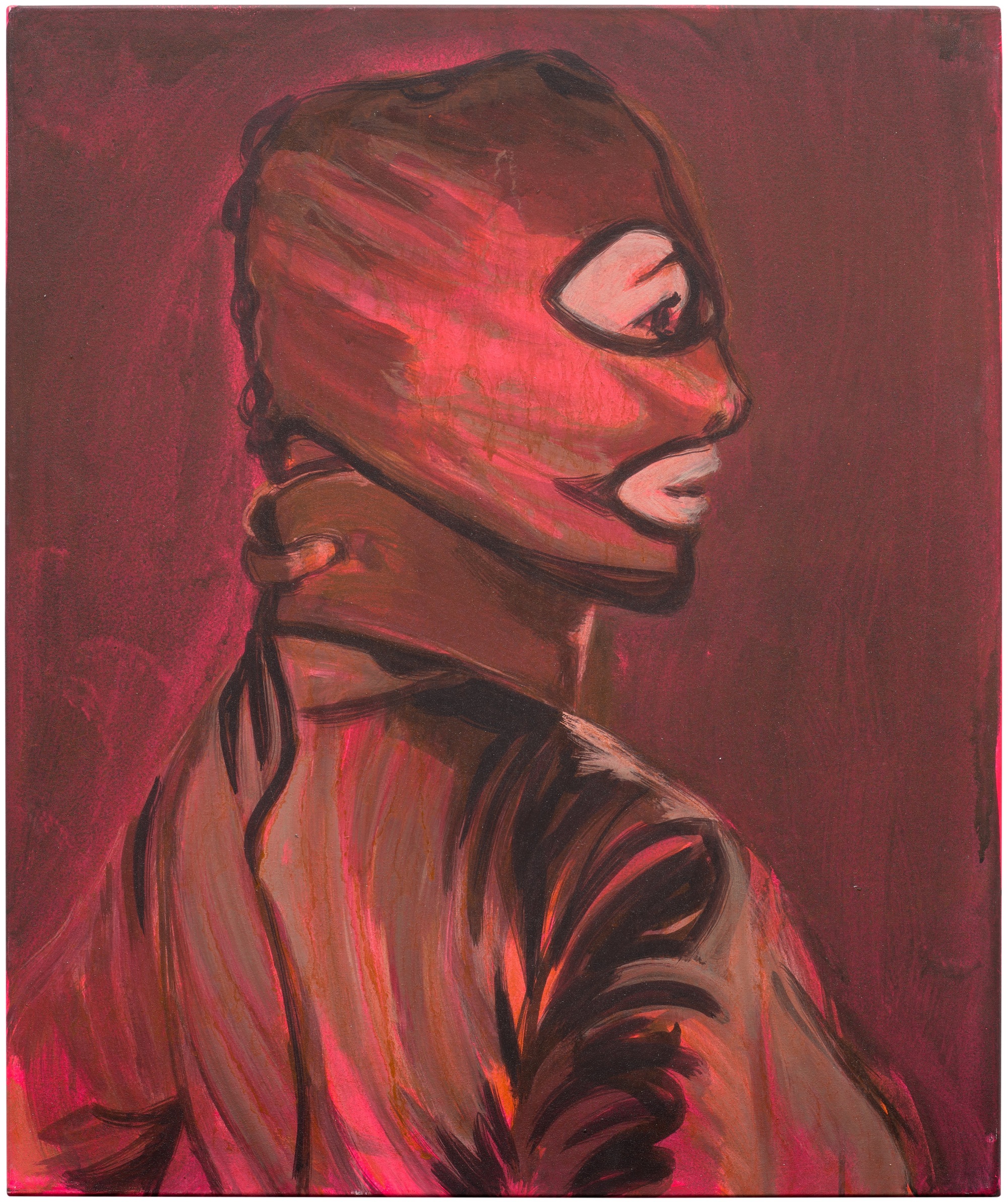
Claire Tabouret, Les Masques (De Profil), 2015. Image: © Phillips
That doesn’t mean “Tabouret is down”. It means buyers are not paying peak-era money for paintings that don’t read as trophy works, especially when a catalogue frames them with ambitious expectations.
Seller implication: if you’re selling a non‑trophy Tabouret painting, you need to be ruthlessly honest about where it sits — and you need a plan that doesn’t depend on the room doing you a favour.
Works on paper: the market’s shortcut — if it’s the right paper
Tabouret’s practice is materially broad (paint, fabric, monotypes, and more), and institutions are comfortable presenting that breadth. Voorlinden, for example, explicitly positions her as a figurative painter who works across multiple media. [2]
At auction, the work-on-paper category is usually a middle band — but it has a crucial twist: the best paper works can behave like paintings.
The clearest recent proof is that Born in Mirrors 8 (ink on paper) made US$300,000 at Christie’s.
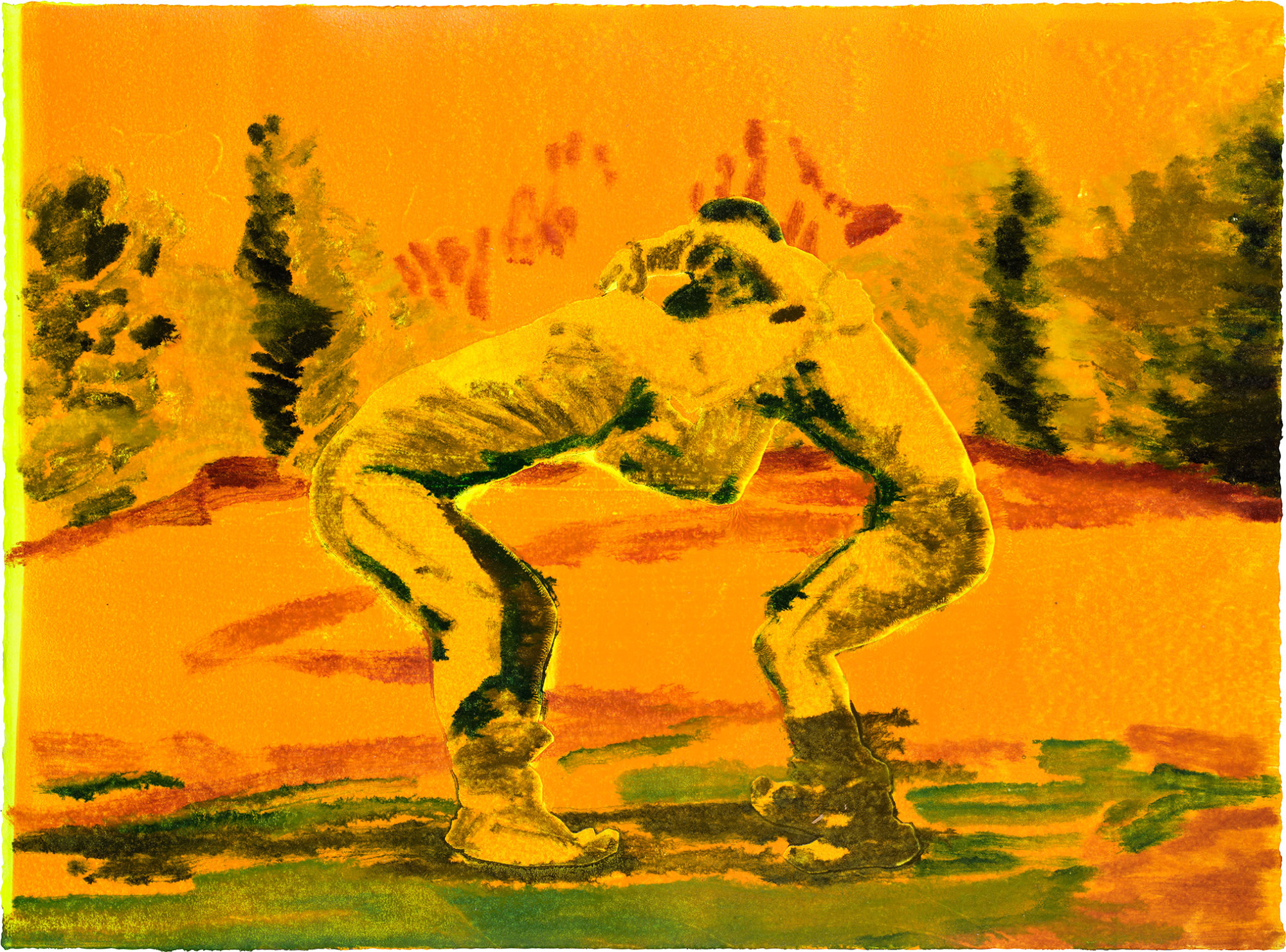
Claire Tabouret, Born in Mirrors 8, 2018. Image: © Phillips
This is the market telling you that collectors will pay aggressively for a paper work when it carries the same psychological pressure and “finished” authority they expect from a canvas.
Seller implication: if your work on paper is from a recognised body of work and looks “complete” rather than preparatory, you may have more liquidity than you think — but only if you avoid selling it like a minor.
Prints and multiples: liquidity exists, but it’s not where value concentrates
Tabouret has a visible edition ecosystem (digital prints, screenprints, lithographs, monotypes), and it produces consistent transaction volume. That can create the illusion that prints are a “safe” resale category.
The price reality is blunt. The top print result in the table is US$23,087 (a monotype), and most edition activity sits far below the levels of unique paintings.
That doesn’t mean your print is worthless; it means the buyer motivation is typically access rather than investment-grade conviction.
Seller implication: if you’re holding a Tabouret print, your best outcome often comes from low-friction execution and correct buyer targeting — not from “waiting for the market” to re-rate editions.
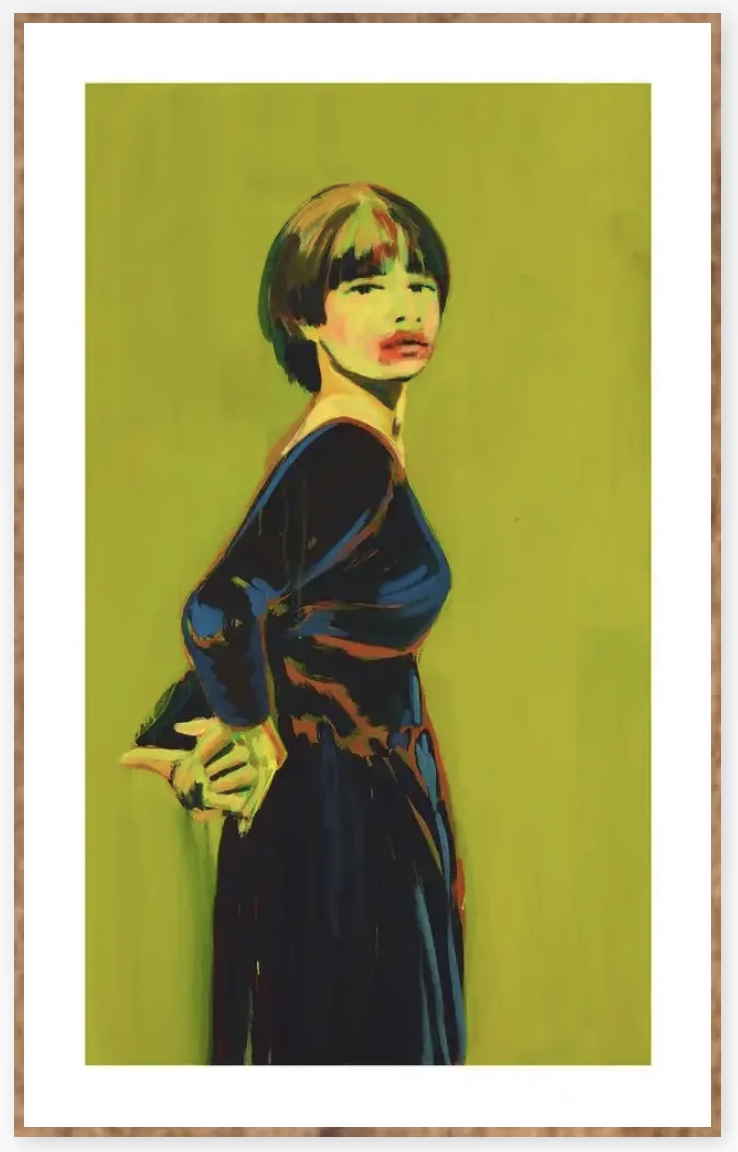
Claire Tabouret, The Spell, 2022. Image: © Almine Rech Editions
Institutional programming: why it matters, and what it will not do for you
A lot of sellers will read “Grand Palais + Notre‑Dame” and assume the resale market automatically lifts. The smarter read is more nuanced.
- Grand Palais is currently presenting D’un seul souffle as a window into Tabouret’s stained-glass project for Notre‑Dame, which is precisely the kind of public-facing institutional context that changes an artist’s perceived cultural footprint. [1]
- Voorlinden is presenting Weaving Waters, Weaving Gestures as a major museum-wide retrospective, explicitly framing breadth and seriousness. [2]
- Musée des beaux-arts de Rennes positioned its Tabouret exhibition around portraiture and social identity — in other words, the themes collectors already associate with her strongest market works. [8]
- ICA Miami has not only presented her work but also acquired a painting into the museum collection, which is the kind of institutional validation that matters over time. [6] [7]
Inference: This density of institutional attention tends to strengthen demand for works that look like “career anchors” — which, in Tabouret’s case, aligns with the Débutantes-type paintings and the most resolved figurative works.
It does not automatically lift edition prices or make off‑series paintings suddenly liquid, because the collector psychology there is different.
Seller implication: use the institutional moment as a tailwind only if your work matches what institutions and top collectors point to as essential.
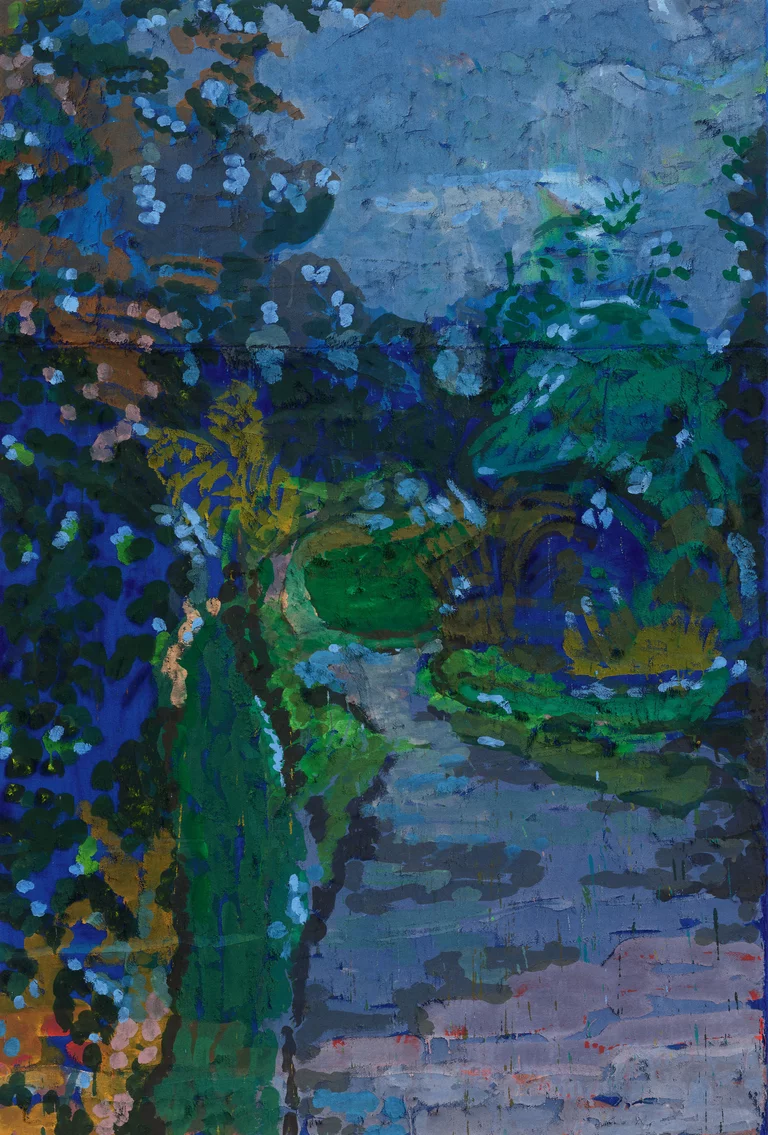
Claire Tabouret, Au Bois d'Amour, 2023. Image: © Almine Rech
Auction vs private sale: for Tabouret, discretion can be structurally rational
Because Claire Tabouret is a “spotlight market”, the biggest risk for a seller is not a modest price — it’s a public non-sale that becomes part of the work’s story.
Auctions are great when:
- the work is trophy-calibre (e.g., Les débutantes territory),
- the estimate is defensible,
- and the venue reliably reaches the right global buyer set.
Auctions can be unnecessarily risky when:
- the work is a Masques painting or another motif that buyers have treated selectively,
- the work is a high-value paper piece where one wrong estimate posture can kill bidding,
- or the work sits in that “adjacent Tabouret” zone where the market’s default is indifference.
Private sale can be structurally rational in Tabouret’s market because it lets you:
- target the collector segment that already buys Perrotin/Almine Rech Tabouret,
- control comparables and context,
- and avoid the reputational damage of a pass.
Seller implication: if your Tabouret is strong but not obviously trophy-level, private placement is often the calmer, more rational route — especially in a market where buyers punish overconfidence.
Acting now vs waiting: the honest decision logic
For Claire Tabouret, “wait” and “sell” are both defensible — depending on what you own.
Acting now can be rational if…
Your work aligns with the current institutional narrative (portraiture, identity, group dynamics) and the auction record shows buyers pay for that kind of Tabouret when it’s prime. That’s especially true if your work is a signature painting, or a high-authority work on paper like Born in Mirrors.
Also, if you’re selling into a market moment where Tabouret is publicly visible through Grand Palais and museum programming, you’re not explaining who she is. You’re letting buyers focus on the work. [1] [2]
Waiting can be rational if…
Your work is editioned, peripheral, or likely to be benchmarked against the wrong comparables. Prints and multiples don’t usually re-rate quickly on the back of institutional headlines, and “adjacent” paintings can be punished when they meet ambitious estimates.
Waiting is also rational if you can’t yet present the work properly — weak documentation, unclear provenance, or unresolved condition questions will cost you more than time.
Seller implication: the decision isn’t about “the artist’s market” in the abstract. It’s about whether your Tabouret sits in the spotlight, or just outside it.
The documentation question most sellers underestimate
Claire Tabouret’s market includes everything from trophy paintings to widely circulated editions. That makes documentation feel boring — until you try to sell.
For Perrotin and Almine Rech works, buyers tend to care about provenance clarity and whether the work’s story matches what institutions and top collectors recognise as central. [3] [4]
Data needed. We need confirmation of whether Claire Tabouret’s studio, Perrotin, or Almine Rech provides formal authentication guidance for secondary-market transactions, and what documentation they require to support it.
Selling with Artscapy: valuation first, then the right route
If you’re considering selling Claire Tabouret, we’ll help you do it the calm way — starting with where your work sits in the real market, not where you’d like it to sit.
Start with a valuation so you can see your work in context alongside comparable Tabouret results and the current buyer behaviour: Get a price range in about 60 seconds.
Then, if the valuation range matches your expectations, we can route you to the right path — auction strategy for trophy paintings, or private placement for selective categories — and, when applicable, request purchase offers within 48 hours with no seller fee.
References
[1] Grand Palais — “Eva Jospin, Grottesco · Claire Tabouret, D’un seul souffle” (programme page, exhibition context and Notre‑Dame stained-glass project).
[2] Museum Voorlinden — “Claire Tabouret: Weaving Waters, Weaving Gestures” (museum-wide retrospective framing and Notre‑Dame project mention).
[3] Perrotin — “Claire Tabouret” (artist biography, practice description, and programme history).
[4] Almine Rech — “Claire Tabouret: Artist Overview” (practice framing and Débutantes positioning).
[5] Le Monde — “From Monet's Water Lilies to Notre-Dame's stained-glass windows, Claire Tabouret's sacred journey” (Notre‑Dame commission context and early collector support narrative).
[6] Institute of Contemporary Art, Miami — “Claire Tabouret: Au Bois d’Amour” (institutional exhibition description).
[7] Almine Rech — “Recent Museum Acquisition” (ICA Miami collection acquisition notice).
[8] Musée des beaux-arts de Rennes — “Claire Tabouret. Entre la mémoire et l’oubli” (museum framing around portraiture and first major French museum presentation claim).