

Roy Lichtenstein market analysis. Is now a good moment to sell? (March 2026)
Last updated: 16 March 2026.
Selling a Roy Lichtenstein is rarely a simple question of whether the name is liquid. The public tape validates the artist, but it also exposes a hard truth: a Reflections print, a Nudes study, and an Entablature sheet do not belong to the same market, do not attract the same buyers, and should not be routed the same way.[1] This is a good moment to sell the right work.
Data note: the figures below reflect public auction results for Roy Lichtenstein from 25 January 2018 to 7 March 2026. Across roughly 2,100 public lots, sell-through excluding withdrawals was about 89%, and the picture may shift as new sales are recorded.[1]
→ Start with a valuation. Click here and get a price range in about 60 seconds.
In this article
- The sale that reset what strong Lichtenstein paper can do
- How the Roy Lichtenstein market actually works
- What buyers pay up for, and what they discount
- Why private sale makes structural sense here
- Sell now or wait?
- A simple route to a valuation
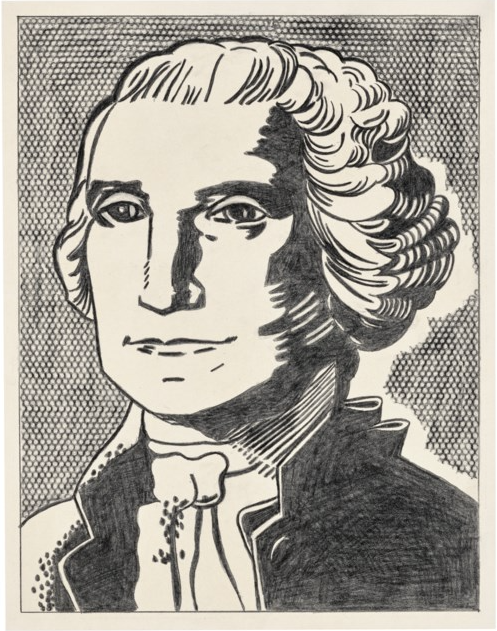 Roy Lichtenstein, George Washington, 1962. Image © Christie’s
The sale that reset what strong Lichtenstein paper can do
The clearest recent benchmark is not a painting. It is George Washington, a 1962 graphite-and-rubbing work on paper that sold in New York in November 2024 for about $7.07 million against a $7 million–$10 million estimate.[1] That mattered because it showed that exceptional early paper in Roy Lichtenstein can command painting-level attention without needing painting-level scale. The signal was not frenzy. It was seriousness.
That sale changed the conversation for owners of studies, drawings, and unique paper. Buyers were willing to treat the right sheet not as preparatory residue but as a primary object, provided the subject, date, and quality were exacting enough.[1] For sellers, that creates a rational reason to revisit routing if your work sits close to a named image, a major series, or an early Pop breakthrough.
At the top of the hierarchy, the ceiling is still far above that. Kiss III remains the highest price in this set at about $31.1 million.[1] The gap between Kiss III and George Washington is the point: this is not one smooth ladder, but several distinct Roy Lichtenstein markets stacked on top of each other.
How the Roy Lichtenstein market actually works
Liquidity sits in prints. About four in five sold lots in this period were prints and multiples, and that lane carried a median reported price of roughly $17,700.[1] That is where the market stays busy, where comparables build quickly, and where the difference between an iconic image and an ordinary sheet becomes commercially decisive.
The ceiling lives elsewhere. Unique works on paper carried a median around $177,800, while paintings sat around $1.27 million.[1] That tells you immediately where buyers reserve serious firepower: not for “a Lichtenstein” in the abstract, but for the right object type with the right art-historical weight.
Inference: this market pays for the second look. Buyers respond to recognisable Roy Lichtenstein imagery, but they pay materially more when the work also stages a more reflective version of his language: Reflections, Brushstrokes, Nudes, Interiors, and strong studies related to those bodies of work.[1][7][8][9]
The clearest barometer is the Reflections print family. These prints sold through at about 94% and carried a median around $140,000.[1] That is a different product from the broad print lane, and it signals that buyers will still stretch for late, technically ambitious Lichtenstein when the image has both recognition and formal complexity.
The recent shift in paper confirms the same logic. In the last 12 months of public sales, the median for unique works on paper moved to roughly $249,000 from about $63,500 in the prior year.[1] That does not mean every drawing is suddenly expensive. It means serious paper tied to major images or studio process is being repriced upward.
The print lane improved too, but more selectively. The last-12-month median for prints moved to about $26,600 from roughly $14,000 in the prior year.[1] Inference: the recovery was quality-led, not universal. Better series, better states, and better documented sheets pulled the market higher; routine material did not suddenly become rare.
Routing still matters enormously. Seventeen of the top twenty reported prices in this set were achieved in New York.[1] If you own a major painting, a notable study, or a top-tier print, the ceiling is still being written there, even when London and Hong Kong remain relevant for selected material.
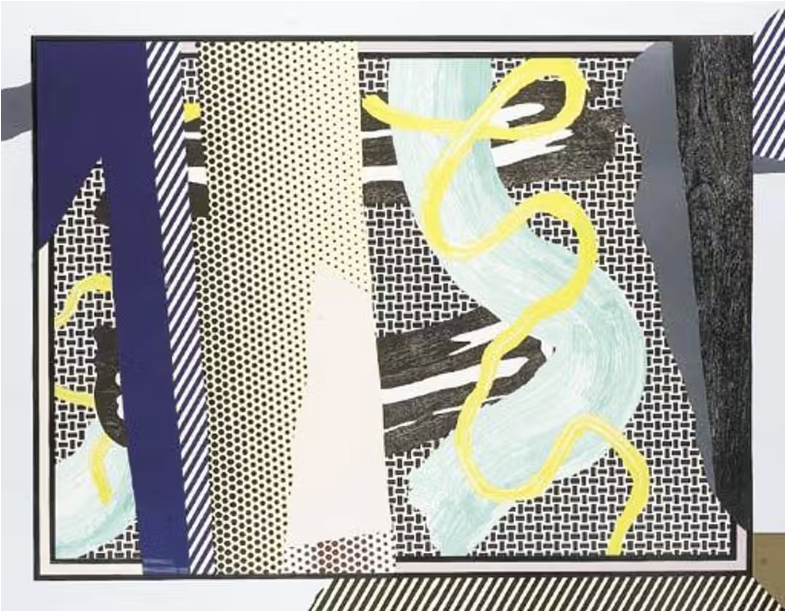 Roy Lichtenstein, Reflections On Brushstrokes, 1990. Image © Christie’s
What buyers pay up for, and what they discount
For Roy Lichtenstein, a certificate is not the universal shortcut some sellers hope for. The Roy Lichtenstein Foundation states that neither it nor the Estate authenticates artworks, and the Foundation also says that inclusion in the catalogue raisonné does not guarantee authenticity or provenance.[2][3][4] That shifts weight onto the things buyers can actually test: catalogue references, inscriptions, publisher details, edition information, provenance, and condition.
That matters especially for prints. The Foundation’s digital catalogue raisonné was launched in 2023 and continues to be updated; its provenance guidance says many entries now carry transactions through 2023, while the Corlett print catalogue remains the key reference point for editioned works.[2][3][5] If your sheet can be matched cleanly to the Corlett entry, the edition notation, and the verso marks, buyer friction drops. If it cannot, buyer confidence drops first.
The current institutional programme also tells you what still feels culturally alive in this market. The Whitney has a Roy Lichtenstein exhibition opening in 2026; Dallas and the Nasher are presenting a foundation gift of more than fifty works with a study day focused on studio practice and sculpture; and Gagosian’s March 2026 exhibition draws exclusively from the Lichtenstein family collection and centres the brushstroke as a formal and symbolic device.[6][7][8] This is why works tied to Brushstrokes, studio studies, prints with strong workshop pedigree, and serious paper still feel legible to sophisticated buyers rather than merely nostalgic.
That institutional attention does not flatten the hierarchy. Whitney’s focused exhibition on the Entablatures made clear how much texture, surface, relief, and reflectivity matter in that body of work.[9] But institutional seriousness and market ceiling are not identical. In practice, Entablatures, Mirrors, and other repeatable print motifs often remain more liquid than exalted unless the impression, state, or provenance lifts them above the pack.[1][9]
Why private sale makes structural sense here
Private sale is not a fallback in this artist’s market. It is often the rational channel. Roy Lichtenstein has a deep public print tape, a much narrower upper tier, and a buyer base that can be exacting about series, state, margin, colour, publisher, and condition.[1] In that structure, public auction is excellent when competition is likely to be visible. It is less helpful when the work is strong but comparison-sensitive, or when a failed public outing would become a future discount.
That is particularly true for high-value studies, unusual states, strong Reflections or Nudes prints, and works that sit awkwardly between categories. A strong study for an Interior or Reflections painting may deserve a discreet approach to a small pool of buyers already active in those pictures. A good but not spectacular Mirror or Bull print may benefit more from price discipline than from theatre. Control matters here.
The broader market is moving the same way. Art Basel notes that private sales now account for about 20% of auction-house revenue, up from 12% a decade ago, and frames the channel as offering sellers greater price control and protection against a public failure to sell.[10][11] Christie’s, meanwhile, described 2025 as a strong private-sales year, with major works changing hands privately across categories.[12] In a segmented Roy Lichtenstein market, that logic feels structurally inevitable rather than fashionable.
Sell now or wait?
Sell now if your work already sits in an upper lane
If your work belongs to a series buyers demonstrably chase, this is a workable selling window. That includes higher-order Reflections prints, strong Nudes impressions, major studies, early Pop paper, and paintings with clear series identity.[1] The public market has recently repriced strong paper upward, the Reflections barometer remains firm, and institutional attention around the Whitney, Dallas/Nasher, and Gagosian programmes keeps Roy Lichtenstein present in the minds of curators and advanced collectors.[1][6][7][8]
Inference: if your work already has the ingredients buyers recognise as upper-tier Roy Lichtenstein, waiting for a universally hotter market is less important than controlling presentation, documentation, and channel. The market is paying for quality now. The seller’s job is to prove quality precisely.
Wait, or prepare first, if your work sits in the broad print lane
If your work is in the volume lane rather than the barometer lane, patience can be productive. That usually means more repeatable print material such as Mirrors, Bulls, some Entablatures, or impressions where condition, margins, or paperwork are not yet persuasive.[1][9] The broad print market is liquid, but it is also comparison-heavy, and buyers use even small documentation gaps as price leverage.
This is the moment to reduce avoidable doubt. Reconcile the sheet to the catalogue reference. Clarify the edition and any state notation. Gather invoices, exhibition history, and a fresh condition report. Because the Foundation does not authenticate works, the market gives extra weight to provenance, inscriptions, and catalogue alignment.[2][3][4][5]
The calm conclusion is straightforward. You do not need to predict “the Roy Lichtenstein market” in the abstract. You need to identify which Roy Lichtenstein market your work actually belongs to, then route it with discipline.
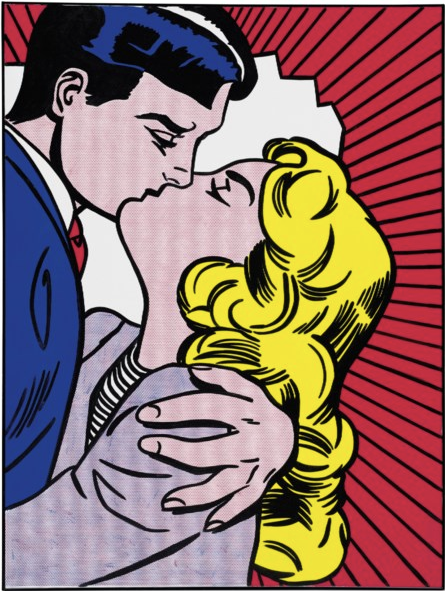
Roy Lichtenstein, Kiss III, 1962. Image © Christie’s
Sell your Roy Lichtenstein with control
- Start with a 60-second estimate. Instant price range, backed by auction data refreshed every 24h.
- Pick your path. Fast Sale for speed, or Maximise Returns for an advisor-led strategy.
- Choose the right route for the work. Fast Sale gets you a non-binding offer in 1–3 working days, where eligible. Maximise Returns lets you choose private placement, targeted auction, or a hybrid strategy based on what your work actually is.
- Close cleanly. 0% seller commission, transparent costs, escrow-protected. Payout within 7 days of collection (Fast Sale payout initiated same day once in our care).
Sources and references
[1] Public auction results for Roy Lichtenstein, various auction houses, sale dates 25 January 2018 to 7 March 2026. Accessed 16 March 2026.
[2] Guide to the Catalogue, Roy Lichtenstein Foundation, digital catalogue raisonné launched 2023, accessed 16 March 2026.
[3] Guide to the Catalogue: Provenance, Roy Lichtenstein Foundation, accessed 16 March 2026.
[4] Guide to the Catalogue: Inscriptions and catalogue terms on authentication and reliance, Roy Lichtenstein Foundation, accessed 16 March 2026.
[5] Corlett Catalogue Raisonné of the Prints of Roy Lichtenstein, Roy Lichtenstein Foundation, accessed 16 March 2026.
[6] Roy Lichtenstein, Whitney Museum of American Art, exhibition page, opens 2026. Accessed 16 March 2026.
[7] The Dallas Museum of Art and the Nasher Sculpture Center Collaboratively Debut Roy Lichtenstein in the Studio, a Landmark Gift from the Roy Lichtenstein Foundation, Nasher Sculpture Center, 12 November 2025. Accessed 16 March 2026.
[8] Roy Lichtenstein: Painting with Scattered Brushstrokes, Gagosian, exhibition page for 19 March–25 April 2026. Accessed 16 March 2026.
[9] Order and Ornament: Roy Lichtenstein’s Entablatures, Whitney Museum of American Art, 27 September 2019. Accessed 16 March 2026.
[10] The Art Basel and UBS Global Art Market Report 2026, Art Basel and UBS, 2026 summary page. Accessed 16 March 2026.
[11] Six art market trends to watch in 2026, Art Basel Stories, 6 January 2026. Accessed 16 March 2026.
[12] $6.2B Projected Global Sales in 2025 Sales up 26% in 2H as momentum builds, Christie’s, 17 December 2025. Accessed 16 March 2026.
