
Tracey Emin market analysis. Is now a good moment to sell? (March 2026)
Last updated: 16 March 2026. Reading time: 9–13 minutes.
If you own a Tracey Emin work, the dilemma is not whether the name is recognisable. It is whether your piece sits closer to A certain degree of anger or I promise to love you, where buyers pay for scale, handwriting, emotional charge and the right route, or closer to the poster-and-handkerchief lane, where recognition is abundant but pricing is strict. Emin’s market offers validation, but it also punishes category mistakes. For the right work, this is a workable moment.
Data note. The figures below reflect public auction results from January 2018 to 7 March 2026, spanning large acrylic-on-canvas paintings, handwritten neon works, posters, handkerchiefs and embroidered calico pieces. Emin also has active gallery and private-sale channels through White Cube, Xavier Hufkens, Christie’s and Sotheby’s, so public auction results are a barometer rather than the whole market.[5][6][10][11]
→ Start with a valuation. Click here and get a price range in about 60 seconds.
In this article
- The London week that clarified the market
- How the Tracey Emin market actually works
- Why private sale makes sense in this market
- Sell now or wait?
- Sell with Artscapy
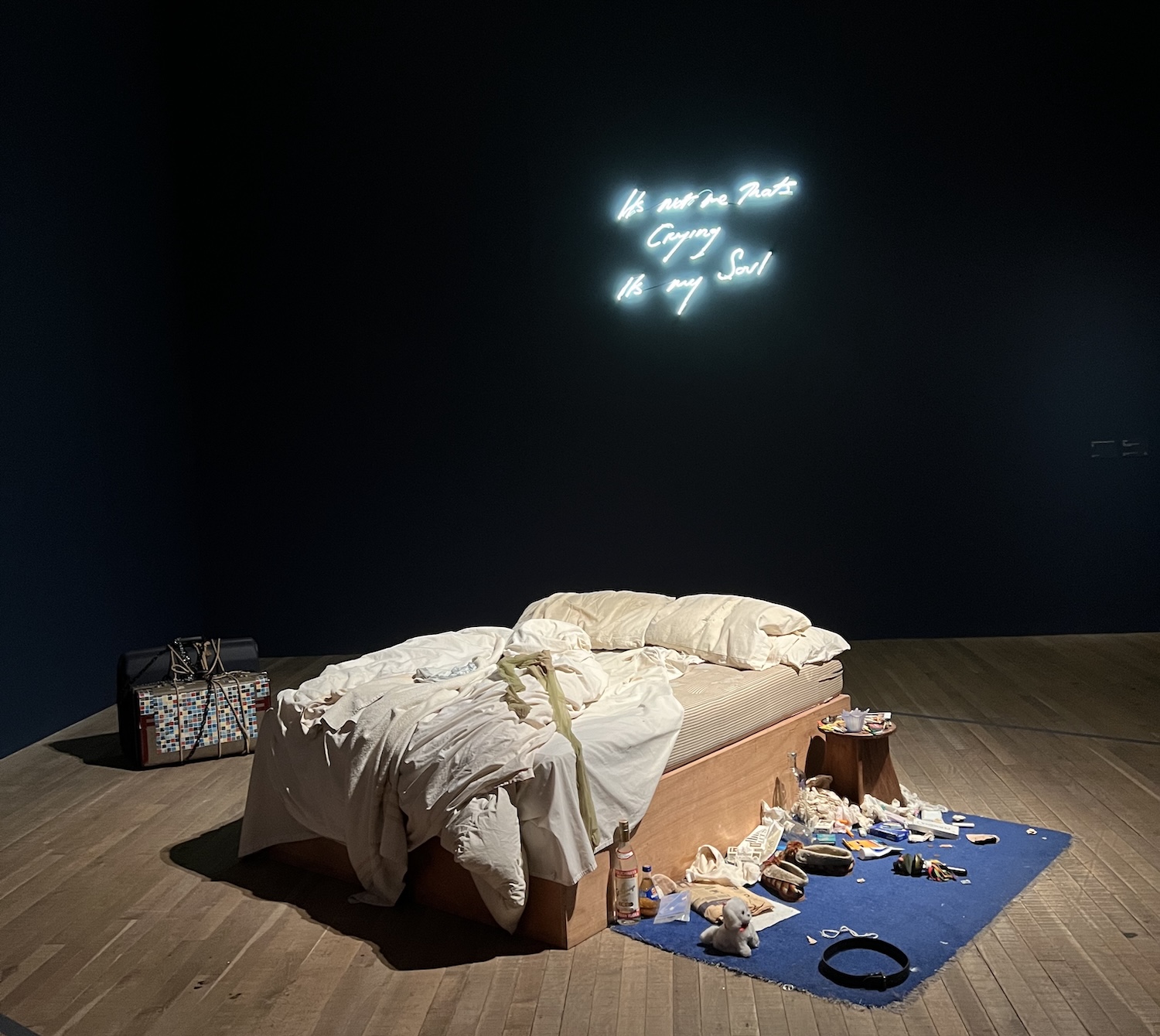
Photo taken during Artscapy’s private view of A Second Life at Tate. Photo: © Bethan Street
The London week that clarified the market
One London week in March 2026 told you almost everything you need to know. A certain degree of anger sold for about US$1.61m, An Insane desire For you made about US$1.03m, and Spending time with you reached about US$678k. That cluster matters because it showed buyers still competing for full-scale Emin paintings when the work is clearly in the mature acrylic-on-canvas lane.
This was not a broad market rising all at once. It was a selective market rewarding the right object. The context matters: Tate Modern’s A Second Life is on view in 2026, Palazzo Strozzi staged Sex and Solitude in 2025, and White Cube’s recent solo exhibitions in New York and Bermondsey centred new paintings, works on paper and sculpture.[1][2][3][4]
How the Tracey Emin market actually works
Inference: this market prices proximity to Emin’s hand and voice
This is not a thin market. Across 682 public results in this period, sell-through is about 86%. That tells you there is steady liquidity in Tracey Emin, but not equal forgiveness across formats.
The all-work median sits around US$4,100. That is not a benchmark for a serious canvas, a strong neon, or a major textile. It is evidence that Emin’s public market is really several markets at once, with posters, small multiples and hand-held textile works dragging the overall number down.
That split matches the way her practice is being framed publicly. Turner Contemporary’s long-running Margate neon I Never Stopped Loving You still presents the handwriting as a public signature, while Turner’s artist text says that in recent years Emin has focused on painting; White Cube’s recent solo exhibitions likewise foreground new paintings, works on paper and sculpture.[3][4][7]
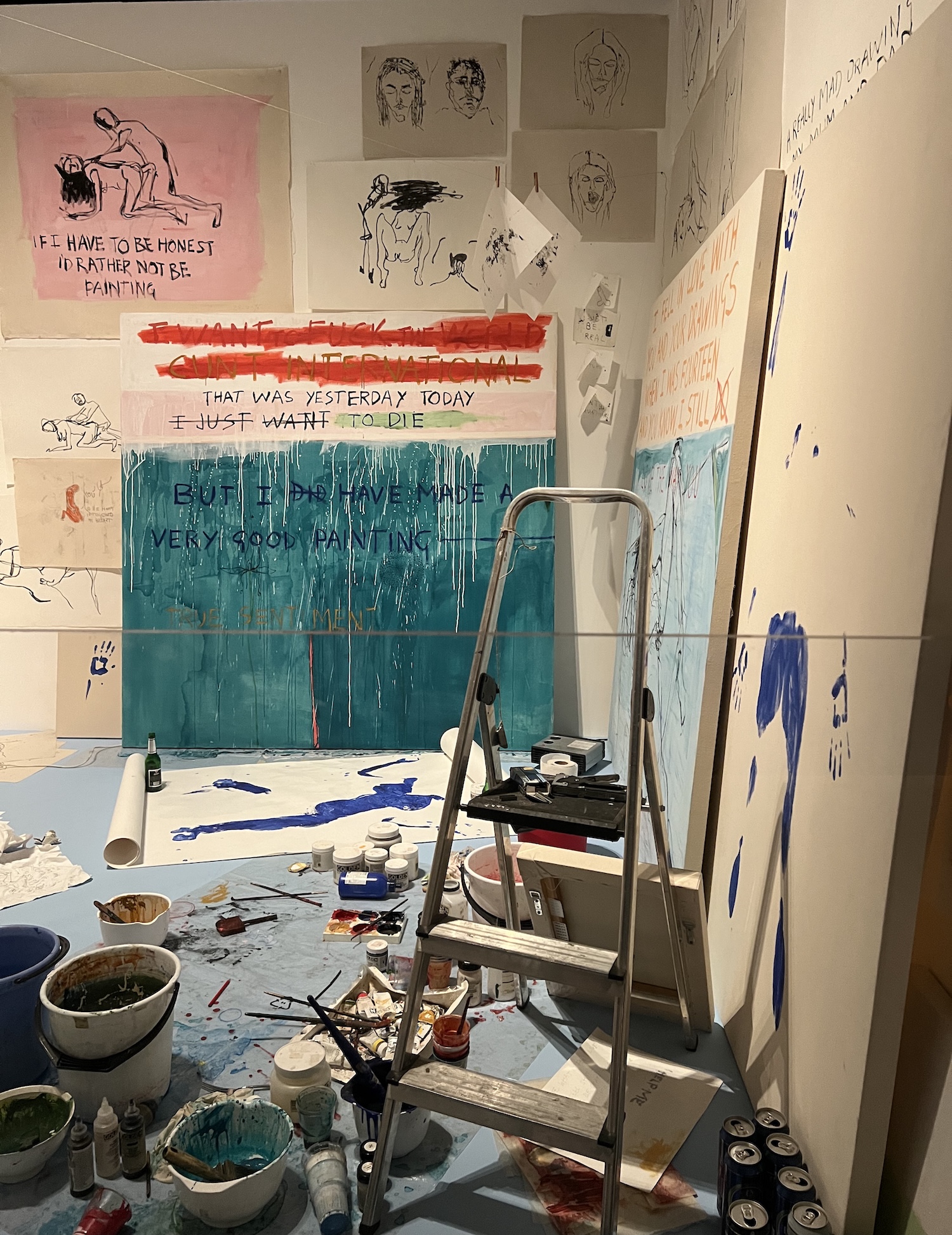
Photo taken during Artscapy’s private view of A Second Life at Tate. Photo: © Bethan Street
Where the ceiling sits
The ceiling is real. Like A Cloud of Blood remains the public record in this data at about US$2.9m. That sale proves the market will still stretch for a major Emin painting when scale, freshness and emotional intensity line up.
For most owners, a more useful benchmark is the body of large paintings rather than the record alone. Eleven large acrylic-on-canvas paintings in this data sold with a median around US$914,000. That is the lane where you should think about placement, visibility and buyer targeting, not about simply “testing” the market.
The barometer: text in neon, not text alone
The clearest barometer is not text on its own. It is text with the right form. The phrase I promise to love you sold 10 times as a poster or lithographic print at a median of about US$1,600, then appeared as a pink-and-blue neon at about US$255,000. The same words are not the same product.
That is the key hierarchy in Tracey Emin. Buyers pay for the line when it feels closest to the artist’s physical voice, whether that means a substantial neon, a major canvas, or a textile with real presence. They do not pay the same way for title recognition alone. The logic repeats across works like The Kiss Was Beautiful and The Closest I am to LOVE is You. Medium first. Then scale. Then route.
Where liquidity sits, and where it does not
Editioned prints and multiples are the deepest volume lane, but they are not the prestige lane. Their median in this data is about US$2,100. That means there is a functioning resale market for posters, lithographs and smaller published works, but you should treat it as a disciplined pricing environment rather than a prestige one.
That caution is even more important because Emin’s edition activity is still live. Turner Editions announced a new limited edition print in March 2025.[8] A seller of Love is what you want or I promise to love you in poster form should therefore argue specificity, not generic scarcity.
Textiles split sharply. Napkins and handkerchiefs such as My heart is with you always sit around a US$2,100 median, while true blankets and embroidered calico works such as I think it’s in my head, More Time Just a-second x and Floating Blue sit around a US$260,000 median. If you own a sewn work, this distinction is decisive.
Handkerchiefs are not blankets. Posters are not neons. Small boards are not major canvases. That is the whole market in miniature.
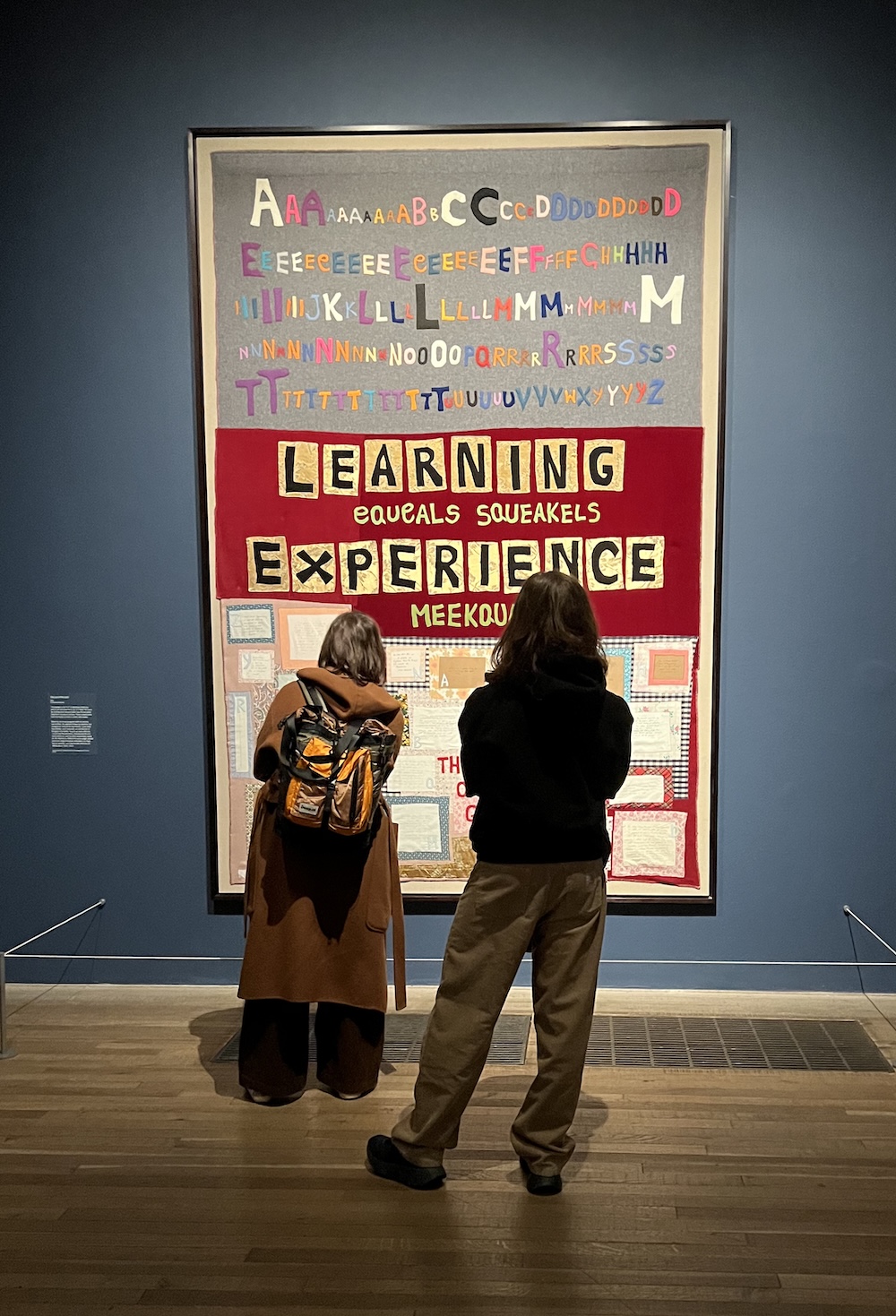
Photo taken during Artscapy’s private view of A Second Life at Tate. Photo: © Bethan Street
Why private sale makes sense in this market
Inference: private sale is structurally suited to Tracey Emin’s top tiers. White Cube now frames a working relationship with Emin of more than 33 years, and Xavier Hufkens notes that its collaboration with her began in 2015.[5][6] That matters because a strong Emin painting or neon does not need indiscriminate exposure. It needs the right collectors, already educated by the right programmes.
The wider market is pointing the same way. Art Basel reported that private sales through auction houses rose 14% to US$4.4bn in 2024, while Christie’s and Sotheby’s continue to market bespoke contemporary private-sale channels.[9][10][11] For a work that belongs in the Like A Cloud of Blood, But you never wanted me or This Is Another Place conversation, private sale is not a fallback. It is a way to control timing, context and comparables in a market that is visibly selective.
That logic is especially strong in Emin because the public tape contains a lot of low-value noise. A major neon can be compared, in search results or casual conversation, with a poster carrying similar words. A serious textile can be flattened against a napkin. Private placement lets you keep the conversation inside the correct tier before a public benchmark is forced.
Paperwork matters here because the market is object-sensitive. Sotheby’s catalogued But you never wanted me with White Cube provenance, and This Is Another Place with artist’s-proof detail and a signed certificate of authenticity; White Cube lists The Wedding as stamped, numbered and accompanied by a certificate.[12][13][14] If your work is a neon, bronze or published multiple and the supporting documents are incomplete, Data needed. The confirming documents are the original gallery invoice, certificate of authenticity, edition or AP designation, dimensions, and any exhibition or publication history.
Sell now or wait?
Sell now if your work already sits in the market’s chosen lane
The tape became more selective after the low-end flood of 2022–23. In those two years, the sold median was about US$2,200. From 2024 onward, it rose to about US$12,300. That is not a blanket boom. It is a quality filter.
If your work is a large acrylic-on-canvas painting, a serious handwritten neon, or a real blanket or embroidered calico work, that filter is working in your favour. The market is already telling you what it wants: objects that feel close to Emin’s hand, voice and current institutional profile, not just objects that carry her name. Inference: if your work belongs in that upper lane, waiting for a dramatically better “general market” matters less than choosing the right route now.
Wait if your benchmark is title recognition rather than object quality
If your reference point is the neon I promise to love you but you own the poster, you are not waiting for time to fix the gap. You are waiting for the wrong thing. The same is true if you are anchoring a napkin against I think it’s in my head, or a small board study against A certain degree of anger.
You may still decide to wait, but the reason should be object-specific: missing provenance, a weak edition line, compromised condition, or a recent public comparable you would rather let cool. It should not be a vague hope that more attention around Tate Modern or Margate will erase the hierarchy between poster, neon, blanket and painting.[1][7][8]
The calm conclusion is straightforward. Sell now if your work is already in the lane buyers are rewarding. Wait if the work needs better paperwork, better context, or a more realistic benchmark. Control beats hope.
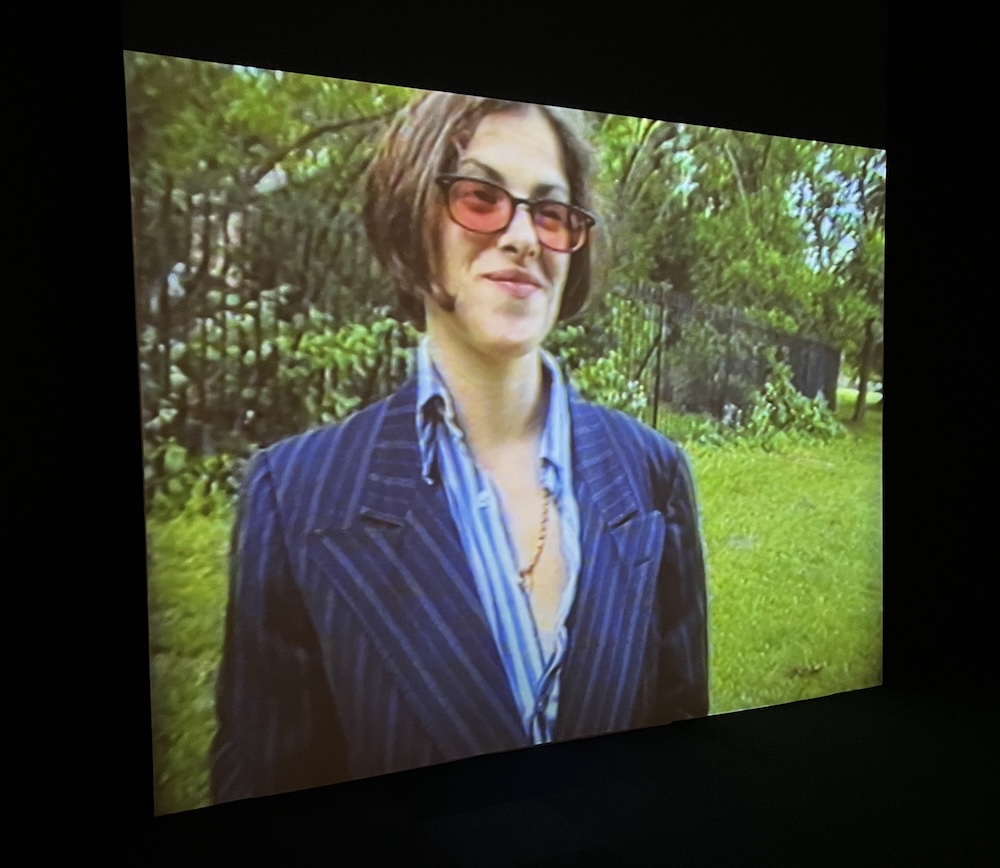
Photo taken during Artscapy’s private view of A Second Life at Tate. Photo: © Bethan Street
Sell your Tracey Emin with Artscapy
Get a price range in about 60 seconds. If it looks right, request purchase offers within 48 hours, where eligible, with 0% seller fee.
1. Start with a 60-second estimate.
We give you an instant price range backed by auction data refreshed every 24h. For a Tracey Emin work, that matters because the gap between a poster, a neon and a major canvas is structural, not cosmetic.
2. Pick your path.
Choose Fast Sale if speed matters more than theatre. Choose Maximise Returns if your work needs advisor-led strategy, tighter routing and a more selective buyer conversation.
3. Fast Sale. Get a non-binding offer in 1–3 working days (where eligible).
This is the sensible route for works that belong in an active resale lane and do not need extended market building.
3. Maximise Returns. Choose private placement vs targeted auction vs hybrid.
This is the sensible route for works where medium, scale, provenance and buyer fit will decide the result. Strategy should follow what your Emin actually is, not just what the name can attract.
4. Close cleanly.
We work with 0% seller commission, transparent costs and escrow protection. Payout is made within 7 days of collection, with Fast Sale payout initiated the same day once the work is in our care.
Sources and references
[1] Tracey Emin: A Second Life, Tate Modern, 2026, accessed 16 March 2026.
[2] Tracey Emin: Sex and Solitude, Fondazione Palazzo Strozzi, 2025, accessed 16 March 2026.
[3] Tracey Emin, Bermondsey (2024), White Cube, 2024, accessed 16 March 2026.
[4] Tracey Emin (New York, 2023): Lovers Grave, White Cube, 2023, accessed 16 March 2026.
[5] Tracey Emin 2026, White Cube, 2026, accessed 16 March 2026.
[6] Tracey Emin, Xavier Hufkens, n.d., accessed 16 March 2026.
[7] Tracey Emin: I Never Stopped Loving You, Turner Contemporary, ongoing since 2010, accessed 16 March 2026.
[8] New Tracey Emin artist edition launching in April, Turner Contemporary, 4 March 2025, accessed 16 March 2026.
[9] The Art Basel and UBS Global Art Market Report 2025, Art Basel, 2025, accessed 16 March 2026.
[10] Post-War and Contemporary Art, Christie’s, n.d., accessed 16 March 2026.
[11] Private Sales, Sotheby’s, n.d., accessed 16 March 2026.
[12] But you never wanted me | The Now Evening Auction | 2024, Sotheby’s, 13 May 2024, accessed 16 March 2026.
[13] This Is Another Place | Modern & Contemporary Day Auction | 2024, Sotheby’s, 7 March 2025, accessed 16 March 2026.
[14] Tracey Emin The Wedding 2019, White Cube, 2019, accessed 16 March 2026.