Anselm Kiefer market analysis. Is now a good moment to sell? (February 2026)
Last updated: 8 February 2026
Anselm Kiefer is one of those artists where the name can feel like a guarantee—until you watch what buyers actually do with a specific Kiefer painting, a lead book object, or a work on paper.
The uncomfortable reality is that Kiefer’s market is not one market. It’s a sorting mechanism that separates “museum-coded” Kiefer—materially dense, conceptually heavy, physically commanding—from works that share his language (photographs, watercolours, smaller studies) but don’t trigger the same buyer urgency.
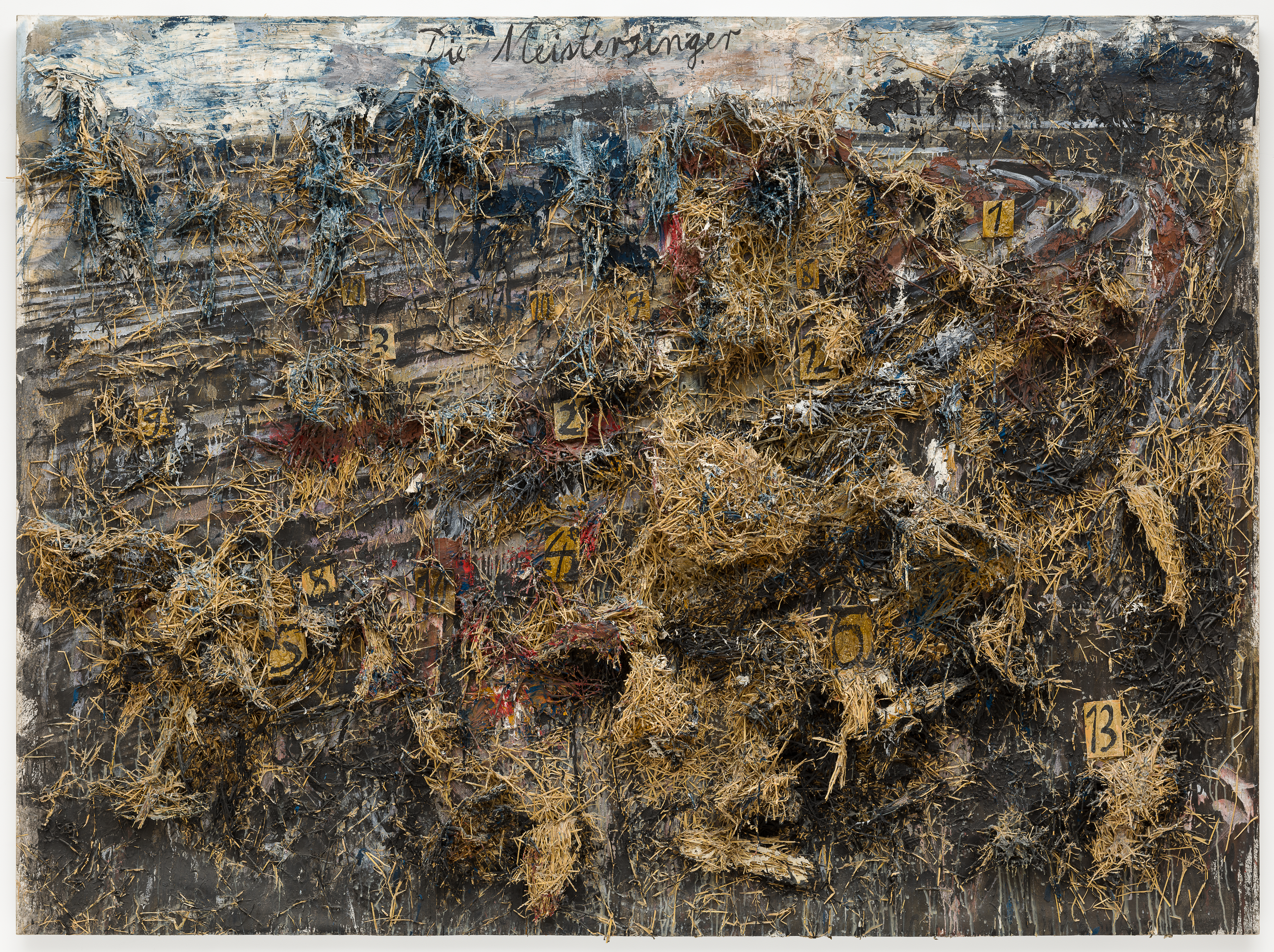
Anselm Kiefer, Die Meistersinger (The Mastersingers), 1982. Image: © San Francisco Museum of Modern Art (SFMOMA)
Verdict: this can be a rational moment to sell, but only if you treat Kiefer as a selective market and place your work in the right lane from the start.
→ Start with Artscapy valuation. Get a price range in about 60 seconds.
If it looks right, we’ll talk you through the routes that actually make sense for your Kiefer—whether that’s a private placement approach designed for lead-and-straw material realities, or a public auction strategy when the work is strong enough to justify the spotlight.
How the Kiefer market really “chooses” winners
Kiefer is not a painter you buy purely with your eyes; you buy him with your tolerance for material (lead, ash, straw, shellac), scale, and meaning (poetry, mythology, German memory). That’s exactly how the secondary market behaves: buyers reward the works that compress those things into a single, unmistakable object.
In practice, that means the market tends to pay up for Kiefer paintings that feel like they could sit next to a museum installation—think the kind of physical density you associate with lead books, scorched surfaces, and built-up collage elements—rather than pieces that read as “a Kiefer image” without Kiefer’s full material presence.
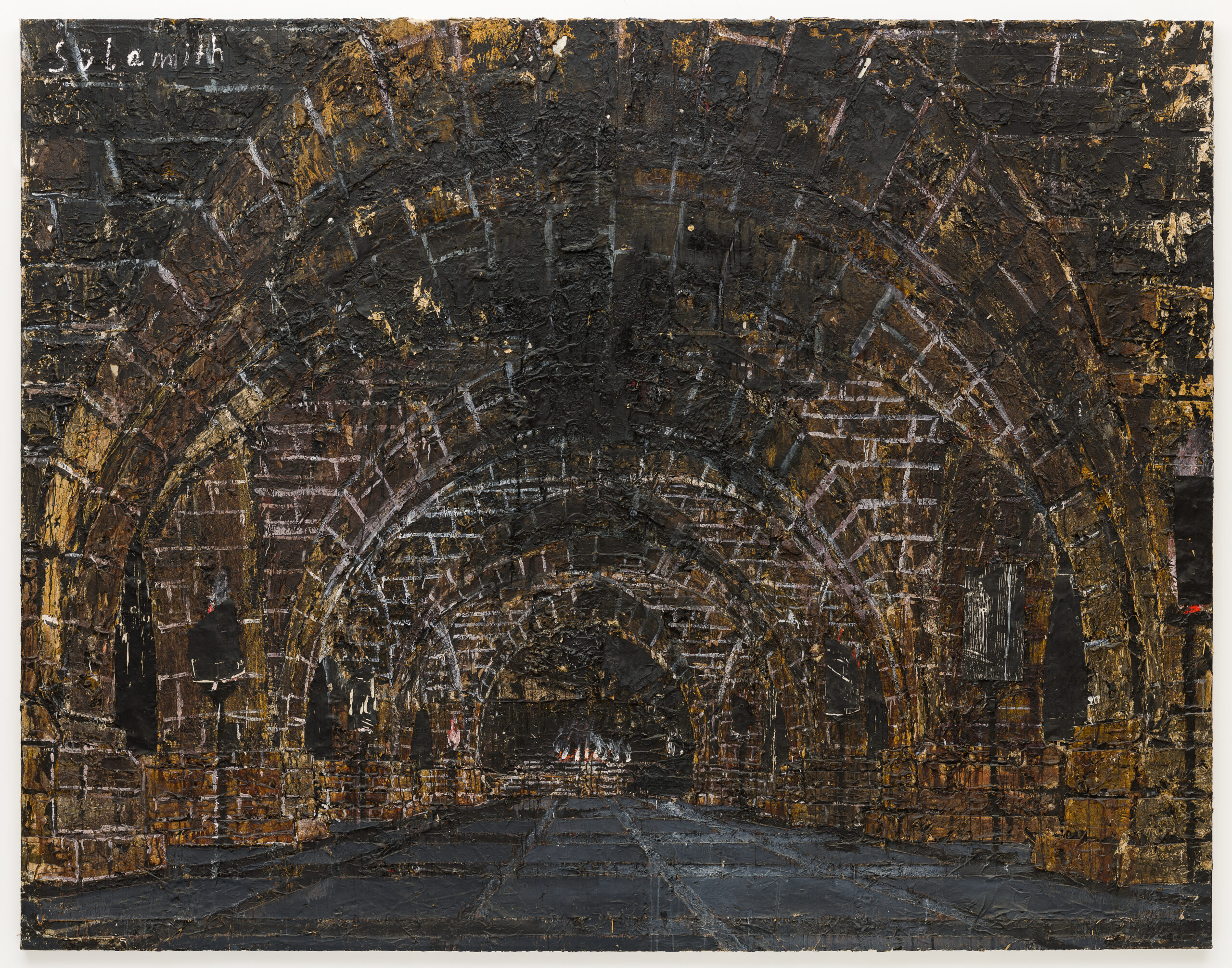
Anselm Kiefer, Sulamith, 1983 . Image: © San Francisco Museum of Modern Art (SFMOMA)
Proof (in auction behaviour): In the results table, the median price in the largest-format bracket is about $654k—a very different liquidity zone from Kiefer’s smaller, more portable output. That’s the market pricing the experience of a monumental Kiefer, not just the signature.
Implication for you: If your Kiefer is a materially complex painting (emulsion/shellac/collage elements, lead, straw, or built objects) and it reads as a major statement, you are selling into the part of the market that still behaves like blue-chip demand.
Action: Before you decide “auction vs private sale”, identify what your work is structurally—a major Kiefer painting, a Kiefer material object (lead/book/sculptural), or an entry-point work on paper/photograph.
A practical liquidity map for Kiefer owners
The fastest way to get realistic is to stop asking “how is Kiefer doing?” and start asking “which Kiefer market am I in?”
The auction record here covers 234 public-sale lots, and it doesn’t read like a single curve; it reads like three distinct lanes.
- Paintings (the core lane): the median price for Kiefer paintings in this table is about $227k.
- Mechanism: the buyer pool here is larger, but it is also more selective about materials (lead/emulsion/shellac) and conceptual weight (poetry/history titles).
- Works on paper & photo-based works (the entry lane): the median for Kiefer works on paper in this table is about $58k.
- Mechanism: liquidity exists, but it behaves like a collector entry point—pricing is stricter, and supply can feel heavier when multiple drawings or photo works hit the market at once.
- Museum-tier outliers (the headline lane): the top sale in this table is about $2.26m, and it is a monumental Kiefer painting (Die Meistersinger).
- Mechanism: when a work is both physically dominant and conceptually unmistakable, auction can still concentrate competition.
Implication for you: “selling a Kiefer” means something totally different depending on whether you’re holding a lead-and-emulsion painting, a photographic work, or a watercolour study.
Action: start your decision-making by placing your work in the lane it actually belongs to, not the lane you wish it belonged to.
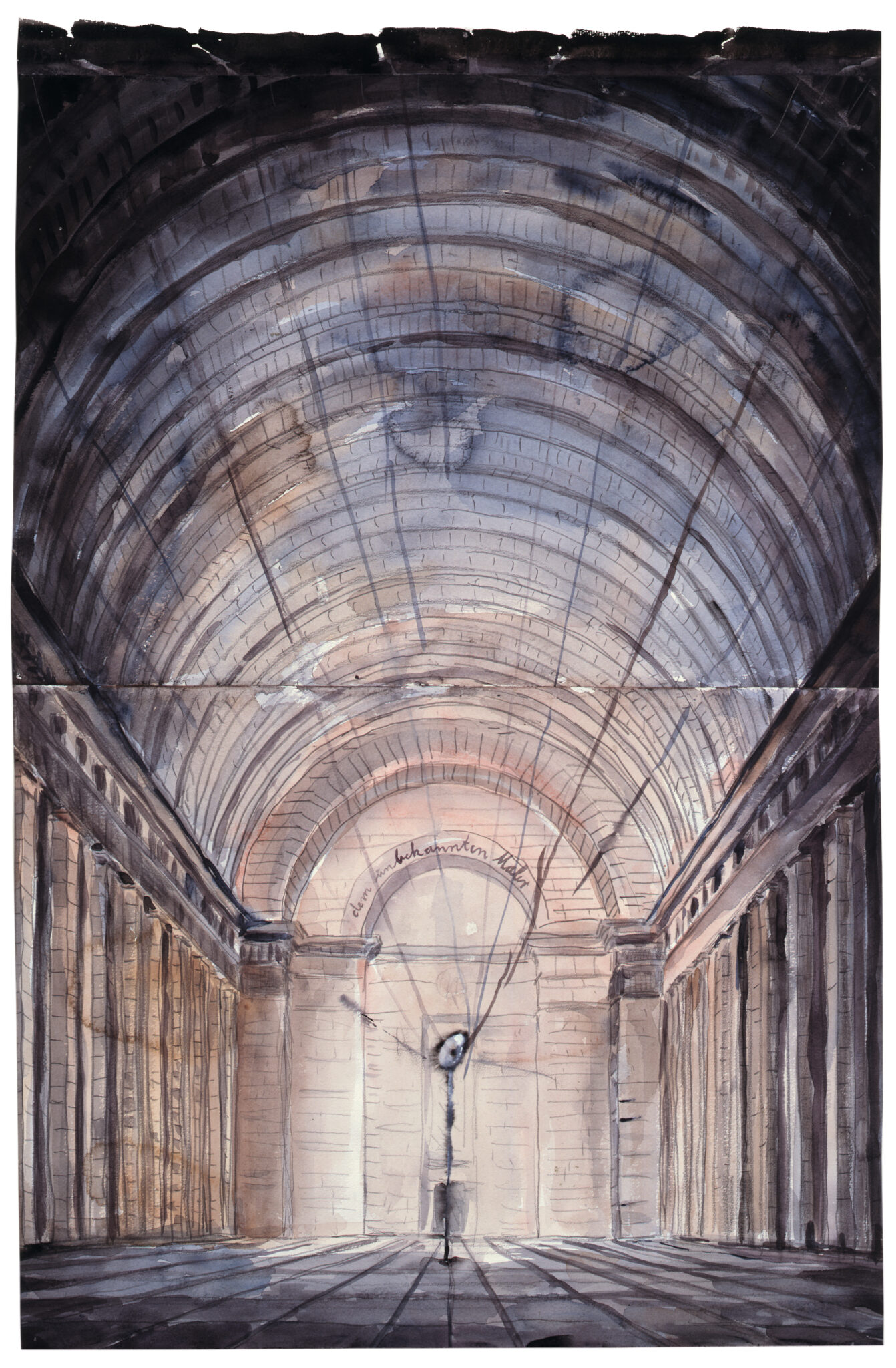
Anselm Kiefer, Dem unbekannten Maler (To the Unknown Painter), 1982. Image: © San Francisco Museum of Modern Art (SFMOMA)
Kiefer looks liquid—until you misread the market’s selectivity
At a glance, Kiefer can look comfortably liquid: across this table, about 82% of lots sold. But that headline hides the real story: buyers will transact, yet they refuse to rescue optimistic pricing on the wrong work.
Kiefer is a market where a “pass” isn’t a temporary inconvenience. A pass at Sotheby’s or Christie’s becomes part of the work’s public biography, especially for large Kiefer paintings that already bring conservation and shipping questions (lead, organic matter, heavy collage).
Implication: the market’s confidence lives in the work, not in the estimate. If the work isn’t a high-conviction Kiefer example, public selling can make your negotiating position worse, not better.
Action: treat pricing as strategy, not theatre. For Kiefer paintings and lead objects, the route you choose should minimise the risk of a very visible “no” from the market.
What gets punished: “big Kiefer” that isn’t the right Kiefer
A common seller assumption is that size + mixed media = auction success. Kiefer’s market is meaner than that.
One of the cleanest case studies in the table is Urd, Werdandi, Skuld: a large mixed-media Kiefer painting (oil/emulsion/shellac with lead and other elements) failed to sell in a high-profile outing, then later cleared publicly at about $151k—roughly the market’s median level rather than a “major painting” level.
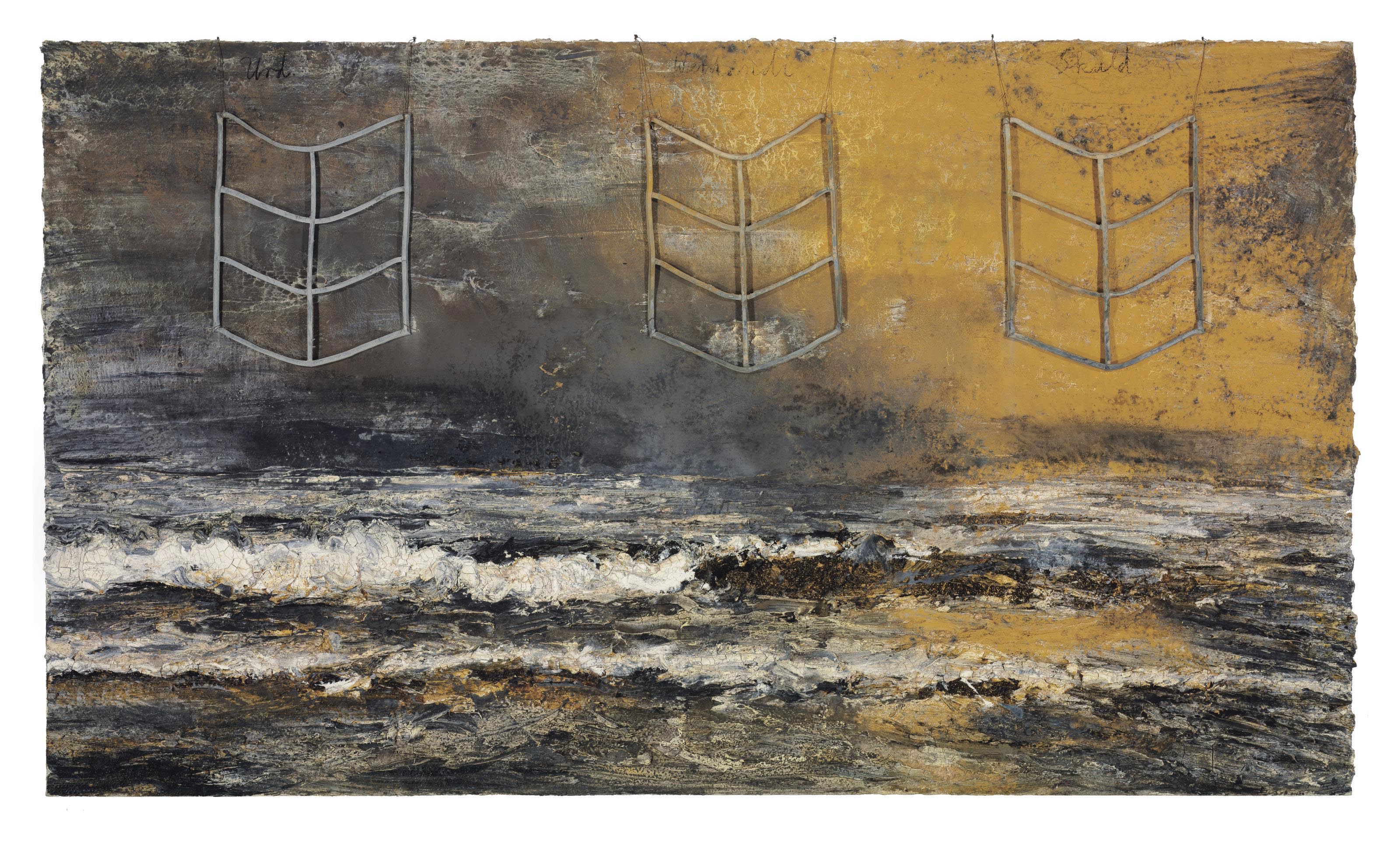
Anselm Kiefer, Urd, Werdandi, Skuld, 2004. Image: © Christie's
Mechanism: buyers aren’t buying “large Kiefer” in the abstract; they’re buying a specific kind of large Kiefer—one with a subject, surface and provenance story that feels inevitable.
Implication: if your Kiefer is big but visually or conceptually less distinctive (for instance, closer to conventional oil-on-canvas than to lead-and-straw material drama), a public auction estimate can be an own goal.
Action: when your work sits in this ambiguous middle, private placement becomes structurally rational because it lets you target the right buyer without forcing a public verdict.
A second lesson from the table: re-offers don’t behave like “second chances”
Kiefer works that come back to market often return with baggage: the market remembers the last attempt, and it tends to anchor expectations to that history.
In this table, Midgard-Utgard (an oil-on-canvas Kiefer painting) failed to sell at Christie’s twice, including after a major estimate reset. That’s not a scandal; it’s the market telling you that some Kiefer paintings—especially those without the artist’s signature material vocabulary—can become illiquid even when the label says “major artist”.
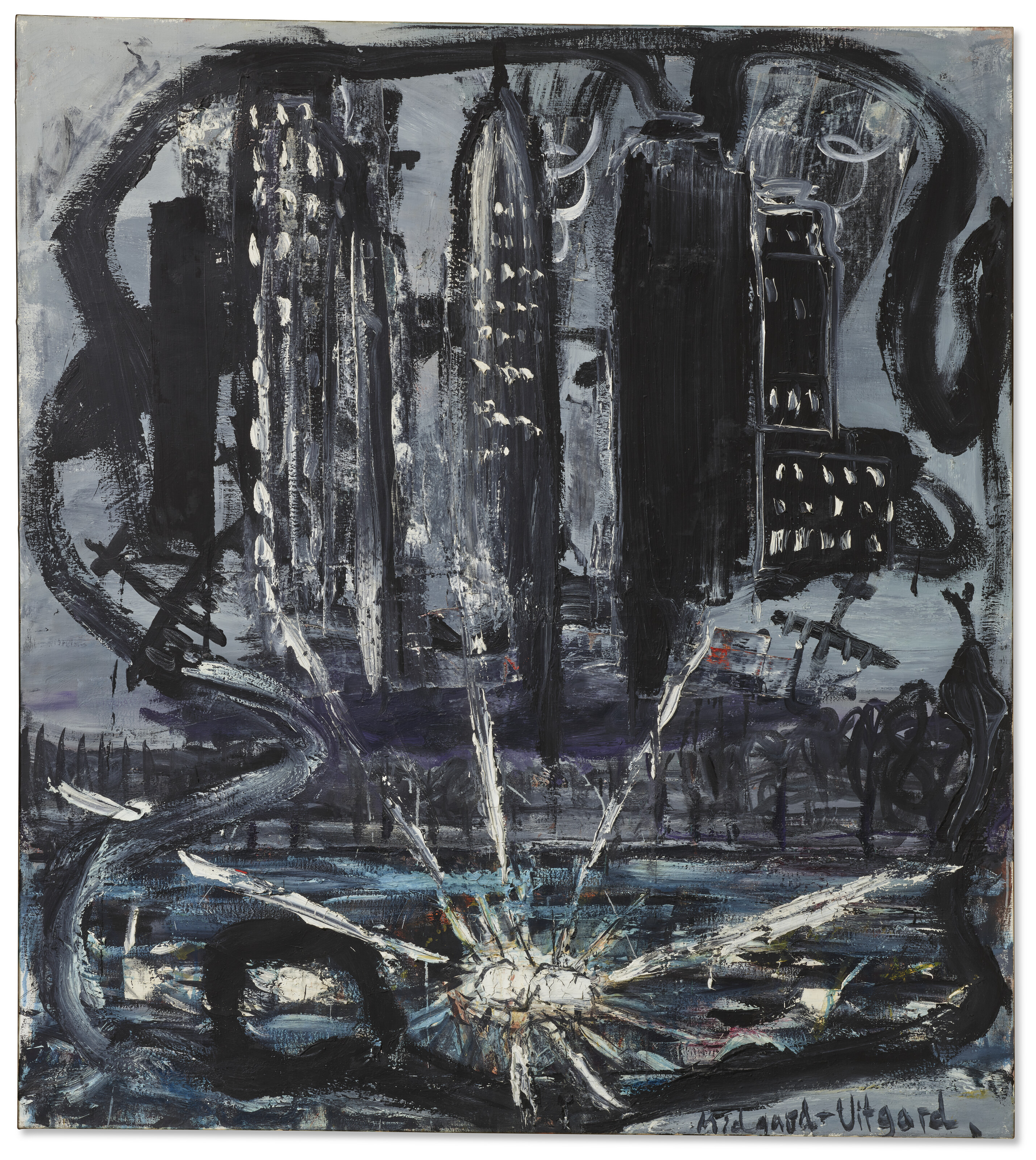
Anselm Kiefer, Midgard-Utgard, 1981. Image: © Christie's
Implication: if your Kiefer has already been publicly offered and failed, repeating the same strategy rarely improves the outcome. It usually just makes the work look “pushed”.
Action: if your Kiefer has auction history (especially a pass), treat the next sale as a re-positioning exercise: rethink venue, buyer pool and timing, not just price.
The seller’s dilemma, stated plainly
If you own a Kiefer, you’re navigating a contradiction:
- Kiefer is institutionally validated, represented by major galleries, and visibly active as a living artist. [1] [2] [3]
- Yet the secondary market is selective enough to ignore perfectly “good” Kiefer works—particularly when they’re conventional oil-on-canvas, smaller works on paper, or anything with public-sale baggage.
Verdict signal: if your Kiefer reads as a museum-coded, materially ambitious object, selling can be sensible; if it reads as a minor or ambiguous example, your main job is finding the right route and the right buyer rather than “testing the room”.
The signals that matter right now: museums, legacy infrastructure, and attention
Kiefer’s demand doesn’t float on social buzz; it tends to be reinforced by institutional programming and legacy management—because those are the forces that shape what collectors think a “serious” Kiefer looks like.
A key recent signal is the joint Van Gogh Museum / Stedelijk Museum Amsterdam exhibition, which placed Kiefer centre stage and explicitly positioned new work alongside Van Gogh as a point of reference. [1]
Mechanism: exhibitions like this don’t raise every Kiefer equally; they sharpen what the market sees as “canonical” (material density, landscape-as-history, the poetic and political register).
Another signal is sustained museum attention in the US: Saint Louis Art Museum staged a major Kiefer survey, with site-specific work and extended programming around the exhibition. [4]

Anselm Kiefer, Becoming the ocean, for Gregory Corso, 2024. Image: © Saint Louis Museum of Art
Mechanism: this keeps Kiefer in the “museum present tense”, which tends to support demand for major paintings and materially complex works rather than paper studies.
And in February 2026, Kiefer opened a site-specific exhibition at Palazzo Reale in Milan, reinforcing his scale and material theatre in a high-profile public setting. [5]
Mechanism: again, this is not a blanket price lever—it’s a reinforcement of Kiefer as a maker of monumental environments, which pushes buyers to favour works that feel structurally aligned.
Finally, the Eschaton—Anselm Kiefer Foundation explicitly describes its mission as maintaining and cataloguing an archive and preserving La Ribaute. [6]
Mechanism: legacy infrastructure tends to increase buyer sensitivity to documentation, provenance and “registered” work histories—especially in a practice involving complex materials and multiple bodies of work (paintings, photographs, books, objects).
Inference: these signals favour sellers of museum-coded Kiefer—major mixed-media paintings, lead-and-book objects, and works with clean documentation—more than they favour generic works on paper or conventional paintings.
Action: when you prepare to sell a Kiefer, treat paperwork and work history as part of the asset: gallery invoices (White Cube / Gagosian / Ropac where applicable), exhibition catalogues, installation photos, and condition documentation for lead, straw, shellac or other unstable materials.
Private sale vs auction for Kiefer: when private placement is structurally rational
In Kiefer’s market, private placement isn’t “what you do if auction fails.” For many works, it’s the rational first choice—because of how selectivity, material reality, and public visibility interact.
Why auctions work (sometimes):
Auctions work best for Kiefer when the work has two properties: it is obviously major (scale + material density) and it is legible as canonical Kiefer (titles/themes that resonate with history, myth, poetry, or the landscape-as-memory register). That’s when multiple bidders can plausibly exist at once.
Why auctions punish you (often):
When the work is mid-tier or ambiguous—conventional oil-on-canvas, smaller works on paper, or pieces that have already failed publicly—an auction estimate becomes a public referendum. For Kiefer, that’s dangerous because a visible pass can “brand” the work as unwanted, and the next buyer will behave like they’re rescuing you.
Why private placement fits Kiefer structurally:
Private sales let you match the work to the buyer’s intent:
- A collector looking for a Kiefer painting that evokes museum installations (lead, straw, heavy collage) is a different person from a buyer looking for a Kiefer watercolour as an entry point.
- A buyer willing to take on lead-and-organic materials wants detailed condition context and careful logistics, not a rushed catalogue blurb.
Private placement also reduces the “auction memory” effect. That matters in a market where re-offers can become a negative signal (as Midgard-Utgard shows) and where estimate resets don’t necessarily restore confidence.
Action: if your Kiefer is not obviously in the headline lane, default to private placement logic—then consider auction only if we can justify it with buyer competition, provenance strength, and a realistic estimate strategy.
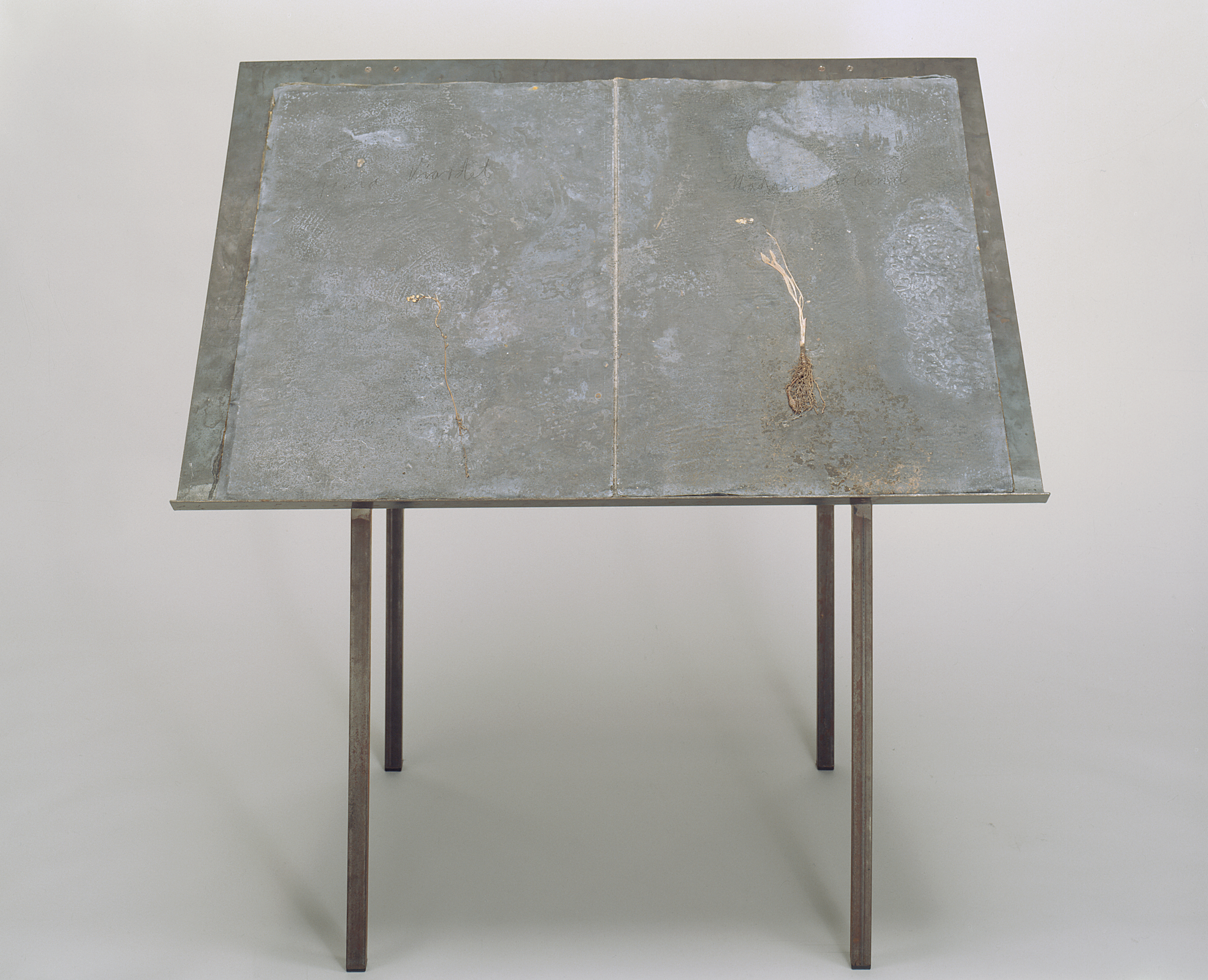
Anselm Kiefer, Die Frauen der Revolution (Women of the Revolution), 1987. Image: © San Francisco Museum of Modern Art (SFMOMA)
Acting now vs waiting: how to decide without self-deception
There isn’t a universal “now is the moment” answer for Kiefer, because the market is segmented by medium (paintings vs works on paper), material (lead/straw/shellac vs conventional paint), and sale history (fresh-to-market vs re-offer).
A rational “act now” case:
If your Kiefer is a materially ambitious painting or object—lead elements, dense surface build, a title and imagery that feels canonical—then the current institutional visibility (Amsterdam in 2025, SLAM in late 2025, Milan in early 2026) gives buyers a clear framework for why Kiefer matters in the present tense. [1] [4] [5] (vangoghmuseum.nl)
Inference: this is the kind of context that tends to support demand for major works, not just interest in the name.
A rational “wait or reframe first” case:
If your Kiefer is a smaller work on paper, a photo-based piece, or a conventional-looking painting, the auction record suggests buyers will not chase. Waiting may be sensible if you need to (a) strengthen documentation, (b) address condition presentation for fragile materials, or (c) avoid selling into a moment where similar works are coming to market.
Action: either path starts the same way: get an honest valuation that places your Kiefer in the correct lane, then choose the route that avoids the market’s punishments (public passes, unrealistic estimates, wrong buyer pool).
The Artscapy next step
A Kiefer sale gets easier the moment you stop asking “how much is Kiefer?” and start asking “what kind of Kiefer is mine—lead-and-emulsion painting, book/object, photograph, or work on paper?”
We’ll help you answer that calmly and quickly.
- Start with a valuation. Get a price range in about 60 seconds.
- Then we route you based on your Kiefer’s lane.
- If it looks right, request purchase offers within 48 hours with 0% seller fee.
- No pressure, just the rational next step.
- Whether you choose private placement for a lead-and-straw material reality, or auction for a museum-tier painting, the goal is the same: place your Kiefer in the part of the market that actually pays for what it is. Questions? Speak to an Advisor for free.
References
[1] Van Gogh Museum — “Exhibition Anselm Kiefer - Sag mir wo die Blumen sind” (Van Gogh Museum / Stedelijk Museum Amsterdam joint exhibition information).
[2] White Cube — Artist page for Anselm Kiefer (representation and practice overview).
[3] Thaddaeus Ropac — Artist page for Anselm Kiefer (representation and practice overview).
[4] Saint Louis Art Museum — “Anselm Kiefer: Becoming the Sea” (museum exhibition programme and updates).
[5] AP News — Report on Anselm Kiefer’s site-specific exhibition at Palazzo Reale, Milan (February 2026).
[6] Eschaton—Anselm Kiefer Foundation — Mission statement (archive cataloguing and preservation of La Ribaute).