
Yayoi Kusama market analysis. Is now a good moment to sell? (March 2026)
Last updated: 16 March 2026.
Yayoi Kusama gives you a very particular selling dilemma. The market has hard public validation, including major programmes at M+ Museum, Guggenheim Bilbao, NGV and Museum Ludwig, plus sustained gallery backing around David Zwirner, Victoria Miro and Ota Fine Arts, but the secondary market no longer rewards every Kusama equally. Buyers still stretch for the right Infinity Net, pumpkin painting or clean editioned icon, yet the wrong comparison set can make a serious work look ordinary. Control matters. Selective, not weak.
Data note: The figures below reflect public auction results for Yayoi Kusama from 25 January 2018 to 10 March 2026. New sales can move benchmarks quickly, especially when a major Infinity Net, pumpkin sculpture or high-quality unique canvas comes to market.
→ Start with a valuation. Click here and get a price range in about 60 seconds.
In this article
- The sale that explains Kusama’s market
- How Kusama’s market actually works
- Why private sale is often the rational route
- Sell now versus wait
- How to start with Artscapy
 Yayoi Kusama, INFINITY-NETS (OQABT), 2007. Image: © Yayoi Kusama
The sale that explains Kusama’s market
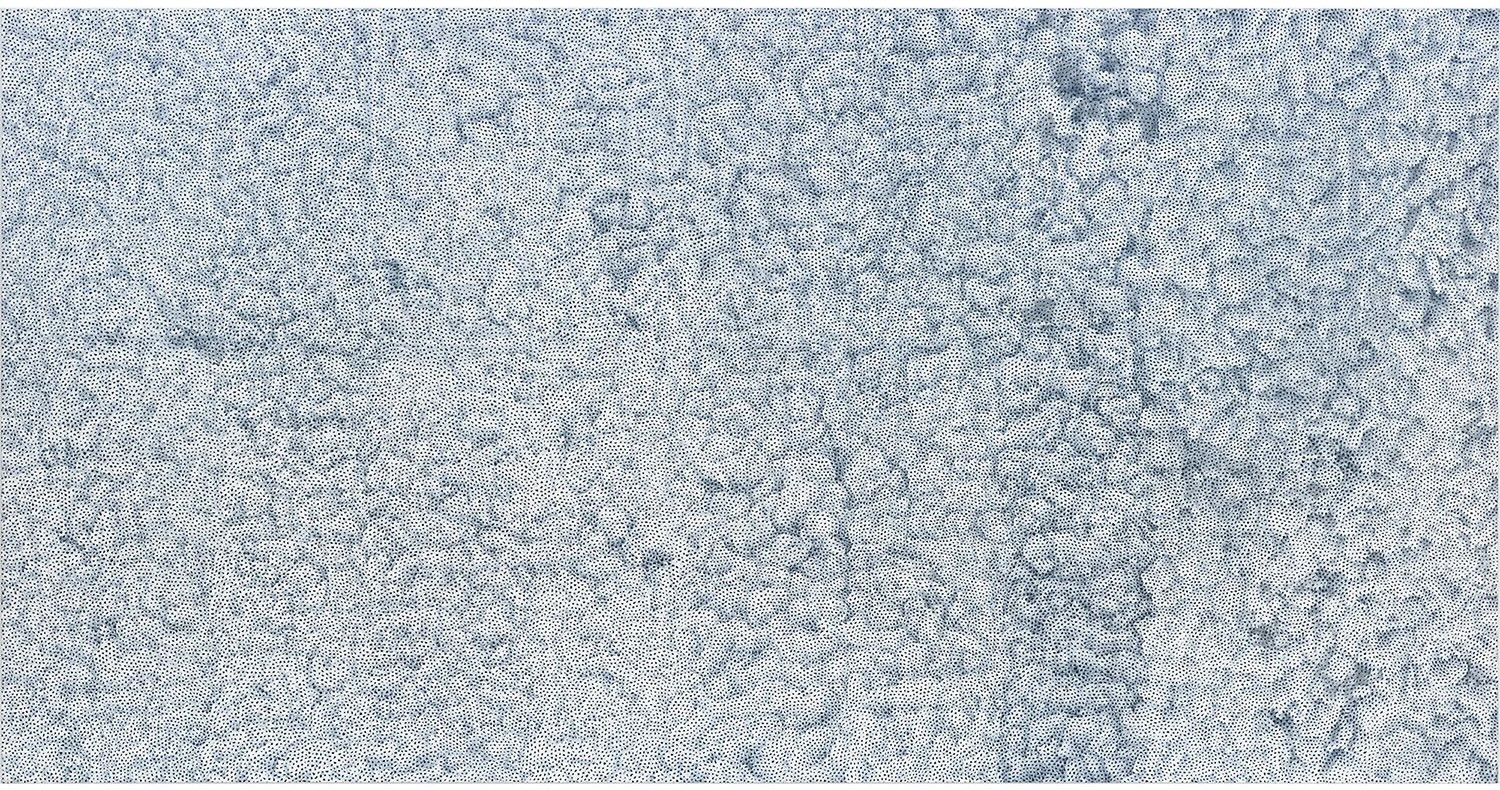
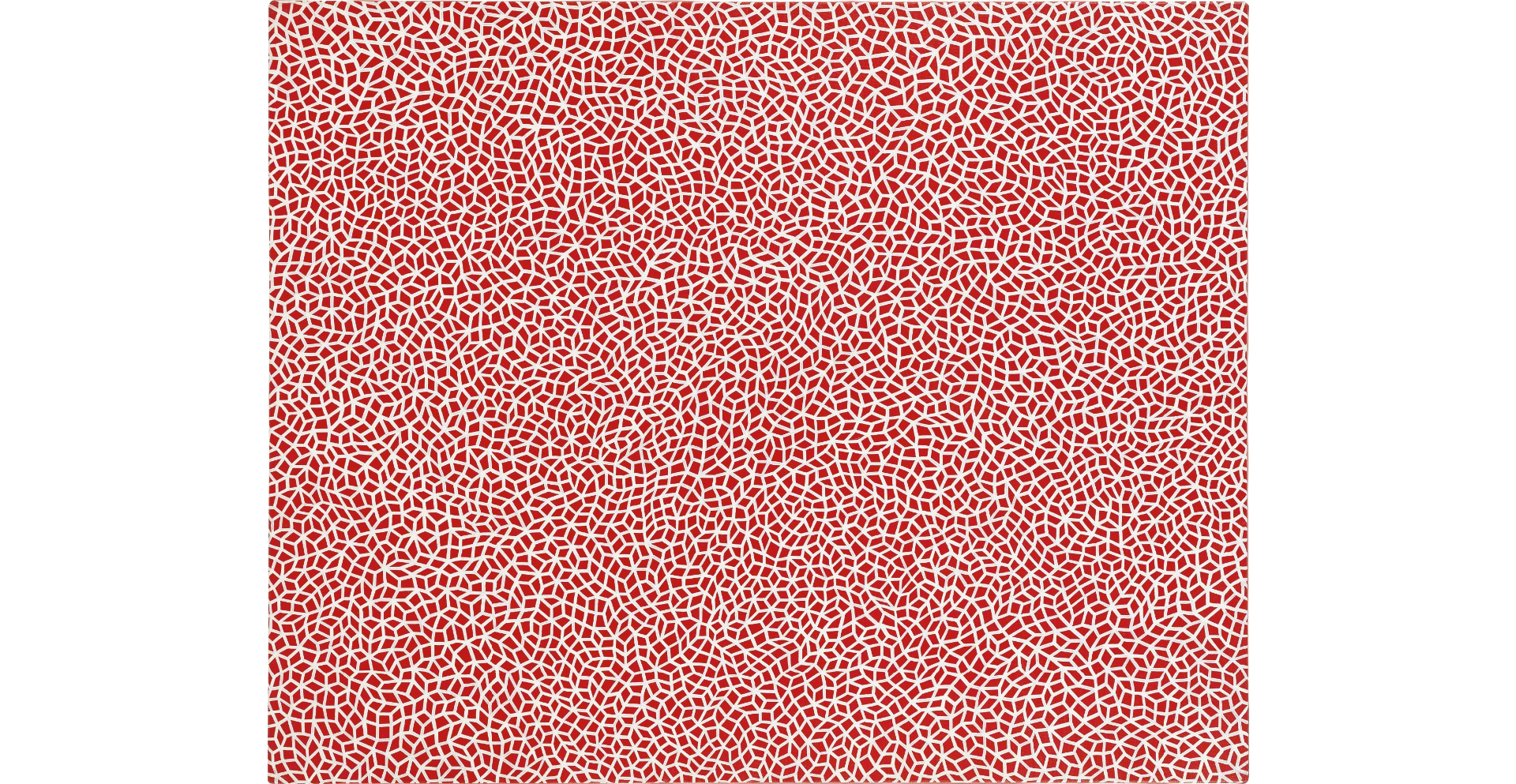
The clearest Kusama case study is a net, not a pumpkin. When INFINITY-NETS (OQABT) sold in Hong Kong in 2023 for about US$10.7 million, it edged past the 1959 Untitled (Nets) that had reached about US$10.5 million in New York the year before. Those two results mattered because they told buyers that Kusama’s absolute ceiling sits where scale, institutional meaning and the Infinity Net language converge. Museums keep framing Infinity, Accumulation and related mirrored environments as the core architecture of her career, so top collectors read major nets as thesis works rather than merely decorative abstractions.
That did not lift every Kusama lot. It hardened the hierarchy. After those net benchmarks, the market did not become broader at the top; it became more discriminating about what counts as core material. For you as a seller, that is the important distinction.
How this market actually works
Kusama is not one market.
The most dangerous number in this market is the all-market median of around US$36,000. It hides the fact that Kusama sells across radically different products: pumpkin objects have a sold median of about US$1,300, pumpkin sculptures sit around US$150,000, pumpkin paintings around US$532,000, and net paintings around US$889,000. Same artist, sometimes the same motif, but entirely different buyer behaviour. You should not price a unique canvas against a desk-scale pumpkin, or a major bronze against a low-entry multiple.
Inference: Kusama’s market rewards repetition when it feels like a complete Kusama world rather than a souvenir of one. The repeated form has to carry authorship, not just familiarity. That is why the hierarchy is so sharp in this artist’s auction results and so stable in museum narratives around her practice.
Pumpkin is the barometer; Infinity Nets set the ceiling.
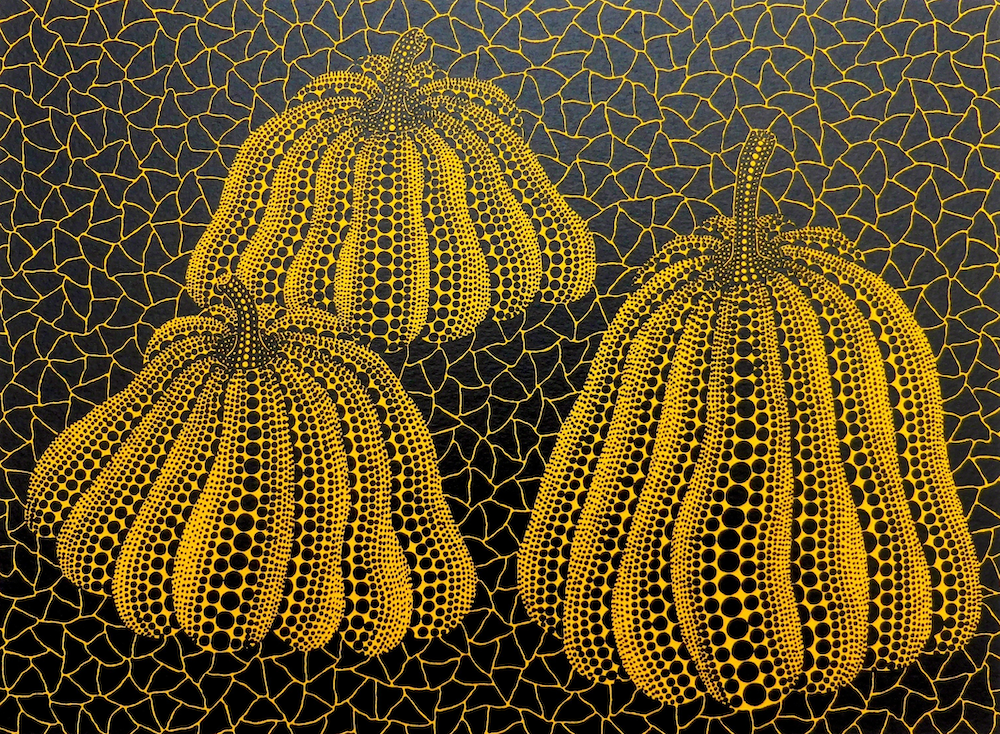
For Kusama, pumpkin is the public language of recognition. It is also one of her most beloved motifs and, in institutional framing, a kind of alternative self-portrait. In the last 12 months of the auction tape, pumpkin prints and multiples cleared at around 85% across 86 lots, with a median close to US$39,000. That is the barometer. It tells you whether broad collector appetite still converts Kusama recognition into actual bids.
The ceiling lives elsewhere. Net paintings carry the auction high, and the best pumpkin paintings sit in a lower but still serious unique-work lane. The market is telling you that iconic image alone is not enough; iconic image plus canonical body of work, scale and clean routing is what creates the real premium. That is why a prime net or a museum-scale pumpkin can behave like a different asset class from a smaller object carrying the same vocabulary.
The big shift is not collapse. It is selectivity.
The signal event in Kusama’s tape is the post-2021 move from broad eagerness to narrower discipline. Overall sell-through fell from about 99% in 2021 to about 81% in 2025. That is not a broken market. It is a market that now distinguishes much more aggressively between top-tier Kusama, recognisable mid-tier Kusama, and noisy lower-tier Kusama.
Routing is part of that distinction. At the high end, Hong Kong carries the clearest ceiling in this data, with New York and London supporting the other serious lanes. That fits the way Kusama has continued to be activated across Asia, Europe and the US through M+, Guggenheim Bilbao, NGV and Museum Ludwig. If your work belongs to the top tier, geography is not cosmetic. It is part of the price.
 Yayoi Kusama, Three Pumpkins, 1993. Image: © Yayoi Kusama
Why private sale is often the rational route
Kusama’s auction tape is crowded at the bottom and highly visible at the top. That is exactly the kind of structure in which private sale becomes rational. When one artist’s name covers low-entry pumpkin objects, editioned prints, major canvases, soft sculptures, bronzes and museum-grade nets, a seller often needs separation before exposure. Private placement lets you frame the work inside the right Kusama lane first, instead of asking a public catalogue to do all the explanatory work.
That logic is broader than Kusama. Art Basel and UBS reported that private sales by auction houses rose 14% in 2024 even as public auction values fell, and reported private-auction sales still totalled just under US$4.2 billion in 2025 after public auctions recovered. Private sale is therefore not a consolation channel. It is a normal control mechanism in a market that is broader, more selective and less forgiving of works that need context before price discovery.
Kusama-specific paperwork makes that especially relevant. Yayoi Kusama Inc. says its registration system is intended to record works it recognises as Kusama works, but the registration card does not function as a certificate of value, and the current system does not confirm edition works, including prints, products and novelties. The official site also warns about forged works and counterfeit merchandise circulating online, at auction and through galleries. In this market, provenance is not admin. It is part of the saleability of the work.
For a serious pumpkin painting, early net or strong sculpture, private sale can be structurally better than auction. It lets you target buyers who already understand Kusama’s hierarchy, keep the work away from the noise created by low-entry objects, and preserve price discipline if the piece is strong but not perfectly auction-shaped. In Kusama, that is often the smartest use of control.
Sell now versus wait
Sell now if your work is already in the recognised lanes.
If you own a strong pumpkin painting, a major Infinity Net, or a clean edition of a high-recognition image, the evidence supports action now. The pumpkin barometer is still functioning, the best unique works still command serious competition, and recent institutional programmes keep Kusama freshly legible to collectors rather than merely famous in the abstract. Inference: when a market remains selective but the core symbols are still culturally live, good sellers benefit from discipline more than from delay.
This is especially true if your Kusama already has clean provenance, strong condition photography, and documentation that makes its place in the hierarchy obvious. In that situation, the question is less “should I sell?” than “which route turns recognition into conviction?”
Wait, or prepare first, if your work needs separation from the noise
If your work sits outside the core pumpkin or net language, or if it is a print, object or work on paper with patchy documentation, waiting can be sensible. Since the post-2021 rush ended, Kusama buyers have become more selective, and the less self-explanatory lanes are the first to feel that pressure. Waiting only helps, though, if you use the time well.
The calm answer is that “sell now versus wait” is not really a calendar question in Kusama. It is a classification question. Once you know whether your work is a barometer piece, a ceiling piece or a noisy lower-tier piece, the route becomes clearer and the decision becomes less emotional.
 Yayoi Kusama, Infinity Nets, 1990. Image: © Yayoi Kusama
Sell your Yayoi Kusama with Artscapy
- Start with a 60-second estimate. For Kusama, that first step matters because the gap between a pumpkin object, a pumpkin print, a unique pumpkin canvas and a major Infinity Net is too wide to guess from the artist name alone.
- Pick your path: Choose Fast Sale if speed matters, or Maximise Returns if your Kusama needs advisor-led strategy. If it looks right, request purchase offers within 48 hours with 0% seller fee, where eligible.
- Close cleanly: 0% seller commission, transparent costs, and escrow-protected handling. Payout within 7 days of collection, with Fast Sale payout initiated the same day once your Kusama is in our care.
Sources and references
[1] Public auction results for Yayoi Kusama, aggregate sales dated 25 January 2018–10 March 2026, Artscapy market analysis, accessed 16 March 2026.
[2] Registration of Yayoi Kusama Works, Yayoi Kusama Inc., 26 December 2019, accessed 16 March 2026.
[3] Notification, Yayoi Kusama official website, notices including counterfeit merchandise and forged works warnings, accessed 16 March 2026.
[4] Yayoi Kusama – Artworks & Biography, David Zwirner, n.d., accessed 16 March 2026.
[5] Yayoi Kusama: 1945 to Now, M+ Museum, n.d., accessed 16 March 2026.
[6] Yayoi Kusama: 1945 to Now, Guggenheim Museum Bilbao, 2023, accessed 16 March 2026.
[7] Kusama in the ‘spot’-light: Yayoi Kusama sets the record for NGV’s highest attended ticketed exhibition with more than 570,000 visitors, National Gallery of Victoria, 28 April 2025, accessed 16 March 2026.
[8] Yayoi Kusama, Museum Ludwig, 14 March–2 August 2026 exhibition page, accessed 16 March 2026.
[9] Infinity Mirror Rooms and The Exhibition, Hirshhorn Museum and Sculpture Garden, Smithsonian Institution, accessed 16 March 2026.
[10] The Art Basel and UBS Global Art Market Report 2025, Art Basel, 2025, accessed 16 March 2026.
[11] The Art Basel and UBS Global Art Market Report 2026 / Art Market Research, UBS Global, 2026, accessed 16 March 2026.