

Art financing for mid-market collections: What banks don’t offer
Art financing has long existed within the private banking ecosystem, quietly serving ultra-high-net-worth collectors with museum-grade works and nine-figure balance sheets. Yet for the vast majority of active collectors—those operating in the mid-market, with artworks valued between $10,000 and $3 million—traditional banks often fall short.
This is not a question of demand. Mid-market collectors are increasingly sophisticated, internationally active, and deeply invested in art as both passion and asset. The gap lies in supply: most banks are simply not structured to serve this segment effectively.
To learn more about art financing, read our guides:
- Using art as collateral to build a smarter wealth strategy
- From passion to capital: Treating art as working wealth
- Art-backed financing 101: How Artscapy helps mid-market collectors unlock liquidity without selling their art

Photo taken during private view of Phillips Evening and Day Editions. Photo: © Bethan Street
Why banks struggle with mid-market art financing
From a bank’s perspective, lending against art is complex. Unlike real estate or listed securities, art is heterogeneous, illiquid, and difficult to standardise. These characteristics make mid-market art particularly challenging within rigid institutional frameworks.
1. Minimum thresholds are too high
Most private banks and institutional art lenders focus on very high-value works—often setting minimum collateral thresholds well above $5–10 million. This automatically excludes the majority of serious collectors whose value is spread across multiple works rather than concentrated in a single masterpiece.
For mid-market collectors, this means that even high-quality, liquid artworks may be deemed “too small” or operationally inefficient for bank-led financing.
2. Limited understanding of mid-market liquidity
Banks tend to rely on conservative, headline-driven valuations, often prioritising brand-name artists and top auction results. While this approach may work at the very top of the market, it frequently misprices risk in the mid-market, where liquidity is driven by depth, repeat transactions, and private sales activity.
As a result:
- Eligible artists are narrowly defined
- Loan-to-value ratios are overly restrictive
- Promising segments are ignored entirely
This lack of nuance penalises active collectors whose works trade regularly, even if not at record-setting prices.
3. Slow timelines and rigid processes
Traditional art lending is rarely fast. Bank-led processes can take months, requiring multiple committees, extensive documentation, and inflexible structures. For collectors operating in real time—responding to auction opportunities, private offers, or tax deadlines—this pace is often unworkable.
In practice, speed matters. A financing solution that arrives too late is no solution at all.
4. One-size-fits-all loan structures
Banks tend to favour standardised products. Yet collectors’ needs are rarely standard.
Mid-market collectors often require:
- Short-term bridge financing
- Flexible repayment schedules
- Loans aligned with acquisition cycles or life events
Rigid structures designed for institutional portfolios frequently fail to reflect how collectors actually use capital.
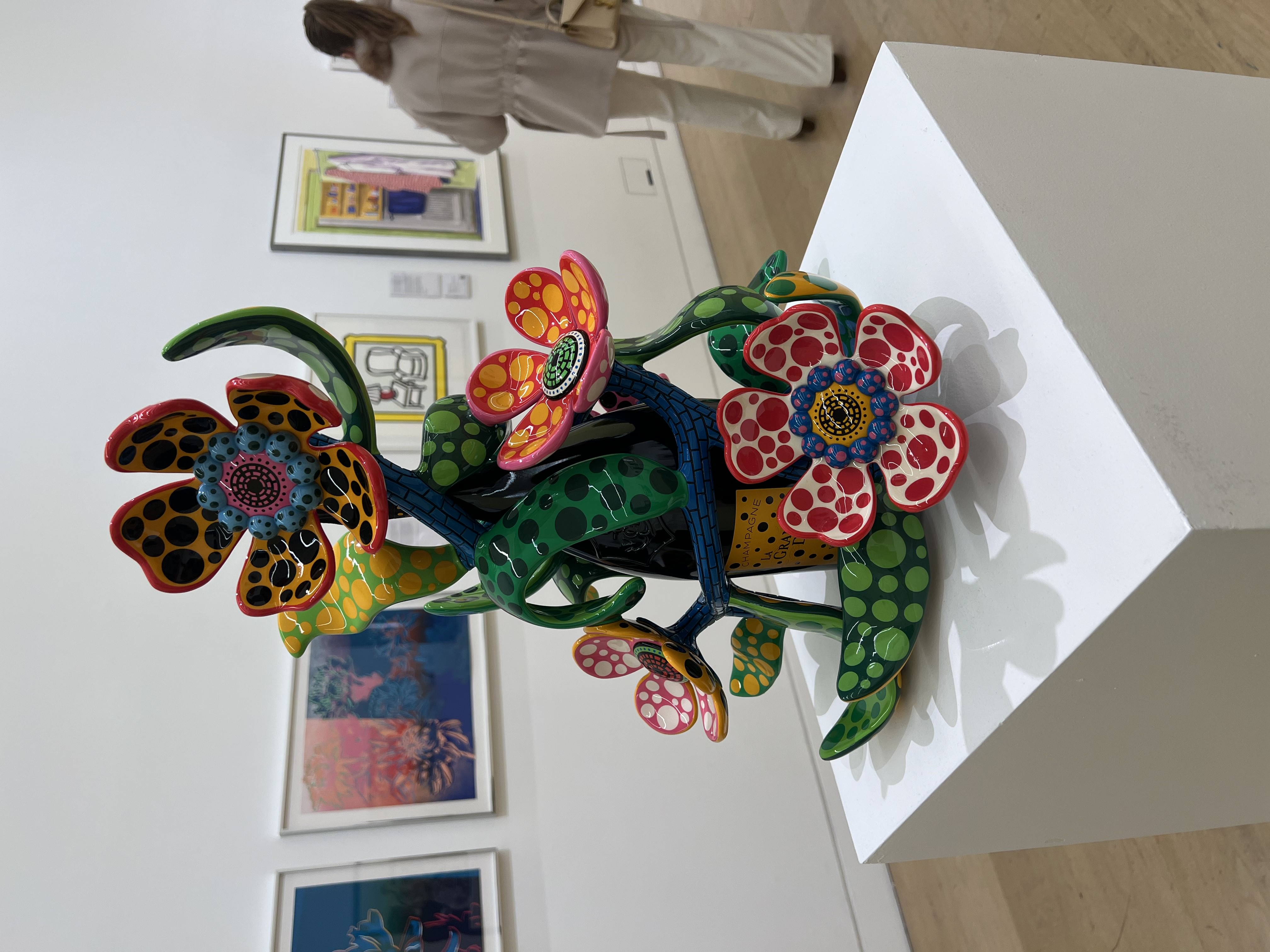
Photo of Yayoi Kusama ceramic taken during private view view of Phillips Evening and Day Editions. Photo: © Bethan Street
What mid-market collectors actually need
The requirements of mid-market art financing are clear, even if underserved:
- Granular market knowledge, not just headline auction results
- Data-driven valuations that reflect real liquidity
- Flexible loan sizing across multiple artworks
- Speed and discretion, particularly around acquisitions or estate matters
- Operational support, from storage to insurance and compliance
This is where specialist platforms, rather than banks, increasingly play a central role.
How Artscapy Finance fills the gap
Artscapy Finance was built specifically to address the structural mismatch between traditional banking and the realities of the mid-market art world.
A mid-market-first approach
Artscapy focuses on artworks and collections that sit below institutional thresholds but above entry-level speculation. This includes established contemporary artists, liquid secondary-market names, and cohesive collections where value is diversified rather than concentrated.
Data, not assumptions
Rather than relying solely on brand recognition or sporadic auction records, Artscapy applies a proprietary AI-driven valuation model that combines market data, transaction history, and liquidity analysis to assess risk at both the artwork and portfolio level. This system automatically updates valuations on a monthly basis, reflecting real market movements rather than static snapshots. The result is more accurate pricing and more competitive loan-to-value ratios for qualified works.
Bespoke, collector-led structures
Artscapy structures financing around collector objectives, not internal product constraints. Whether the need is to fund a new acquisition, bridge liquidity, or pay inheritance or estate taxes, loan terms are designed to align with real-world use cases.
Speed with institutional discipline
While maintaining rigorous due diligence, Artscapy can move significantly faster than traditional banks. This combination—speed without sacrificing discipline—is critical in an art market where opportunities are often time-sensitive.
End-to-end execution
Art financing is operationally complex. Artscapy manages the full process, coordinating valuation, legal documentation, insurance, and secure storage. For collectors, this removes friction and reduces execution risk.

Photo of attendees taken during private view view of Phillips Evening and Day Editions. Photo: © Bethan Street
A structural shift in art finance
The rise of specialist platforms reflects a broader trend: art is increasingly treated as a financial asset class, but one that requires bespoke infrastructure. As with private credit, private markets, and alternative assets, specialist lenders are often better equipped than universal banks to serve nuanced segments.
For mid-market collectors, this shift is particularly significant. It opens access to liquidity strategies that were previously unavailable or impractical.
Final thoughts for collectors
The question is no longer whether art can be financed, but who should provide that financing. For mid-market collectors, traditional banks are often too rigid, too slow, or too narrowly focused. Specialist platforms like Artscapy Finance offer a more aligned alternative—one that understands both the financial and cultural dimensions of collecting.
In an increasingly sophisticated art market, the ability to unlock liquidity without compromise is becoming a defining advantage. Explore Artscapy Finance to see how bespoke, mid-market-focused art financing can support your collecting and long-term wealth strategy.
