
Cecily Brown market analysis. Is now a good moment to sell? (February 2026)
Last updated: 8 February 2026
Cecily Brown’s market can look deceptively simple from the outside: a major painter, steady institutional attention, and headline auction prices that make the rounds.
But when you’re deciding whether to sell, the real question isn’t “Is Cecily Brown in demand?” It’s: does your specific work sit in the part of her market that buyers actually compete for or in the part they politely scroll past?
Verdict: If your Cecily Brown is a serious painting or a painting-calibre monotype, selling can be rational now; if it’s an edition or a slight work on paper, the market will reward patience and precision.
Start with valuation. We’ll help you place your work inside Cecily Brown’s market as it behaves in practice, not as it’s assumed to behave.
Get a price range in about 60 seconds.
After valuation, we’ll route you based on what you own: the right public auction context for Cecily Brown, a discreet private sale where that’s structurally smarter, or (for some works) a straightforward retail-style placement.
If it looks right, request purchase offers within 48 hours, with no seller fee when applicable.
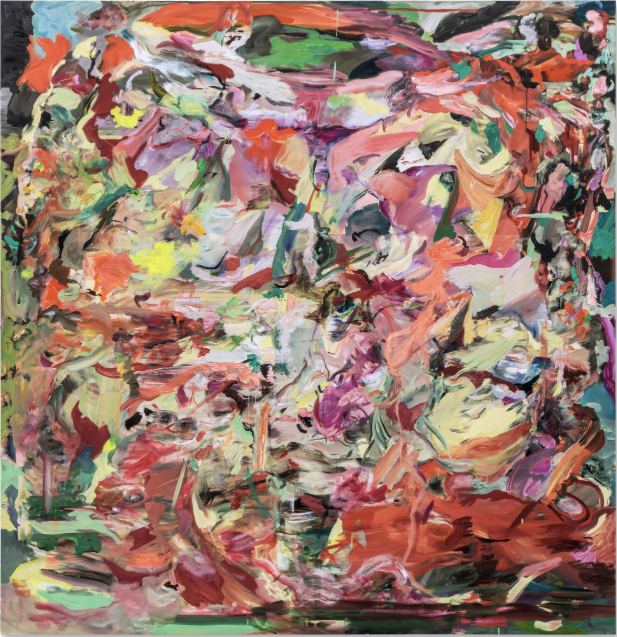
Cecily Brown, Free Games for May, 2015. Image: © Sotheby's
The Cecily Brown market isn’t one ladder, it’s separate lanes
The biggest trap for Cecily Brown sellers is assuming there’s a neat value ladder: painting at the top, then works on paper, then prints.
In reality, Cecily Brown has at least two “serious” collecting categories that buyers treat differently, plus a third category that behaves like an accessible, price-capped market.
That difference matters because the selling strategy that works for a flagship Brown painting can be actively unhelpful for a print edition—and vice versa.
Here’s the practical mental model:
- Lane A: Paintings (high liquidity when the work is right, high penalty when it isn’t).
- Lane B: Unique works on paper that behave like paintings (especially monotypes with scale and presence).
- Lane C: Prints and multiples (more transactional, more price-sensitive, and rarely the place where bidding turns feral).
Your first job as a seller isn’t to “pick a platform.” It’s to identify which lane your Cecily Brown is actually in, because buyers already have.
Paintings: where liquidity concentrates, and why it can still turn binary
Cecily Brown paintings are, broadly, the most liquid part of her public auction market—but the liquidity is selective, not blanket.
Across the public auction record we reviewed, Cecily Brown paintings sold 93% of the time.
That sounds forgiving, but it hides a sharper truth: this is a market that rewards conviction, and punishes ambiguity. A painting that feels inevitable can draw real competition; a painting that feels merely “nice” can be exposed quickly once it’s under the lights.

Cecily Brown, Sirens and Shipwrecks and Bathers and the Band, 2016. Image: © Brooklynrail
The proof is the ceiling. The highest priced painting in the public auction results we reviewed achieved US$6,711,450.
That number matters less as a “record” than as a reminder of what buyers are paying for: the version of Cecily Brown that feels like a main event—full of velocity, atmosphere, and half-emerging narrative, not just surface energy.
The implication for you as a seller is uncomfortable but useful: you don’t get paid for “being by Cecily Brown.” You get paid for being a painting that buyers recognise as a signature example of Cecily Brown.
Action: before you choose auction, treat your painting like a specific product in a specific lane. Condition, scale, date, image strength, and provenance are the difference between “liquid” and “publicly stalled.”
A late-market reality check: strong demand still exists, but it’s not indiscriminate
If you’re worried that the market “was hotter a few years ago,” the public record still shows that demand at the top end hasn’t vanished—it has just become more discerning.
In the auction results we reviewed, a Cecily Brown painting sold for US$5,100,000 as recently as 2025.
That’s not a promise. It’s a sign that buyers will still pay when the work justifies the price in the room.
The implication is that “now vs later” isn’t primarily about a macro clock for Cecily Brown. It’s about whether your work is positioned as a compelling example rather than a hopeful comp.
Action: valuation first, then route selection. If your painting belongs in the top lane, the job becomes choosing the right context and the right level of price discipline—not waiting for a mystical “better year.”
The monotype wildcard: why some “works on paper” sell like paintings
Cecily Brown’s market has a feature that surprises collectors who only track painting results: some works on paper behave like paintings in price and demand, particularly monotypes.
This isn’t a side hustle. Brown’s monotypes are deeply embedded in her practice; she has spoken about monotypes as among the works “closest” to her paintings. [6] (apollo-magazine.com)
In the auction results we reviewed, the highest priced work on paper reached US$6,140,500.
That single figure rewires the seller’s mental model. It means “work on paper” is not automatically an entry-level lane in Cecily Brown’s market. For the right monotype—especially when it carries scale, density, and presence—buyers can treat it as a painting-equivalent object.
Implication: if you own a Cecily Brown monotype, don’t let it get priced or marketed like a casual drawing. The market has shown it can pay painting-level money for the right example.
Action: route depends on quality and context. A major monotype can belong in the same conversation as paintings; smaller or less characteristic sheets often do better with a more controlled private placement or a specialist works-on-paper pathway.

Cecily Brown, Untitled, 2013. Image: © Phillips
Works on paper that aren’t painting-equivalent: where liquidity quietly disappears
The flip side of the monotype headline is that Cecily Brown works on paper are uneven as a category.
In the public auction results we reviewed, the median sold work on paper was about US$52,088.
That figure matters because it captures the “typical” reality behind the occasional outlier. Many works on paper trade as serious collectibles, but the market is not obligated to treat every sheet as a painting substitute.
Implication: if your Cecily Brown is a smaller drawing, watercolour, or a less characteristic work on paper, the market can be quiet—not because the artist isn’t wanted, but because buyers are saving their appetite for works with more scale, more charge, or more unmistakable “Brown”.
Action: this is the zone where private sale can become structurally rational. A discreet placement lets you find the right buyer without the reputational drag of a public pass, and without forcing your work to pretend it belongs in the headline lane.
Prints and multiples: more transactional, more capped
Cecily Brown also has a prints-and-multiples market that behaves like a different ecosystem: more supply, more comparables, and a far tighter ceiling.
In the public auction results we reviewed, the median sold print was US$2,150.
That doesn’t make prints “bad”. It makes them different. Buyers in this lane are often buying access to the name and the image rather than buying into the high-stakes connoisseurship game.
Implication: prints usually do not benefit from the same kind of “moment” selling logic as major paintings. Timing and venue still matter, but pricing realism matters more.
Action: if you’re selling a Cecily Brown print, the rational goal is usually an efficient, clean sale rather than a heroic result. A valuation will tell you whether it’s better routed towards an edition-aware private buyer, a prints sale, or a direct retail-style offer.
The signal sellers should actually respect: public “passes” at ambitious expectations
Cecily Brown’s market punishes one thing more than most sellers expect: overreaching pricing for works that aren’t unquestionably top-tier.
In the auction record we reviewed, a Cecily Brown painting offered with a US$6,000,000 low estimate failed to sell in 2024.
That matters because it’s not an obscure work being ignored; it’s a reminder that, at the trophy end, the market will not save sellers from ambitious positioning. A public pass becomes part of the work’s visible history, and that can make the next sale harder.
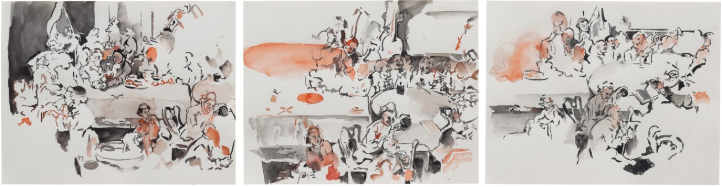
Cecily Brown, 3 Studies After "An Election: An Election Entertainment" by William Hogarth, 2004. Image: © Phillips
Implication: for borderline works (or works with complicated provenance, condition questions, or simply less punch), “try it at auction and see” can be a high-cost experiment.
Action: if your Cecily Brown feels like it might be right on the line, private placement is often the calmer, more rational first move. If demand is there, you can still achieve a strong price—without the public downside.
Institutional momentum is real but it doesn’t lift everything equally
Cecily Brown isn’t relying on market chatter alone. She has had a major museum survey at The Met (Death and the Maid), and a significant travelling retrospective (Themes and Variations) organised with the Barnes Foundation and the Dallas Museum of Art. [1], [2]
There is also an announced Serpentine exhibition (Picture Making) featuring new and recent works. [3]
This matters because institutional framing tends to do two things in the secondary market:
- It gives buyers more confidence in the artist’s staying power.
- It sharpens the market’s sense of what the “real” Cecily Brown looks like—what belongs in the canon, and what belongs in the footnotes.
Inference: institutional momentum in Cecily Brown’s case is likely to widen the gap between “main-event” works and everything else, because it encourages connoisseurship rather than indiscriminate buying. That’s consistent with a market where high-end results coexist with visible selectivity.
Action: don’t sell on the assumption that “Cecily Brown has a show, so everything will fly.” Sell on the basis that your work aligns with what the market is rewarding right now—or choose a route that protects you if it doesn’t.
Auction vs private sale: what’s structurally rational for Cecily Brown?
For Cecily Brown, private sale isn’t just a “quiet option.” It’s often a structurally sensible option because this market can be judgemental in public.
A key reason is the binary nature of the painting lane: when the work is perfect for auction, auction can be brilliant. When it’s not, auction can brand the work with a miss.
There’s also a primary-market dynamic worth noting: The Art Newspaper has reported on a case involving a Cecily Brown painting sold via Paula Cooper Gallery where the purchase was linked to a resale restriction/offer-back style agreement. [7]

Cecily Brown, The Last Shipwreck, 2018. Image: © Phillips
That doesn’t tell you what your contract says. But it does tell you something about the ecosystem around Brown: demand has been strong enough, at least in some cases, for galleries to try to manage resale behaviour.
Implication: if your Cecily Brown was acquired on the primary market, it’s rational to treat resale as a managed process—not a casual listing decision.
Action: check your paperwork before you choose a route. If you want discretion, speed, and less reputational risk, private sale can be the default rational path for many Brown works—especially in the “strong but not headline” zone.
Authenticity and documentation: what the market will ask you for
Cecily Brown’s market includes paintings, unique works on paper, and editioned prints. The documentation expectations can differ by category, and buyers do pay attention.
For editioned works, publishers and workshops can be part of the provenance trail. For example, Gemini G.E.L. lists Cecily Brown editions on its artist page. [8] (geminigel.com)
Data needed. We cannot verify from reputable public sources whether there is a current, publicly accessible authentication committee or catalogue raisonné process for Cecily Brown paintings. Confirmation would require an official statement from Cecily Brown’s studio/representing galleries, or a recognised publisher publicly announcing a catalogue raisonné project.
Action: for valuation, be ready with whatever you have—invoice, gallery correspondence, certificates where they exist, exhibition history, and clear condition notes. For higher-value paintings, professional condition reporting is often part of the buyer’s comfort.
Sell now vs wait: the calm way to decide in Cecily Brown’s market
A rational selling decision here isn’t about guessing the next headline. It’s about matching your work to the market lane it actually belongs to.
Selling sooner tends to be rational when:
- Your Cecily Brown is a painting that holds its own in the “main event” lane (image strength, scale, and presence).
- You have clean provenance and condition, and you’d rather trade certainty for optionality.
- You want to sell ahead of additional supply that often follows institutional visibility (owners become tempted to test the market).

Cecily Brown, The Serpentine Picture, 2024. Image: © Serpentine / Genevieve Hanson
Waiting tends to be rational when:
- Your Cecily Brown sits in the more price-capped lanes (prints, minor works on paper), where timing is less catalytic.
- Your work is strong but borderline for public auction, and you’d benefit from a more controlled private placement strategy.
- You can improve the selling package (documentation, condition work where appropriate, or simply clearer market positioning).
Inference: with upcoming institutional visibility continuing, the direction of attention is supportive—but the distribution of demand is likely to remain selective. That means patience can pay when your work isn’t a natural headline lot, and decisiveness can pay when it is.
Action: start with a valuation that reflects the lane your work is in, then choose a route that matches the market’s actual behaviour.
What we do next at Artscapy
We’ll start by valuing your Cecily Brown based on what buyers are rewarding in practice: medium (painting vs monotype vs edition), scale, image strength, condition, provenance, and how comparable works have actually traded publicly.
Then we’ll show you your realistic options:
- Private sale when discretion and risk control are the rational choice.
- Auction-aligned strategy when your work belongs in public competition.
- Direct purchase offers where eligible, when speed and simplicity matter.
Get a price range in about 60 seconds.
References
[1] The Metropolitan Museum of Art, “Cecily Brown: Death and the Maid” (exhibition page).
[2] The Barnes Foundation, “The Barnes Foundation Presents Cecily Brown: Themes and Variations” (press release, 17 December 2024).
[3] Serpentine Galleries, “CECILY BROWN: PICTURE MAKING” (press release page).
[4] Paula Cooper Gallery, “Cecily Brown” (artist biography page).
[5] Paula Cooper Gallery, “Cecily Brown, ‘Unmoored From Her Reflection,’ 2021” (news item regarding The Courtauld commission).
[6] Apollo Magazine, “Cecily Brown: I’m not a gestural painter… I’m a process painter” (interview, 2018).
[7] The Art Newspaper, “The socialite collectors, the Cecily Brown painting and the first-refusal contract…” (reporting on a resale restriction/offer-back contract context, 13 January 2022).
[8] Gemini G.E.L., “Cecily Brown” (artist editions page).